Michael Easton
Michael Easton (1954–2004) was a British-born composer, pianist and arranger who settled in Melbourne in 1982. His music is accessible, wickedly witty and finely crafted, drawing on French models and jazz.
Michael Easton was born in Hertfordshire, England, in 1954. Once in Australia – some 28 years later – he quickly established himself as a practical and inventive composer able to answer commissions of every kind, as a brilliant arranger of other people's music, and as an all-round musician of wide abilities. By 1986 he felt able to leave music publishing and work entirely as a freelance composer. That did not stop him forming an ongoing duo-piano partnership with Len Vorster, or giving many stimulating pre-concert talks for the Melbourne Symphony, Musica Viva and Opera Australia.
His music carries the same energy and good humour. It is wholly accessible, built on ear-catching melodies, piquant harmonies and brilliant orchestration. French models (especially Milhaud, Poulenc and Ravel) and jazz run through it: the former from natural sympathy and study with Berkeley, himself French-trained; the latter from Easton's own skill as a jazz pianist. Wickedly witty and beautifully crafted, it can please at first hearing while depth and seriousness only gradually become clear.
He died in 2004.
Michael Easton is featured on the following titles
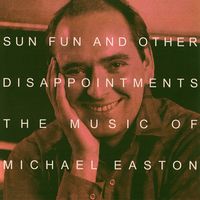
Sun Fun and other Disappointments: The music of Michael Easton
This compilation gathers British–Australian composer Michael Easton’s output from 1981 to 1993: solo and duo piano, a flute sonata, a piccolo concerto, song cycles, and four songs from his one-woman show Dorothy Parker Says.
Composer
Compositions by Michael Easton also appear on

Teamwork
An eminently listenable collection of piano music for four and six hands. Romantic, brilliant and companionable by turns, it is an exciting, all-stops-out tour de force from the Team of Pianists.
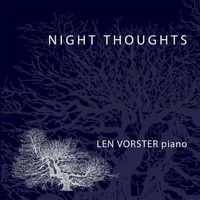
Night Thoughts
During the long still nights of Melbourne’s Covid lockdowns, pianist Len Vorster listened widely and thought hard about what he heard. Those evening ruminations became this programme of fifteen nocturnes and night pieces, from Schumann’s circle to Copland.