Nicolas Gombert
Nicolas Gombert wrote dense, closely imitative sacred polyphony at the height of the Franco-Flemish style: masses, motets and Magnificat settings in continuous textures that favour lower voices and bold cross-relations.
His preferred form was the motet, where Scripture often supplies the text and expressive sonority matters more than syllable-by-syllable clarity. Close imitation, irregular entries and few clean breaks give the lines a seamless, enduring feel; syncopation and false relations sharpen the harmony, especially in six or more parts. Musae Jovis, the six-voice monody on Josquin’s death, turns clashing semitones to elegiac effect. The chansons are less tightly woven than the sacred music yet denser than most contemporary secular song, and they travelled widely in lute and vihuela arrangements. Eight Magnificat settings, one in each church mode, remain among his best-known works.
Compositions by Nicolas Gombert appear on
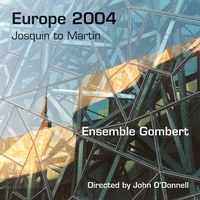
Josquin to Martin
A miscellany spanning High and Late Renaissance motets and nineteenth- and twentieth-century sacred works, drawn from Ensemble Gombert’s first European tour in 2004. The programme was chosen to complement Hommage à Gombert, then in production, with Gombert, Lassus and Monteverdi.