
Listen & tracks
2 of 10 tracks have a preview · 1 work · 60:01
-
48 Fugues For FrankMichael Kieran Harvey 10 movements60:01
- 1 #1 – Greggery Peccary, Pentagon Afternoon 7:52
- 2 #2 – The Girl in The Magnesium Dress 7:12
- 3 #3 – Jazz From Hell 7:20
- 4 #4 – Tink Runs Amok 6:26
- 5 #5 – Civilization Phaze III 4:38
- 6 #6 – G-Spot Tornado 3:50
- 7 #7 – St Etienne: guitar solo 6:23
- 8 #8 – Ruth is Sleeping 5:00
- 9 #9 – The Black Page 5:18
- 10 #10 – Baby Snakes 6:02
Premiered at Mona Foma in Hobart in January 2010, the ten pieces draw on Zappa’s late instrumental and Synclavier work rather than his rock songs with lyrics. Each movement takes four or five of Zappa’s signature devices – irregular speech rhythms, ostinatos, overdubbed tempos, Baroque pastiche, pounding bass lines – and recasts them for concert piano.
Harvey’s notes place the cycle beside Bach’s great contrapuntal sets while winking at Zappa’s professed dislike of fugue. The recording was made in March 2010 at Move Records Studio on an EX Shigeru Kawai concert grand.
In the artist’s words
These pieces pay homage to Zappa’s fascination with purely instrumental music. The use of vocals restricted his idiomatic complex style to an accompanying role, largely so that the text could be understood.
A supreme autodidact, Zappa was at his best improvising. With Australian rock infected with vomit-inducing spectacles such as trivia quiz shows and contests, and totally emasculated through the influence of everyone from Scientologists, Hill Song-style evangelical Churches, Christian bikies to old rockers’ radio stations, it’s important to remember the educative contribution of Zappa.
This he achieved not only by way of his satirical lyrics, but in the sheer complexity and intelligence of his music, which somehow bypassed the stupidity of the American top 40 cartel and listening public, spreading to connoisseurs in Europe, Australia and elsewhere.
His deep respect for classical masters such as Stravinsky, Nancarrow, slonimsky, Bartok, Ravel, Debussy, Varese and Boulez resulted in sympathetic arrangements of their music for his virtuoso ensemble, interspersed with humorous digs at commercial genres like doo-wop, disco, blues, gospel, country ’n’ western, cult-backed pop/rock stars, reggae, pretentious jazz and stadium rock to name only a few.
I hope our little homage might inspire listeners to dip into Zappa’s oevre for themselves, or the Zappa connoisseur to wryly consider what might have been had he not died so young.
I remain indebted forever to Ernest Rust who opened my mind to the music and doors of Frank Zappa. Through headphones he encouraged me to subject my much younger and more ignorant self to You Are What You Is (apparently one of the albums Zappa was happiest with, and the first to be entirely pooted forth from The Utility Muffin Research Kitchen, his own recording studio).
Having been brought up on the more controlled austerities of JS Bach and Ravi Shankar, I could not believe my ears, as I was simultaneously and vastly astounded, bewildered, shocked, amused, entertained.
Then I stumbled across the Francesco Zappa album, Zappa’s synclavier opus of his namesake (who had flourished some 200 years previously) and whose Baroque compositions he had inimitably rendered with his Barking Pumpkin Digital Gratification Consort. Frank Zappa reeked humour, affection, subversion – and questions: why the division of music into serious and non?; what is an ‘authentic’ instrument?; dare ‘rock’ musicians inhabit other Domaines?; can ‘new’ music be old, and ‘old’ music, new?
Thus it was both shocking and exciting to discover that an Australian and ‘classical’ musician had actually released a version of Zappa’s Ruth Is Sleeping, and what was even more freaky, was alive and living not in leather but in Hobart, and more oddly yet, was working in parallel on a Zappa homage of his own.
Reviews
An unpredictable, exhilarating tribute to one of rock’s greatest instrumental pioneers. Like Zappa, pianist Michael Kieran Harvey is fearless and inventive. 48 Fugues For Frank is a unique tribute. ★★★★
The distinguished Australian pianist Michael Kieran Harvey has produced a powerful and virtuosic tribute to Frank Zappa. Harvey has created a suite that establishes him as an emerging composer of piano music.
Homages to an artist can take a variety of forms such as recording new versions of their work. Groups such as Ensemble Modern, Meridian Arts Ensemble and The Persuasions have followed this path in the case of Zappa. Harvey has taken a different and more challenging approach, using some elements from 11 of Zappa’s compositions to create a completely new work.
As befits any musical reference to Zappa there is no shortage of musical jokes: there are 10 pieces, not 48, and some of the elements are summed up in Harvey’s tongue-in-cheek words: ‘repetition is the mother of twisted arpeggios’, ‘pompous counterpoint’, ‘gratuitous arpeggios’, ‘clichéd Romantic chords’ and ‘Baroque pastiche’.
As also befits a homage to Zappa the music is demanding and works on a number of levels. The listener is treated to a virtual history of classical piano music as Harvey utilises the full range of the piano and moves seamlessly from Zappa to Stravinsky, Bartok and Debussy, with some Bach and Schumann thrown in for good measure, and succeeds in blending them into a challenging set of contemporary pieces for piano.
In a kaleidoscope of musical colours moments of calm and beauty are combined with tension, driving rhythms and dissonant sections, and at times Harvey has so many things happening at once that it seems there are two pianists at work.
The compositions that Harvey has used as inspiration for his suite mainly come from Zappa’s last decade when he started using the Synclavier, the first digital synthesiser-sequencer, and the period when he increasingly concentrated on ‘serious’ music. As Harvey says ‘These pieces pay homage to Zappa’s fascination with purely instrumental music. The use of vocals restricted his idiomatic complex style to an accompanying role...’ This selection has the virtue of avoiding Zappa’s compositions with sometimes reactionary lyrics, which have often served as a barrier for listeners to his music.
Like his idol Edgar Varèse, Zappa was intrigued by the development of electronic instruments and he used the Synclavier on albums such as Francesco Zappa (1984), Jazz from Hell (1986), The Perfect Stranger (1984) and Civilisation Phaze III (1994). Although advances in technology have made the Synclavier largely obsolete, it provided Zappa with the chance to hear approximations of what he was writing without the expense of hiring a symphony orchestra.
When he died in 1993, at the age of 52, Zappa left behind a substantial volume of compositions. The guitarist, composer and satirist blended a wide variety of musical and other influences. Largely self-taught, Zappa didn’t recognise the boundaries instilled by traditional musical education and he was influenced as much by Varèse, Stravinsky, Bartók, Ravel and Webern, along with music of Tibet, India and the Middle East, as by Spike Jones, pop, rhythm and blues and jazz. Elements of film, dance and opera were also present in most of his work. Alone amongst his rock contemporaries he was able to integrate these diverse influences into a recognisable style.
Like Zappa, Harvey has a very broad range of influences and has also been able to integrate them into his playing and composing. Among others he has recorded Liszt, Messiaen, Shostakovich and Okamoto as well as contemporary Australian composers such as Vine, Westlake, Sitsky, Ford, Gifford, Nock and Gould. He has used computer-generated music, for example on his compositions ‘Elektra’ and ‘Toccata DNA’. He has recorded over 30 CDs and this is his 16th for Move.
Zappa’s contribution to so-called serious music remains an open question. He did not feel happy with his use of symphony musicians until he worked with the Ensemble Modern on The Yellow Shark just before his death and his last work was to supervise this group recording Varèse, but this remains unreleased.
In his ‘serious’ music Zappa employed techniques such as speech-influenced irregular rhythms, percussion treated as on a par with other instruments, collages, abrupt changes and air sculptures or balanced blocks of sound. Most of these are present in one form or another on the CD.
The dramatic opening phrase of Fugue 1, influenced by ‘Greggery Peccary’ and ‘Pentagon Afternoon’ announces that Harvey is about to unleash some serious music.
Inspired by ‘The Girl in the Magnesium Dress’, the second piece moves from a beautiful opening to a tense cadenza and a lyrical close.
One of Zappa’s Synclavier pieces, ‘Jazz From Hell’, leads Harvey to use a series of chords as the basis for written ‘improvisations’ with a rhythmic interlude before returning to the original chords with a different melodic line. A characteristic Zappa device was to overdub parts at different tempos and ‘Tink Walks Amok’ is based on a solo by bass player Arthur ‘Tink’ Barrow. Harvey responds with some pounding bass lines and a touch of Stravinsky’s ‘Rite of Spring’.
In Fugue 5 Harvey uses Zappa’s final work, Civilization Phaze III, as the basis for a romp through ‘classical’ themes surrounded by calm opening and closing chords. One of Zappa’s more accessible ‘serious’ works, ‘G Spot Tornado’ is based largely on a melodic fragment that is repeated with slight variations and this inspires Harvey to a driving piece which culminates in a repeated treble figure.
Zappa’s melodic guitar solo on ‘St Etienne’ provokes Harvey to alternate lyrical and very tense passages. Harvey recorded a solo piano version of the very difficult ‘Ruth Is Sleeping’ on his Storm Sight CD (2001). In Fugue 8 the calm repeated opening notes give way to a series of increasingly tense arpeggios before a dreamy ending.
As a 14-year-old drummer, Zappa was entranced by Varèse’s ‘Ionisation’, written for 13 percussionists (including piano as a percussion instrument). This is reflected in Zappa’s ‘The Black Page’, where the melody speeds up and slows down over a steady underlying beat. In Harvey’s hands this becomes the basis for a driving tour de force performance.
‘Baby Snakes’ is the only influence from Zappa’s rock/pop works. The driving rock theme inspires a slow, beautiful bass melody from Harvey, which leads to a reprise of some earlier themes and concludes with the opening phrase of the first piece.
The CD includes detailed liner notes by Harvey and some examples of concrete poetry by Arjun von Caemmerer. Move Records deserves praise for continuing to produce the finest Australian contemporary music.
Listeners not familiar with Zappa’s later compositions may find the best way to approach this CD is with an open mind and simply enjoy listening as Harvey presents a challenging and rewarding program of contemporary piano music. He has given a glimpse of the sort of music Zappa might have produced had he not died so young.
The virtuosity is astounding. This is a CD which demonstrates that Harvey – already acknowledged as an important pianist – is also an important composer.
Artists
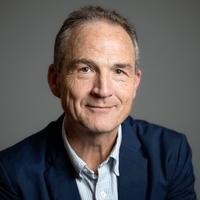
Michael Kieran Harvey
piano
Australian pianist and composer Dr Michael Kieran Harvey FAHA is among the foremost interpreters of contemporary piano music of his generation. A champion of Australian music, he regularly commissions new work and has performed with the country’s leading contemporary ensembles and orchestras.
Digital booklet
Digital booklet Notes, texts and credits — read online or download the PDF Download the PDFPerformers
- Michael Kieran Harvey · piano
Technical credits
-
Recording Engineer
Martin Wright
Vaughan McAlley
-
Editing Engineer
Vaughan McAlley
-
Mastering Engineer
Martin Wright
-
Venue
Move Records Studio
-
Thanks to
Kawai Australia
-
Credit
Arjun von Caemmerer
Graeme Lee
Peter Mathew
Details
- List price
- $25.00 AUD
- Total playing time
- 60 minutes 1 seconds
- Release date
- 2010
- Categories
- Australian, Classical, Keyboard
- Musical work copyright
- © 2010 Move Records
- Sound recording copyright
- ℗ 2010 Move Records
- Catalogue
- MD 3339
- EAN
- 9314574333923
More to explore
De Tribus Impostoribus
This is a new collection of works by acclaimed Australian pianist and composer Michael Kieran Harvey, bringing together music spanning more than two decades of his distinctive and adventurous creative practice.
The life in between
Michael Kieran Harvey anchors this solo piano programme with Martin Friedel’s final work, …the life in between…, then sets it among virtuoso scores by Pertout, Crossman, Spiers, Selleck and McAlley.
War Sonatas
Three piano sonatas by Michael Kieran Harvey, written as a response to twenty-first-century war. Spoken poems by Arjun von Caemmerer stand between the works, framing a triptych of anger, friendship and warning.
Threnody
Michael Kieran Harvey’s landmark 1995 Astra recital of late twentieth-century Australian piano music returns in a 2024 Move re-master. Premiere recordings by Harvey, Vine, Campbell, McCaughey, Byrne, Humble and Anderson form one continuous programme.
The Sparrow and the Mead Hall
Composed and mostly performed by Michael Kieran Harvey, these 2021 works move from the rarefied extended techniques of Piano Sonata #7 and Liszt–Busoni bravura in the Four Ballades to bebop wit in Lawyers… and metal-edged satire in Death Cap Mushroom.
Shichiseki
Collaborations with violinist Miwako Abe and cellist Alister Barker sit beside solos written for Michael Kieran Harvey by Gabriella Vici and Andrián Pertout, spanning Japanese, Latin American and South Indian influences.