
Listen & tracks
1 of 8 tracks have a preview · 8 works · 63:26
-
1 Scherzo No. 2 in B-flat minor, Op. 31 Frédéric Chopin 11:13
-
2 Berceuse, Op. 57 Frédéric Chopin 4:21
-
3 Grande Valse Brillante in A-flat major, Op. 34 No. 1 Frédéric Chopin 5:37
-
4 Barcarolle, Op. 60 Frédéric Chopin 8:28
-
5 Fantaisie-Impromptu in C-sharp minor, Op. 66 Frédéric Chopin 5:26
-
6 Ballade No. 1 in G minor, Op. 23 Frédéric Chopin 9:16
-
7 Nocturne in D-flat major, Op. 27 No. 2 Frédéric Chopin 5:15
-
8 Andante spianato and Grande Polonaise in E-flat major, Op. 22 Frédéric Chopin 13:50
Rita's impeccable connections with Chopin began early, when she studied with Mieczysław Horszowski, whose mother had been a pupil of Chopin's student Karol Mikuli. Another teacher, Jorge Bolet, had studied with Rosenthal, also a Mikuli pupil. That lineage shapes the integrity and authority of her interpretations.
Chopin remains something of a paradox. Alone among the great composers he wrote almost exclusively for one medium – the piano. Here Rita Reichman gives stunning performances of his master works: the Scherzo in B-flat minor, the Berceuse, a Grande Valse Brillante, the Barcarolle, the Fantaisie-Impromptu, the first Ballade, a Nocturne, and the Andante spianato and Grande Polonaise.
In the artist’s words
Chopin has always been something of a paradox. As one of the canon of ‘great composers’ he, unlike many of the others, is singular in writing almost exclusively for one medium – the piano. The salon associations of his music – the pianistic limp-wrist so to speak – concealed the iron backbone of his utterances. Put into perspective, the piano was merely a fashionable salon instrument at the beginning and into the middle of the 19th century. And Chopin had to earn his keep. If the grand ladies of the salons were prepared to swoon to the beauty of his music – and pay him respectably to do so – why would he refuse? While most composers entered through tradesmen’s doors, Chopin walked with countesses, princesses and the very milieu of Parisian high society. It does not mean that he enjoyed the atmosphere, the social flippancy, so to speak: ‘I am up to my neck in evening parties, concerts and dances, but they bore me to death …’ he wrote.
With the passing of time, the paradox recognised, Chopin has emerged as much less effete a composer. But the dichotomy always will – and should, perhaps – remain. His Mazurkas were described as ‘guns buried in roses’. Or take the phrase that so beautifully describes that combination of coolness and an underlying seething passion – ‘Rain of silvery fire’. ‘Rain’, ‘roses’, ‘fire’ – these objects clearly point to Chopin’s poetic muse, his ability to express narrative or verse through the medium of a solo instrument. It is thus so often that he is considered one of the keyboard’s most ‘natural’ writers.
But therein too lies a paradox. A great performance of Chopin may reveal a sense of struggle but rarely discloses the mechanical difficulty of his writing. For while Chopin, one of the great league of pianist-composers, knew the piano inside-out, he did so much more than his knuckle-breaking-obsessed predecessors, Moscheles and Hummel among them. For a start, he abhorred displays of digital virtuosity for their own sake. ‘Simplicity is everything’ he wrote. ‘After having exhausted all the difficulties, after having played immense quantities of notes, and more notes, then simplicity emerges with all its charm, like art’s final seal. Whoever wants to obtain this immediately will never achieve it: you can’t begin with the end. One has to have studied a lot, tremendously, to reach this goal; it’s no easy matter.’
As was to be expected, parallels were drawn between Chopin and his contemporaries, almost always in Chopin’s favour. ‘The difference between [Kalkbrenner] and Chopin was remarkable,’ wrote F.-Henry Peru, a student of both composer-pianists. ‘The latter never played his works twice with the same expression, and yet the result was always ideally beautiful, thanks to the ever-inspiration, powerful tender or sorrowful. He could have played the same piece twenty times in succession, and you would still listen with equal fascination.’ Or, more floridly, in the words of Alfred James Hipkins, a staff member of Broadwood pianos and Chopin’s preferred piano tuner: ‘Chopin never played his own compositions twice alike, but varied each according to the mood of the moment, a mood that charmed by its very waywardness; his playing resembled nothing so much as the tender delicate tints seen in mother-o’-pearl, and rendered apparently without the least effort.’
The composer Pauline Viardot speaks about the “spianato” (literally spinning) aspect of his writing: ‘[In Chopin’s works] when huge slurs extend over entire musical periods they indicate this spianato playing, without nuances or discontinuities in the rhythm – impossible for those whose hands are not graced with perfect suppleness.’ Given that so much of Chopin’s music has that ‘spun’ quality (its direct precedent, even inspiration, being the bel canto writing of Bellini and Donizetti) it is surprising that Chopin used the title only once in his oeuvre – for the Andante Spianato et Grande Polonaise. Apart from the three sonatas, the Andante Spianato is one of Chopin’s larger-scale works in what was, essentially, an output of short works. But short only in time span, for here again is another paradox: short in clock time, long-range in musical structure. Or as Schubert’s friend Holzapfel would reminisce about the composer, ‘He was a little man, but he was a giant’.
And expansive (if not gigantic) is indeed the scope of the Andante, which floats songfully over a rippling accompaniment. Again and again Chopin would urge his pupils to listen to the great opera stars of the day. ‘You have to sing if you wish to play,’ he would exhort.
Travelling through the 18th century with the works of J.S. Bach, Telemann, Mozart and Weber, the Polonaise found its own voice in the music of Chopin. He wrote seventeen of these – fifteen individual ones and two fused with other forms. The Polonaise-fantaisie, Op. 61 is really a fantasy on the polonaise idea and the Andante Spianato et Grande Polonaise is really a two-movement piece fused together with a bridge passage. It is proudly and fervently Polish.
Fusion of forms was not uncommon for Chopin. Although now regarded as belonging to the ‘set’ of four Impromptus (although these were written at different times), the Fantaisie-Impromptu, whether or not for its ‘I’m always chasing rainbows’ over-familiarity, is the most popular. Ironically, Chopin had for it such little regard that it remained unpublished during his lifetime. Its fluttery outer sections with tricky rhythmic coordination between the two hands enclose a rapturous centre.
And rapture really is the essence of the magnificent Barcarolle, Op. 60 – Chopin’s only tribute to Venetian waters. He struggled with the piece, working on it intermittently from the autumn of 1845 to the summer of 1846. It is speculative whether one can ‘hear’ the sense of struggle in the music inasmuch it is speculative to what extent a composer’s personal surroundings leave a mark on the music he writes at the time. Suffice to say that this is no picture of unruffled aquatic calm, and that the passion which seethes beneath its undulating rhythm nobly rides the piece to its ecstatic close.
Rarely did Chopin compose works on an ostinato and the little Berceuse, Op. 57 is one such – an iridescent set of variations on a constant tonic-dominant pattern, that ‘rain of silvery fire’.
If the sentiments of this piece are unashamedly showy, Chopin’s nocturnes are – and here again we have that paradox – pieces of the night in the sense of both calm and storm, at times in the single piece. The D-flat major Nocturne (Op. 27 No. 2) though, is serenely elegant.
The Ballades and Scherzos are yet further exemplifications of the ‘He was a little man, but he was a giant’ syndrome. A question mark hovers around the reason why Chopin chose the term ‘Scherzo’ for the four pieces he thus named (as opposed to, say, the scherzo in his third piano sonata). Apart from the occasional playful figuration that informs all four pieces, there is nothing coquettish about their mood or intent. The B-flat minor piece imbues elements of the hectoring (near the beginning), the ingratiating (development), heroic, sinister and excitable (coda) whirling the piece into a final shout of glory, all within a span of some ten minutes.
The Ballades are perhaps, considered as a set, less urgent if no less intense than the Scherzos. The fanciful stories built around them contemporaneously or posthumously were seldom by Chopin himself, who, for all his picturesque imagination, rarely felt the urge to attach pictorial images to his music. Completed in Paris in 1835, the first Ballade combines elements of sonata, variation and rondo. Its ‘legendenton’ (to steal an expression from Schumann’s Op. 17 Fantaisie) is implicit and its recapitulation reverses the order of the opening themes, rising in emotional temperature to a climax of passionate declamation.
Like the Ballades, Scherzos and Impromptus, the Waltzes punctuated different stages in Chopin’s life and career. They are seldom Waltzes for the ballroom – their whirl and passion too tiring, too intense perhaps for the casual dancer. Op. 34 No. 1 is one of Chopin’s most extrovert outings in this genre.
Would we call Chopin a romantic? With all the romantic illusions spun around his life (the leaking roof in Majorca where he composed the so-called ‘Raindrop’ Prelude; the affair with George Sand which scandalised Parisian society) and the soulful qualities of his music which we today identify as ‘romantic’, it wouldn’t seem an unreasonable epithet. Yet, in his day he found little empathy with other aspects of the Romantic movement, gravitating towards Mozart and Bach (cf. the intricate counterpoint in the first movement of the B minor sonata). To take that paradox even further, surely, he was for his time a modernist. The astonishing and mystifying finale of the B-flat minor Sonata, the enigmatic structure of the Polonaise-Fantaisie bear witness to this. Yet for all its temporal flexibility, its refusal to be stylistically pigeonholed, and, on the other hand, its powerful Polish sentiments, Chopin’s music speaks a universal voice.
Debussy – whose teacher Marmontel prepared an edition of his teacher Chopin’s works – is often credited with the dawn of modernity. But he repeatedly, both in and out of the context of this attribute, would look back over his shoulder to the Pole. ‘Chopin,’ he would say, ‘is the greatest of us all; for through the piano alone he discovered everything.’
Reviews
a profound musical understanding and a most proficient technique.
This first CD – the first, we plead, of many – stamps her as one of the coming big names of world pianism.
passionately committed to the music she plays … characterful readings.
She is a true master of the keyboard … the piano was playing bel canto.
She has a remarkable talent and I have watched her grow into an outstanding artist.
Artists
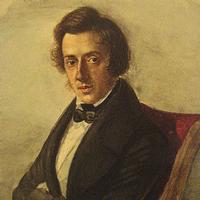
Frédéric Chopin
composer
Frédéric Chopin (1810–1849) was a Polish composer and virtuoso pianist of the early Romantic period. He wrote almost exclusively for the piano and remains one of its defining poetic voices.

Rita Reichman
piano
Many of the world's finest pianists became specialists in interpreting one composer or period, but Rita Reichman is outstanding for the breadth of her repertoire. Her concerti include Ravel, Bartok, Mozart, Tchaikovsky and Schumann.
Digital booklet
Digital booklet Notes, texts and credits — read online or download the PDF Download the PDFPerformers
- Rita Reichman · piano
Technical credits
-
Contributor
Ben Chong
Robyn Barrett
Serge Thomann
-
Producer
Maria Vandamme
-
Recording Engineer
Richard Girvan
-
Venue
ABC Studios, Melbourne
Details
- List price
- $25.00 AUD
- Total playing time
- 63 minutes 26 seconds
- Release date
- 1998
- Categories
- Classical, Keyboard
- Musical work copyright
- © 1998 Move Records
- Sound recording copyright
- ℗ 1998 Move Records
- Catalogue
- MD 3214
- EAN
- 9314574321425
More to explore

Chopin: Complete Ballades and Scherzi
Having successfully recorded Chopin's complete études, pianist Ian Holtham turns to the four ballades and four scherzi: eight large-scale works among the composer's most individual, characteristic and dramatic pieces.

Ronald Farren-Price Plays Chopin
With a virtuosity that has become the hallmark of his performing career, Farren-Price pays tribute to the creative genius of Frédéric Chopin in this carefully selected programme.

Chopin Showcase
Ian Holtham, piano. The genesis of this recording was to assemble a number of the composer’s most attractive and original works as a mark of homage to one of the most outstandingly innovative and important composers for the piano who has ever lived.

Chopin: The Nocturnes
Pianist Nancy Tsou (pronounced "Zo") brings rare intensity to Chopin's nocturnes. She hears in this night music what few performers catch, and a lifelong devotion to the composer shapes every phrase.
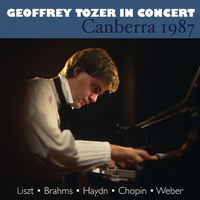
Geoffrey Tozer in Concert: Canberra 1987
This live recording of pianist Geoffrey Tozer was made in June 1987, during a series of four recitals marking his twenty-fifth anniversary as a performer.

Kevin Kanisius Suherman presents Schimmel Konzert 219
Kevin Kanisius Suherman presents the new Schimmel Konzert 219 concert grand in a recital that sets Romantic and early twentieth-century piano works beside his own arrangements of Indonesian song.