Alban Berg
Alban Berg joined late-Romantic lyricism to twelve-tone method in a small, intense body of work. Operas, chamber scores and songs carry expressionist feeling inside tightly organised forms, from the early Piano Sonata to the Four Pieces for clarinet and piano.
The Four Pieces, Op. 5, take only minutes yet move through wistful melancholy, flighty brilliance and almost funereal stillness, with clarinet colours that include echo tones and flutter-tonguing. The Piano Sonata, Op. 1, builds a whole movement world from a single opening gesture. Larger works such as Wozzeck, Lulu, the Lyric Suite, the Chamber Concerto and the Violin Concerto keep the same balance: tonal memory and quotation sit inside serial organisation, so the music can sound glamorous and human without loosening its structure. Berg’s writing favours developing variation and hidden programmes, and it remains among the most often played of the Second Viennese School.
Alban Berg is featured on the following titles
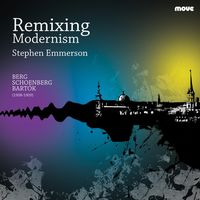
Remixing Modernism
A unique experiment by Stephen Emmerson: this two-CD set presents the same 1908–1909 piano repertoire with contrasting styles of mixing and sound production, from traditional to modern.
Compositions by Alban Berg also appear on

Liquid Crystal
Clarinetist Luke Carbon and pianist Alex Raineri offer a varied duo programme spanning Brahms, Berg, Beach, Bernstein and Elliott Gyger, framed as a personal mixtape of cherished clarinet and piano works.