Arvo Pärt
Arvo Pärt writes spare, slowly unfolding music built on tintinnabuli: simple triads and unadorned lines that ring like bells. Sacred texts and contemplative chamber pieces sit at the centre of the style that made him one of the most heard living composers.
After early serial and collage experiments he turned to plainsong, Renaissance polyphony and Orthodox liturgy, and the music that followed is rhythmically plain, often static in tempo, and built from few notes held in clear relationship. Fratres, heard here for cello and piano, releases power through repetition and control rather than display. The Sieben Magnificat-Antiphonen demand extreme choral discipline and colour; Hymn to a Great City, for two pianos, offers monumental calm against more driven minimalism. Much of the later catalogue sets Latin or Church Slavonic; the sound is often described as luminous, numinous, or unsettling under its surface stillness.
Compositions by Arvo Pärt appear on
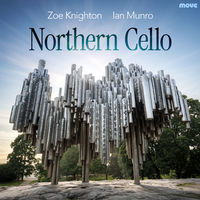
Northern Cello
Music for cello from northern European composers. Zoe Knighton and pianist Ian Munro centre the programme on Grieg’s romantic sonata, with Sibelius’s Op. 78 pieces, Vasks’s solo Gramata Cellam and Pärt’s Fratres.
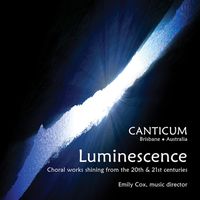
Luminescence
Light is integral to colour, and musical integrity is often described in terms of its colour or luminescence. Celebrating Canticum’s 21st birthday, the programme seeks composers whose music shows a particular sensitivity to the choral instrument and to beautiful text.