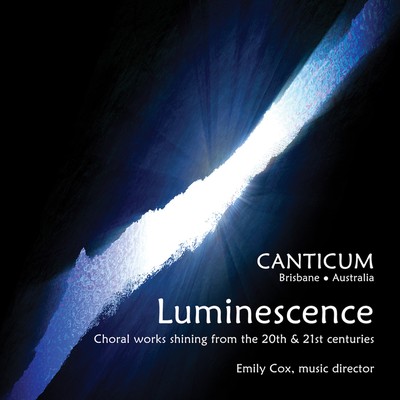
Listen & tracks
12 works · 61:08
-
1 Ubi Caritas Ola Gjeilo 3:33
-
2 Sure on this Shining Night Morten Lauridsen 5:19
-
3 Stars Ēriks Ešenvalds 5:38
-
4 Only the Light Phillip Gearing 3:55
-
5 Ubi Caritas Paul Mealor 3:15
-
6 The Waking Giselle Wyers 3:19
-
7 The Fleeing Child is Jesus Fredrik Sixten 3:25
-
8 Ubi Caritas Joseph Twist 4:43
-
9 Choose Something Like a Star Randall Thompson 7:06
-
Sieben Magnificat-AntiphonenArvo Pärt 7 movements11:51
- 10 O Weisheit 1:32
- 11 O Adonai 2:12
- 12 O Sproß aus Isais Wurzel :50
- 13 O Schlüssel Davids 1:55
- 14 O Morgenstern 1:39
- 15 O König aller Völker 1:26
- 16 O Immanuel 2:17
-
17 Ecce Beatam Lucem David Hamilton 2:54
-
18 Light Keren Terpstra 6:10
Canticum is directed by Emily Cox, one of Australia’s most respected choral conductors and the founding director of Canticum Chamber Choir. The choir is accompanied by Christopher Wrench.
Recorded at St Peter’s Lutheran College Chapel in Brisbane, the programme gathers 20th- and 21st-century sacred and secular works on the theme of light. Arvo Pärt’s Sieben Magnificat-Antiphonen stands at its centre, with new pieces by choir members Phillip Gearing and Keren Terpstra.
In the artist’s words
Light is integral to colour, and musical sonority is often described in terms of its colour or luminescence.
In creating this collection to celebrate Canticum’s 21st birthday year, I sought composers whose music reflects a particular sensitivity to the versatility of the choral instrument, and which celebrates beautiful text. This collection of 20th and 21st century music includes works from Australia and New Zealand, Europe and the United States. Although Canticum’s repertoire stretches from the renaissance to the present day, it is composers of our time who captured my desire early on to explore musical light and shade. We are fortunate to have talented composers associated with the ensemble, and are proud to present their music here. We have also included composers who are far-off colleagues, or who have been a significant part of Canticum’s musical journey.
While the broad categories of sacred and secular music are represented in this recording, to me, these borders easily blur – all the music is deeply spiritual, whether in a religious or liturgical sense, or in a more humanistic sense. Nature, emotion, the life cycle, and the journey of the human spirit are integral to the music in this collection, as are the extremely tender and colourful settings of exquisite text.
Reviews
What you see here is exactly what you get: contemporary choral music from across the world – New Zealand, Estonia, the United States, Latvia, Norway (sort-of), Sweden, and Australia. The choir Canticum itself is new to me although it has been in existence for 21 years; in fact, this CD is a 21st birthday celebration. With founding conductor Emily Cox, the ensemble is currently in residence at St. Mary’s Anglican Church, Kangaroo Point in Brisbane...Cox and her cohorts adopted the over-arching theme of light; in this instance, light generated by sources that need no heat to do their work. This refers, I suppose, to the static nature of scores which, in themselves, have no physical energy. Canticum’s task is to generate the luminous – sometimes, the numinous – by their efforts and, for a good deal of the time, this works. Of the 16 tracks, three contain settings of the Maundy Thursday antiphon Ubi caritas, seven comprise the Magnificat-Antiphons of Arvo Part, another is New Zealander David Hamilton’s version of the Ecce beatam lucem text best known for its 40-part setting by Alessandro Striggio, and Swedish composer Fredrik Sixten uses the chant Veni, veni Emmanuel in his refugee-remembering The Fleeing Child is Jesus to a text by Norwegian poet Emil Skartveit. The remaining six works fall under the general heading of celebrations of nature, or even God-in-nature. In sum, Cox and Canticum have given us an interesting miscellany including some pieces that are pretty familiar to those who have an interest in the field of contemporary choral composition and some rarities, even for the well-informed.
Luminescence was recorded to celebrate the 21st birthday of Canticum, a Brisbane–based semi-professional chamber choir. Canticum has performed with the Queensland Symphony Orchestra, Queensland Youth Symphony Orchestra, Queensland Ballet, and at Brisbane Festival, Queensland Music Festival and the last two Brisbane Baroque Festivals. They also sang at the 2005 World Symposium on Choral Music in Kyoto. For this recording, the music director, Emily Cox, who founded the choir in 1995, selected well-established pieces by contemporary Australian, Kiwi, North American and European composers, and also included two recent works composed by members of the choir itself: Phillip Gearing’s Only the Light and Keren Terpstra’s Light, which contribute to the interest of this CD. The magnificent Sieben Magnificat-Antiphonen (1988/-1991) by the Estonian, Arvo Pärt is the centrepiece of the programme – a very challenging work for any choir. Pärt’s huge influence on contemporary choral writing is evident in many of the other pieces on the CD too. The oldest work on the disc is the renowned Choose Something Like a Star from 1959 by Randall Thompson (no obvious influence by Pärt here), and the rest are by living composers. American-born Cox studied at Queensland Conservatorium and overseas with noted conductors including Eric Ericson, Frieder Bernius and most recently, Simon Halsey in Berlin. She also conducts the symphonic choir, Brisbane Chorale. All the lyrics refer in some way to light, hence “Luminescence”. Unfortunately the texts and translations are not included in the CD booklet and one needs to visit Canticum’s website to find them (canticum.org.au) – regrettably this has become the new norm with CDs. Cox explained in the CD notes that she also deliberately chose works that exploited the huge range of sonorities that “the choral instrument” (her words) is capable of producing, and the effects are often stunning, as in Stars (2011) by the Latvian Ēriks Ešenvalds, Ecce Beatum Lucem (2012) by David Hamilton and the Pärt Magnificat – Antiphonen (1988/1991). Her selection gives one a taste of how choral traditions have evolved over the past fifty years, especially with regard to the treatment of dissonance. The character of the works is spiritual, and there is a lot of similarity in the choices. I would have enjoyed more variety but perhaps the prayerful effect was deliberate. The performances are all solid if not outstanding. More conviction and emotional connection is needed in the singing, but available rehearsal time can present problems with non-professional choirs and this repertoire is particularly challenging. So though I was never blown away by the sound, I still enjoyed hearing so many recent works well sung on one CD. The intonation suffered in some of the Pärt Antiphons, which would have benefitted from a fuller tone and definitely needed a more fervent expression. The acoustics in St.Peter’s Lutheran College Chapel in Brisbane, where the recording was made, were sympathetic to all but the Pärt. His huge chords become even more amazing in a larger cathedral when they echo through the rests he uses so frequently.
The CD starts with three standards, very well-sung with a warm resonant timbre and confidence: the beautiful Ubi Caritas (2001) by the renowned Ola Gjello (Norwegian) with some excellent unison singing at the start, then Morten Lauridsen’s Sure on this Shining Night (2005) and Ešenvalds’ Stars, which magically evokes the majesty of a star-filled night sky. Tuned glasses and Tibetan bowls as accompaniment add wonderful harmonics to the choral sound. Paul Mealor’s Ubi Caritas, Fredrik Sixten’s The Fleeing Child is Jesus and Ubi Caritas by Joseph Twist are all very satisfying pieces, whilst The Waking of Giselle Wyers is a rather lightweight work by comparison, and the soprano tone was rather thin. David Hamilton’s Ecce Beatum Lucem (2012) by contrast was given a full-throated energetic rendition. The two pieces by the members Gearing and Terpstra, were both well-constructed and attractive and written specifically for Canticum. One looks forward to hearing more of their work. The renowned Brisbane-based organist, Christopher Wrench provides the fine piano accompanying in the Lauridsen, Wyers and Thompson. He has worked closely with Canticum since its inception.
Artists
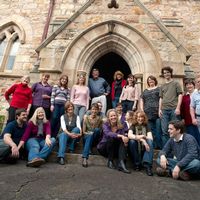
Canticum Chamber Choir
ensemble
Canticum Chamber Choir is an independent semi-professional choir based in Brisbane. Formed in 1995 with Emily Cox as its founding Music Director, its members are skilled amateur musicians, some with formal musical training and others professionals in other fields.
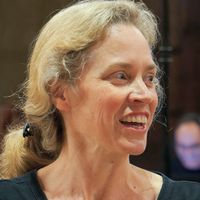
Emily Cox
conductor
Emily Cox AM is a leading Australian choral conductor and music director. She directs Canticum Chamber Choir and Brisbane Chorale, and lectures in choral studies at the Queensland Conservatorium Griffith University.

Ēriks Ešenvalds
composer
Ēriks Ešenvalds’s choral writing favours luminous harmony, clear textures and a contemplative response to nature and sacred text. Works such as Stars show how carefully he colours the choir’s sound.
Phillip Gearing
composer
Ola Gjeilo
composer
David Hamilton
composer
David Hamilton writes choral music built for real voices: school, youth and community choirs as much as the concert stage. His settings favour clear text, luminous harmony and the full colour range of the choral instrument, as in his Ecce beatam lucem.
Morten Lauridsen
composer
Morten Lauridsen is an American composer of choral music. His motets and vocal cycles, including O magnum mysterium and Sure on this Shining Night, are sung throughout the world.
Paul Mealor
composer
Arvo Pärt
composer
Arvo Pärt writes spare, slowly unfolding music built on tintinnabuli: simple triads and unadorned lines that ring like bells. Sacred texts and contemplative chamber pieces sit at the centre of the style that made him one of the most heard living composers.
Fredrik Sixten
composer
Keren Terpstra
composer
Keren Terpstra is an Australian composer of contemporary sacred choral music. Her short works have been written for, and recorded by, Brisbane chamber choirs.
Randall Thompson
composer
Joseph Twist
composer
Joseph Twist composes across choral, orchestral, stage and screen music. Sacred settings and concert works sit alongside film and television scores, with a steady focus on voices, text and liturgical colour.
Giselle Wyers
composer
Digital booklet
Digital booklet Notes, texts and credits — read online or download the PDF Download the PDFPerformers
- Canticum Chamber Choir · ensemble
- Emily Cox · conductor
- Christopher Wrench · piano · tracks 2, 6 and 9
Technical credits
-
Recording Engineer
David Starr
-
Editing Engineer
David Starr
-
Mastering Engineer
David Starr
-
Venue
St Peter’s Lutheran College Chapel, Indooroopilly, Brisbane
Details
- List price
- $25.00 AUD
- Total playing time
- 61 minutes 8 seconds
- Release date
- 1 Dec 2016
- Category
- Choral
- Musical work copyright
- © 2016 Canticum Chamber Choir
- Sound recording copyright
- ℗ 2016 Move Records
- Catalogue
- MCD 558
- EAN
- 9314574055825
More to explore
Joy to the World
Christmas at the Sydney Town Hall, presented annually by the City of Sydney, began in 1978 when Robert Ampt became the fourth Sydney City Organist. The event has since grown into one of the city’s major Christmas celebrations.
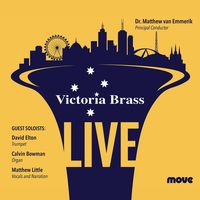
Victoria Brass Live
A top-class Australian brass band under Matthew van Emmerik in a full, varied programme of innovative repertoire: two world premieres, three Australasian premieres, and some well-loved classics.
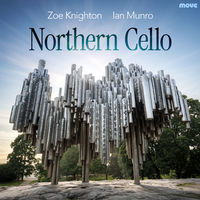
Northern Cello
Music for cello from northern European composers. Zoe Knighton and pianist Ian Munro centre the programme on Grieg’s romantic sonata, with Sibelius’s Op. 78 pieces, Vasks’s solo Gramata Cellam and Pärt’s Fratres.
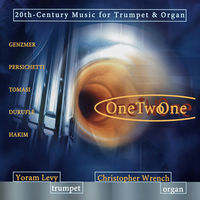
One Two One
Yoram Levy (trumpet) and Christopher Wrench (organ) explore the contrasting textures and styles of twentieth-century works by Genzmer, Tomasi, Persichetti, Duruflé and Hakim.