John Greenleaf Whittier
John Greenleaf Whittier’s verse lives on in the hymn book: calm, plain-spoken lines that ask for stillness, pity, and fellowship. Dear Lord and Father of Mankind and O Brother Man are the texts most often sung from his work.
An American Quaker poet of the nineteenth century, Whittier wrote for conscience as much as for the page. Anti-slavery poems and New England narratives made his name; later readers kept the quieter stanzas that fit worship. Dear Lord and Father of Mankind comes from the close of The Brewing of Soma, where the noise of false ecstasy gives way to ordered peace and a plea to be taken back to simple trust. Set to Parry’s Repton, it has become a standard of measured devotion. O Brother Man folds doctrine into neighbourly duty: right worship is love of one another, each kindness a prayer. On these recordings the words stand among other well-known hymns, carried by choir and organ rather than by literary reputation. The diction stays direct, the moral tone warm without ornament, and the music finds in that plainness room to breathe.
Compositions by John Greenleaf Whittier appear on
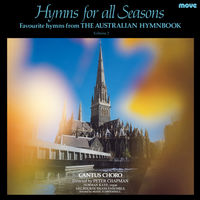
Hymns For All Seasons
Sixteen further hymns from Cantus Choro, recorded in the grand acoustic of St Patrick's Cathedral, Melbourne. The programme opens with Advent and follows the great events of the Christian year, with Norman Kaye at the organ and the Melbourne Brass Ensemble.
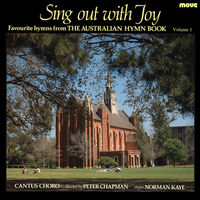
Sing Out With Joy
Cantus Choro, directed by Peter Chapman, sings seventeen favourite hymns from the Australian Hymn Book. Norman Kaye’s imaginative organ accompaniments give the well-known settings fresh dramatic shape and room for the choir to breathe.