Nicolas Le Bègue
Nicolas Lebègue wrote French Baroque keyboard music that helped define the organ school: independent pedal parts, the tierce en taille, early unmeasured harpsichord preludes, and some of the first published noëls.
His surviving reputation rests on five published keyboard collections. The organ suites cover the eight modes and treat the instrument as a colourful, multi-manual machine rather than a continuo support: trios for two right-hand parts and left hand, récits with the tierce singing in the tenor range, and Christmas variations that are among the earliest of their kind. The harpsichord books continue the line of Chambonnières and Louis Couperin, but lean toward shorter forms and clearer suite order—allemande, courante, sarabande, gigue—without the fanciful titles common in the French school. His unmeasured preludes, the first of the type to reach print, use mixed note values so the free opening gestures read more simply than Couperin’s. Motets for the nuns of Val-de-Grâce give the organ a concertante role in places instead of plain continuo. On record he often appears through a single noël or suite movement, a brief window on a style built for liturgy, colour, and clear dance rhythm.
Compositions by Nicolas Le Bègue appear on
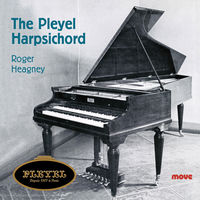
The Pleyel Harpsichord
Roger Heagney plays one of the last harpsichords made by the French Pleyel piano company (1963). Founded in 1807, Pleyel built pianos until 2014. The Concert Grand Harpsichord offers a distinctive sound and seven-pedal colour.
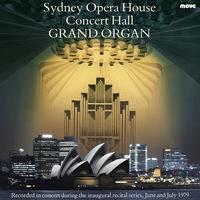
Sydney Opera House Concert Hall Grand Organ
Historic recordings from the 1979 inaugural recital series that launched the Sydney Opera House Concert Hall Grand Organ, Ronald Sharp’s vast mechanical-action instrument.