Listen & tracks
6 works · 47:53
-
Suite in A majorGeorge Frideric Handel 4 movements11:56
- 1 Präludium 2:06
- 2 Allemande 3:36
- 3 Courante 2:43
- 4 Gigue 3:31
-
Prelude en D la re solNicolas Le Bègue 7 movements15:01
- 5 Prelude 2:09
- 6 Allemande 3:09
- 7 Courante - grave 1:36
- 8 Courante - gaye 1:22
- 9 Sarabande 2:20
- 10 Gavotte :55
- 11 Chaconne - grave 3:30
-
12 Les Baricades Mistérieuses (Sixième Ordre) François Couperin 2:47
-
13 Passacaille (Huitième Ordre) François Couperin 7:03
-
Sonata in C minorBaldassare Galuppi 2 movements5:07
- 14 Larghetto 2:23
- 15 Allegro 2:44
-
Sonata in C majorBaldassare Galuppi 2 movements5:59
- 16 Andante 3:55
- 17 Allegro 2:04
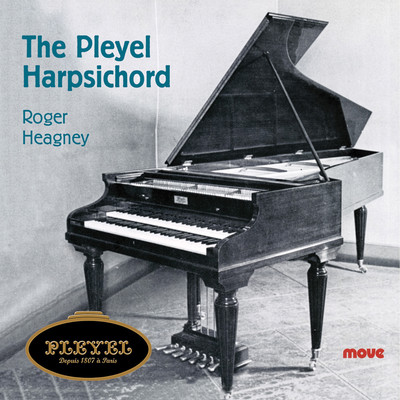
Known as the Grande Modèle Concert, this harpsichord carries the manufacture date 14 August 1963 on its keyboards. At the Paris exhibition of 1889, Pleyel and Erard showed three harpsichords loosely based on a surviving Pascal Taskin instrument. So began the harpsichord’s rebirth after almost a century of neglect, meeting a rising public interest in music of the past.
The Pleyel has been called the ultimate achievement of the piano-maker’s art: piano-like, yet undeniably a harpsichord. Over the next fifty years Pleyel is thought to have made as many as eighty such instruments.
Bought for the Canberra School of Music in 1965 and later restored in Melbourne by Alastair McAllister, who revoiced it with Delrin plectra, it was prepared for Heagney’s Harpsichord Masters programme at the 1998 Melbourne International Festival of Organ and Harpsichord. The programme pairs Handel’s Suite in A major with Nicolas Le Bègue’s Prelude en D la re sol, Couperin’s Les Baricades Mistérieuses and Passacaille, and two Galuppi sonatas.
In the artist’s words
Known as the Grande Modèle Concert, this harpsichord has the date of manufacture on its keyboards of 14 August 1963. The old French piano making companies of Pleyel and Erard, together with one Louis Tomasini, motivated by the opportunity to display French technology to the world, exhibited at the Paris exhibition of 1889 which, of course, marked the opening of the Eiffel tower. The three harpsichords exhibited were loosely based on a surviving Pascal Taskin harpsichord which had also been made in Paris in 1769, and so began the instrument’s rebirth after almost one hundred years of neglect. Serendipitously, there was an increasing public interest in the performance of ‘music of the past’, so it was surely a timely renaissance.
The Polish keyboardist, Wanda Landowska, had eloped to Paris in 1900 and began her harpsichord playing career using early model Pleyels. Her memoirs record that she was soon to decide she wanted something more and she persuaded Pleyel’s chief designer to go with her to museums and collections, to study their instruments. Eventually, after more than two years of work, Landowska played the new model harpsichord, for the first time in public, at a concert given in Breslau, Poland, in 1912. Vastly different from an original instrument, it was provided with a full cast iron frame like a piano and was also equipped with overhead dampers and seven pedals, to enable register changes without taking ones hands from the keyboards. The plectra were all hard leather, and it boasted a 16’ stop as well as an English style ‘cut through lute’ stop.
There are 4 sets of strings: 1x16’, 2x8’, and 1x4’, plucked by five registers of jacks, two working from the upper manual and three from the lower manual. There is also a ‘Buff’ stop for the upper manual, and a manual coupler.
It has been described as the ultimate achievement of the piano-maker’s art. Piano-like it may have been, but it was undeniably a harpsichord. It has been estimated that, over the next fifty years, Pleyel made as many as eighty such harpsichords; there exists an early model Pleyel in Canberra but this is the only concert grand known to be in Australia.
The restoration of this harpsichord, over two and a half years of spare time, involved (apart from a myriad other detail) a complete set of new jack tongues which have been voiced in delrin in place of the original leather. It is not possible for the listener to determine the plectra material of a harpsichord from any distance, and it is perhaps still not clear cut even under the probing ears of the microphone. However, the difference is sensed by the fingers of the player very readily indeed, and given the current fashion for authenticity, has perhaps made the instrument of more than passing interest to the historically minded performer. Nothing of the grandeur of the sound has been compromised but the change of voicing material perhaps suggests some untapped possibilities for Pleyel, had they had the opportunity to take advantage of the development of such space age products as Delrin, Celcon, low tensile iron wire and so on. Sadly, such instruments are no longer being manufactured.
Artists
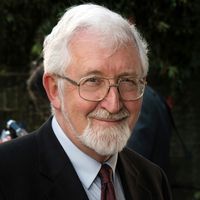
Roger Heagney
harpsichord
Roger Heagney has gained an international reputation as a pianist, harpsichordist, conductor and composer, giving recitals in Germany, France, England, Brunei and China, and appearing at festivals and on radio and television in Australia.
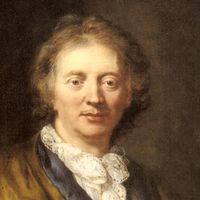
François Couperin
composer
François Couperin (1668–1733) was a French Baroque composer, organist and harpsichordist, known as Couperin le Grand. Organist to Louis XIV and to Saint-Gervais in Paris, he remains the supreme French master of the harpsichord.
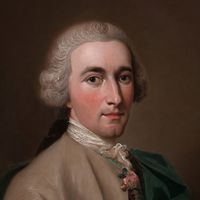
Baldassare Galuppi
composer
Baldassare Galuppi (18 October 1706 – 3 January 1785) was an Italian composer, born on the island of Burano in the Venetian Republic. He achieved international success, spending periods of his career in London and Saint Petersburg, but his main base remained Venice, where he held a succession of leading appointments.
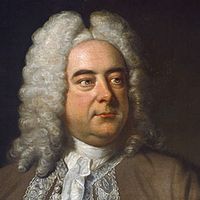
George Frideric Handel
composer
George Frideric Handel (1685–1759) was a German-born Baroque composer who settled in London and became a naturalised British subject. He is celebrated for his operas, English oratorios, organ concertos and orchestral works.

Nicolas Le Bègue
composer
Nicolas Lebègue wrote French Baroque keyboard music that helped define the organ school: independent pedal parts, the tierce en taille, early unmeasured harpsichord preludes, and some of the first published noëls.
Digital booklet
Digital booklet Notes, texts and credits — read online or download the PDF Download the PDFPerformers
- Roger Heagney · harpsichord
Technical credit
-
Contributor
Alastair McAllister
Details
- List price
- $20.00 AUD
- Total playing time
- 47 minutes 53 seconds
- Release date
- Mar 2018
- Category
- Baroque
- Genre
- Baroque
- Musical work copyright
- © 2018 Move Records
- Sound recording copyright
- ℗ 2018 Move Records
- Catalogue
- MD 3428
- EAN
- 9314574342826
More to explore
Move 50
Twenty-four Australian composers mark Move Records’ fiftieth year with short new works gathered on this commemorative disc.
Trio Polyphonica
Trio Polyphonica was active from 1980 to 1990, with a repertoire spanning more than three centuries. This recording gathers chamber trios by Vivaldi, C.P.E. Bach, Haydn, J.S. Bach and Francesco Zappa.

Masters of Baroque
Trio Polyphonica was active between 1980 and 1990, with a repertoire spanning more than three centuries. This programme presents Baroque chamber works by Frescobaldi, Hellendaal, Couperin, Leclair, Rameau and Corelli.
Peter Sculthorpe
A retrospective compilation of favourite chamber works by the late Peter Sculthorpe, drawn from Move’s own catalogue. Torres Strait song, Kakadu landscapes and intimate string writing are heard in performances by leading Australian musicians.
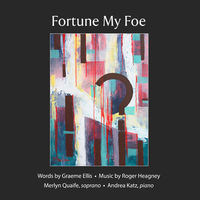
Fortune My Foe
Roger Heagney’s song cycle Fortune My Foe sets poems by Graeme Ellis. Soprano Merlyn Quaife and pianist Andrea Katz also perform Schumann’s Liederkreis, Op. 39, on this fund-raising recital.
Classical Allusion: Selected Works by Julian Yu
Julian Yu takes famous pieces from the Western musical tradition and ornaments them in the manner of Chinese folk music, until the familiar becomes something newly made.