Ross Edwards
One of Australia's best known and most performed composers, Ross Edwards lives and works in Sydney. His commitment to music as a positive and regenerative force has led him to explore beyond the confines of Western art music.
Edwards' distinctive sound-world interfuses shapes and patterns from nature with musical resources that reflect and celebrate Australia's cultural diversity. In his Maninya (dance-chant) pieces he has pursued an ideal of wholeness – a reintegration of mind, body and spirit, and a restoration to serious music of lightness, spontaneity and the impulse to dance. These works have attracted choreography, notably Stanton Welch's ballet Maninyas – based on the violin concerto of the same name – for the San Francisco Ballet and the Singapore Dance Company, and Chrissie Parrott's interpretation for the West Australian Ballet.
He is perhaps best known for his orchestral music. Works include Enyato III (1995) for the Sydney Symphony's European tour, the Concerto for Guitar and Strings (1995) for John Williams and the Darwin Symphony Orchestra, Symphony No. 2 – Earth Spirit Songs (1997) for Yvonne Kenny and the Sydney Symphony, White Ghost Dancing (1999) for David Porcelijn and the Tasmanian Symphony, and Symphony No. 3 – Mater Magna (2000) for the Melbourne Symphony. The ABC Classics recording of Symphony No. 1 – Da Pacem Domine (1991) with the Sydney Symphony won an ARIA Award in Australia and was Editor's Choice at the 1996 Cannes Classical Awards.
His music also accompanies dance and film, including the original score for Bruce Beresford's feature Paradise Road. Dawn Mantras was telecast at the dawn of the new millennium from the sails of the Sydney Opera House to worldwide acclaim.
Edwards has created a sound world aligned with deep ecology, seeking to reconnect music with elemental forces and restore its traditional association with ritual and dance. Universal in its concern with age-old mysteries, the music is deeply rooted in Australia: it celebrates cultural diversity and draws inspiration from the natural environment, especially birdsong and the patterns and drones of insects. Living and working on the Pacific Rim, he is conscious of the potential of that vast region.
He has composed prolifically across most genres. Some concert works allow for lighting, movement and costume, among them the Fourth Symphony Star Chant and Frog and Star Cycle, a concerto for Amy Dickson, Colin Currie and the Sydney Symphony. Later works include Dances of Life and Death for the Sydney Conservatorium Wind Symphony, Singing the Love for The Choir of King’s College, Cambridge, and Vespers for Mother Earth for the Judith Neilson Institute.
Compositions by Ross Edwards appear on
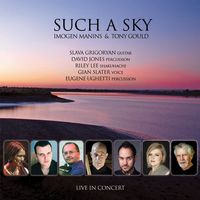
Such a Sky
Such a Sky gathers live Salon performances from the Melbourne Recital Centre. Cellist Imogen Manins and pianist Tony Gould are joined by Slava Grigoryan, David Jones, Gian Slater, Riley Lee and Eugene Ughetti.
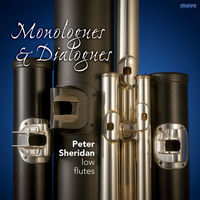
Monologues & Dialogues
This recording features the resonant, meditative colours of modern low flutes. Austere, breathy and at times eerie, these deep registers open a sound-world still little explored in woodwind writing, and invite a wide range of musical imaginings.
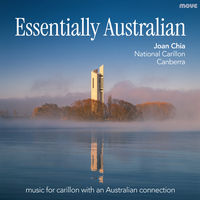
Essentially Australian
A programme of original compositions for carillon, with transcriptions and arrangements that share an Australian connection, played on Canberra’s National Carillon.
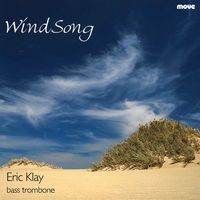
WindSong
Eric Klay brings his bass trombone centre-stage in a varied selection of stylish classic, contemporary, and big band pieces.
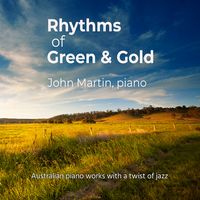
Rhythms of Green and Gold
John Martin’s solo piano recital gathers nineteen short works by ten Australian composers, from ragtime and blues to waltz and jazz-tinged lyricism.