Shirley Jacobs
Shirley Jacobs (1927-2015), whose records and TV appearances made her one of Australia's best-known guitar-strumming folksingers during the 1970s, embraced the instrument almost by accident. Today, Shirley's voice can still be heard on at least ten albums, on websites devoted to the nation's musical heritage.
Born in Euroa as Shirley Gilbert, the youngest child of a former British army officer, she was a voracious reader and champion speller at school. She was also a natural entertainer and often in trouble for acting the clown in class. At age 15 Shirley enrolled in Melbourne's Stotts Business College, later found work as a legal secretary, and at 18, married a dentist, Horst Jacobs. She was divorced in 1966, but kept Jacobs as her professional name throughout her musical career.
During the 1960s there were coffee shops with folk singers springing up across inner Melbourne and Shirley was convinced she sounded better, and looked more attractive, than the men with goatee beards and skivvies she had seen singing Irish sea shanties. She felt she could bring something different to the scene and, lamenting that a lot of Australian folk material was old and tired, she collaborated with another local musician, Ade Monsbourgh, to put a selection of Henry Lawson's poems to music.
It was a tough time for female folksingers but Jacobs was no pushover. She could be fiery and relentlessly defiant, refusing to back down if confronted by what she believed to be an injustice. Shirley signed with local label Crest Records and released three albums, 'Endless Highways' (1967), 'Dublin To Bungaree' (1968) and 'Bush Girl' (1969).
Her talent and persistence finally led to a major recording contract with RCA records. After searching for more material, she decided to write her own, mainly about social and topical issues – the West Gate Bridge collapse, the Skipping Girl neon sign when it looked bound for the rubbish heap and people with disabilities – to name a few. Her RCA album releases were 'Australia's Shirley Jacobs (1970), 'A Voice From The City: A Tribute To Henry Lawson' (1972), 'Country Girl' (1974) and 'Songs Of Love And Freedom' (1975).
She published a songbook and toured, appearing at music festivals, schools and in concerts, and her passionate beliefs saw her singing on stage during the huge anti-Vietnam-war protests led by Jim Cairns in the early 1970s. On the eve of the 1972 election, Jacobs appeared as warm-up at a gathering of Labor supporters at St Kilda Town Hall. The crowd went wild as she strummed a final chord and Gough Whitlam strode onto the stage to give his "Men and Women of Australia" speech. By this time she was appearing regularly on television, on children's shows and performing weekly satirical songs for the ABC's This Day Tonight with often only hours to turn the subject matter into original verse.
Shirley Jacobs is featured on the following titles
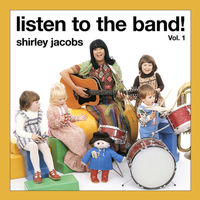
Listen to the Band, Vol. 1
It has been apparent for some time that of all the children’s records available, many styles of music have been neglected. That gap is the reason this series was begun.