Listen & tracks
2 of 46 tracks have a preview · 46 works · 87:54
-
1 Nun komm, der Heiden Heiland, BWV 599 Johann Sebastian Bach 1:52
-
2 Gott, durch deine Güte, or Gottes Sohn ist kommen, BWV 600 Johann Sebastian Bach 1:24
-
3 Herr Christ, der ein'ge Gottes-Sohn, or Herr Gott, nun sei gepreiset, BWV 601 Johann Sebastian Bach 2:03
-
4 Lob sei dem allmächtigen Gott, BWV 602 Johann Sebastian Bach 1:06
-
5 Puer natus in Bethlehem, BWV 603 Johann Sebastian Bach 2:03
-
6 Gelobet seist du, Jesu Christ, BWV 604 Johann Sebastian Bach 2:02
-
7 Der Tag, der ist so freudenreich, BWV 605 Johann Sebastian Bach 2:03
-
8 Vom Himmel hoch, da komm ich her, BWV 606 Johann Sebastian Bach :54
-
9 Vom Himmel kam der Engel Schaar, BWV 607 Johann Sebastian Bach 1:42
-
10 In dulci jubilo, BWV 608 Johann Sebastian Bach 1:30
-
11 Lobt Gott, ihr Christen allzugleich, BWV 609 Johann Sebastian Bach 1:01
-
12 Jesu, meine Freude, BWV 610 Johann Sebastian Bach 3:06
-
13 Christum wir sollen loben schon, BWV 611 Johann Sebastian Bach 2:54
-
14 Wir Christenleut', BWV 612 Johann Sebastian Bach 1:26
-
15 Helft mir Gottes Güte preisen, BWV 613 Johann Sebastian Bach 1:32
-
16 Das alte Jahr vergangen ist, BWV 614 Johann Sebastian Bach 2:05
-
17 In dir ist Freude, BWV 615 Johann Sebastian Bach 2:48
-
18 Mit Fried und Freud ich fahr dahin, BWV 616 Johann Sebastian Bach 2:20
-
19 Herr Gott, nun schleuss den Himmel auf, BWV 617 Johann Sebastian Bach 2:45
-
20 O Lamm Gottes, unschuldig, BWV 618 Johann Sebastian Bach 4:04
-
21 Christe, du Lamm Gottes, BWV 619 Johann Sebastian Bach 1:13
-
22 Christus, der uns selig macht, BWV 620 Johann Sebastian Bach 2:15
-
23 Da Jesus an dem Kreuze stund, BWV 621 Johann Sebastian Bach 1:54
-
24 O Mensch, bewein dein Sünde gross, BWV 622 Johann Sebastian Bach 5:11
-
201 Wir danken dir, Herr Jesu Christ, BWV 623 Johann Sebastian Bach 1:03
-
202 Hilf, Gott, dass mirs gelinge, BWV 624 Johann Sebastian Bach 1:33
-
203 Christ lag in Todesbanden, BWV 625 Johann Sebastian Bach 1:56
-
204 Jesus Christus, unser Heiland, BWV 626 Johann Sebastian Bach 1:04
-
205 Christ ist erstanden, BWV 627 Johann Sebastian Bach 4:17
-
206 Erstanden ist der heilige Christ, BWV 628 Johann Sebastian Bach :57
-
207 Erschienen ist der herrliche Tag, BWV 629 Johann Sebastian Bach 1:10
-
208 Heut triumphiret Gottes Sohn, BWV 630 Johann Sebastian Bach 1:55
-
209 Komm, Gott Schöpfer, heiliger Geist, BWV 631 Johann Sebastian Bach :58
-
210 Herr Jesu Christ, dich zu uns wend, BWV 632 Johann Sebastian Bach 1:30
-
211 Liebster Jesu, wir sind hier, BWV 633 Johann Sebastian Bach 1:41
-
212 Liebster Jesu, wir sind hier, BWV 634 Johann Sebastian Bach 1:41
-
213 Dies sind die heil'gen zehn Gebot, BWV 635 Johann Sebastian Bach 1:25
-
214 Vater unser im Himmelreich, BWV 636 Johann Sebastian Bach 1:34
-
215 Durch Adams Fall ist ganz verderbt, BWV 637 Johann Sebastian Bach 2:17
-
216 Es ist das Heil uns kommen her, BWV 638 Johann Sebastian Bach 1:17
-
217 Ich ruf zu dir, Herr Jesu Christ, BWV 639 Johann Sebastian Bach 2:43
-
218 In dich hab' ich gehoffet, Herr, BWV 640 Johann Sebastian Bach 1:18
-
219 Wenn wir in höchsten Nöten sein, BWV 641 Johann Sebastian Bach 1:48
-
220 Wer nur den lieben Gott lässt walten, BWV 642 Johann Sebastian Bach 1:46
-
221 Alle Menschen müssen sterben, BWV 643 Johann Sebastian Bach 1:57
-
222 Ach wie flüchtig, ach wie nichtig, BWV 644 Johann Sebastian Bach :51
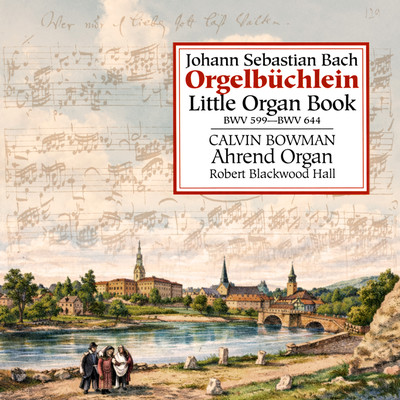
Calvin Bowman exhibits a self-confessed passion for the music of J.S. Bach, and it shows in this performance of the Little Organ Book on the Ahrend organ in Robert Blackwood Hall, Melbourne.
This mature reading is the first step toward his goal of recording Bach's complete organ and harpsichord works.
The Orgelbüchlein is a record – suspended for all time – of Bach's inspired improvisations on existing hymn tunes. These written-down improvisations open a window onto Bach's brilliance as both composer and performer. In this microcosm of imaginative invention, the Baroque master expresses a richness of invention and symbolism rarely seen in earlier works.
Complete with German and English text and organ registrations, the release is an inviting introduction for performer and listener alike to the genius of Bach's organ music.
In the artist’s words
The phrase ‘… how to accomplish a chorale in all kinds of ways …’ suggests that the Orgelbüchlein may be seen not only as a guide to performance and composition, but even improvisation of chorale preludes. Bach's skills in improvisation were legendary in his own day, and his fame rested on his abilities as a performer rather than a composer. It is quite feasible to suggest that most of these chorale preludes may be written-down improvisations. It is more difficult to ascertain whether or not these pieces served a larger function in that they may have been used in an appropriate liturgical setting, as preludes to a congregational hymn, or as voluntaries at the conclusion of a service. The pedagogical nature of the works (‘… to become practised in the study of pedalling …’) certainly cannot be denied, however.
Almost all of the chorale preludes contained in the Orgelbüchlein were written during Bach's Weimar period. The chorales used in the collection are probably taken from a Thuringian hymn book published almost ten years before Bach's birth. From this base, Bach maps out various chorale preludes for use at certain times throughout the Christian calendar.
It is a somewhat melancholic exercise to browse through a facsimile of the original manuscript. To begin with, Bach planned for one hundred and sixty-four chorale preludes, but only forty-six were ever completed, with a tantalising fragment of a forty-seventh. Reasons given for the incomplete state of the collection have been many and varied over the years. Schweitzer's claim that the unset chorale texts lack ‘the strong pictorial or characteristic quality’ of the completed chorale preludes must be dismissed immediately. Blank pages which bear titles such as ‘Nun ruhen alle Wälder’ and ‘Wie schön leuchtet der Morgenstern’, to name a couple, refute that theory. Another reason put forward to explain the missing chorale preludes is that when Bach resigned from his post as organist in Weimar, his compositional thought turned to other areas. While this may be partially true, it doesn't satisfactorily explain the existence of many miscellaneous chorale preludes, nor the mighty Clavierübung III chorale preludes, which were written after this time. I believe that the most plausible reason for the gaps in the manuscript is simply that Bach had exhausted the structural possibilities for the small organ chorale prelude. Many pieces in the Orgelbüchlein are no longer than a page, and many exploit a single motif underneath the cantus firmus, which is often in the soprano. The Orgelbüchlein, furthermore, is a logical step forward from the recently discovered Neumeister chorale preludes, while in turn Clavierübung III is a logical step from the Orgelbüchlein. Such comparisons show that Bach was constantly searching for perfection. The fact that Bach went to the trouble of revising a couple of works from the Orgelbüchlein (BWV 620 and 631) around 1740 is further evidence of this search.
The Orgelbüchlein has been the staple diet of organists everywhere for generations. Even within such a compact form, Bach expresses a richness of invention and symbolism rarely seen in works written before this time. These chorale preludes serve as a very accessible introduction, for performer and listener alike, to the genius of Bach's larger organ works.
Reviews
This collection of 46 chorale preludes – small-scale works and very accessible – is an excellent introduction to the genius of Bach's large organ works. Bowman gives readings that combine restraint and authority.
Calvin Bowman is acknowledged as one of Australia's finest young musicians. As well as being an outstanding organist, he is also respected as a harpsichordist and accompanist producing masterly interpretations that would do credit to a performer twice or three times his age.
Bowman's enthusiasm and commitment to Bach's keyboard music is obvious in this performance
delicious, quiet miniatures, demonstrating Bach's propensity for the reflective and intensely beautiful. Bowman shows mastery of the organ and a great love for these seductive masterpieces.
should be in every organist's library.
The recording and digital editing are excellent as is the whole presentation. The set is recommended
Artists
Johann Sebastian Bach
composer
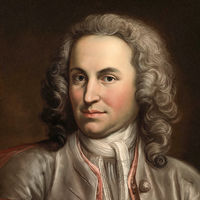
Johann Sebastian Bach (1685–1750) was a German composer and organist of the late Baroque. His sacred and secular music for choir, orchestra, organ and solo instruments remains among the foundations of the Western concert and church repertory.
Calvin Bowman
organ
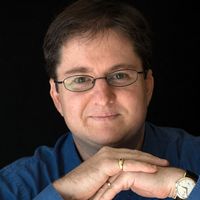
Calvin Bowman is acknowledged as one of Australia’s finest musicians: an outstanding organist, accompanist and chamber player who strives for nothing less than perfection.
Digital booklet
Digital booklet Notes, texts and credits — read online or download the PDF Download the PDFPerformers
- Calvin Bowman · organ
Technical credits
-
Producer
John O'Donnell
-
Recording Engineer
Martin Wright
Vaughan McAlley
-
Venue
Robert Blackwood Hall
-
Design
Martin Wright
-
Front cover colour treatment
Simon Wright
Details
- List price
- $25.00 AUD
- Total playing time
- 87 minutes 54 seconds
- Release date
- 1995
- Categories
- Baroque, Classical, Organ
- Genres
- Baroque, Choral & Sacred, Organ
- Musical work copyright
- © 1995 Move Records
- Sound recording copyright
- ℗ 1995 Move Records
- Catalogue
- MD 3162
- EAN
- 9314574316223
More to explore
Life and Love
Cameron Roberts plays Johann Sebastian Bach at the piano, joining original keyboard works with his own arrangements and those of Busoni and Lipatti.
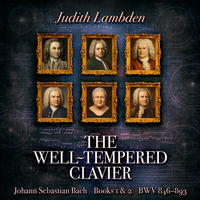
The Well-Tempered Clavier: Books 1 and 2
Distinguished Australian pianist and harpsichordist Judith Lambden presents J.S. Bach’s complete Well-Tempered Clavier, Books I and II (BWV 846–893), recorded across nine years as a five-CD set.
Bach to China with Yu
Volume 3 of Julian Yu’s clarinet music, with Robert Schubert and ensemble in arrangements that join Chinese folk melody to Western classical craft.
Crossing Paths
Ensemble Liaison and the Tony Gould Trio take turns across the programme: each piece is heard first in a scored reading, then in an improvised jazz response that opens the same melodic and harmonic material to fresh colour.
Shichiseki
Collaborations with violinist Miwako Abe and cellist Alister Barker sit beside solos written for Michael Kieran Harvey by Gabriella Vici and Andrián Pertout, spanning Japanese, Latin American and South Indian influences.
Bach Piano 2
More Bach keyboard works on piano from Judith Lambden. Of her first volume, Toby Wong praised ‘[Lambden’s] exceptional artistry … creates a compelling and vibrant musical narrative.’