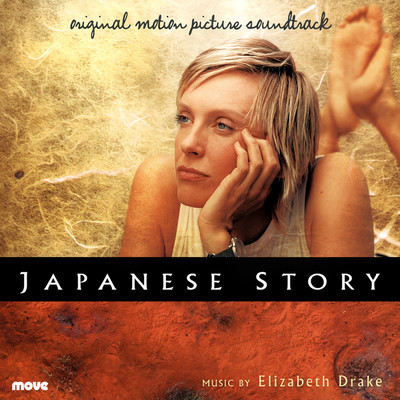
Listen & tracks
3 of 15 tracks have a preview · 15 works · 58:20
-
1 Chinsagu No Hana Elizabeth Drake 5:30
-
2 Opening Titles Elizabeth Drake 4:17
-
3 "I hate Karaoke" Elizabeth Drake 2:32
-
4 Debris in a Desert Elizabeth Drake 1:21
-
5 Hotel Elizabeth Drake 4:03
-
6 "No more map" Elizabeth Drake 1:21
-
7 "Who are you?" Elizabeth Drake 1:26
-
8 "Very old rock" Elizabeth Drake 3:15
-
9 At the Waterhole Elizabeth Drake 5:03
-
10 Driving at Night Elizabeth Drake 2:43
-
11 In the Mirror Elizabeth Drake 1:18
-
12 "I'd like to be involved" Elizabeth Drake ([Chinsagu No Hana]) 14:34
-
13 Japanese Story Elizabeth Drake ([closing credits]) 3:12
-
14 "Hiromitsu" Elizabeth Drake ([alternate At the Waterhole]) 5:06
-
15 Night Drive Elizabeth Drake ([unused]) 2:39
Winner of Best Feature Film Score at the 2004 AGSC (APRA) Screen Music Awards, Best Score at the 2003 AFI and Film Critics Circle of Australia Awards, and further ARIA and IF nominations.
Drake recognised the script of Japanese Story as a gift to the composer: cultural displacement, tragedy and transformation could be told through Japanese instruments, modes, folksong and ritual set against western orchestral writing. The score turns on the Okinawan folksong Chinsagu No Hana, heard in the hotel sequence and through the long final stretch of the film.
Two bonus tracks sit outside the Australian cut: an alternate waterhole cue used in the US print, and an unused night-drive piece. The booklet carries synopsis, producer and composer notes, and stills from the Pilbara shoot.
In the artist’s words
I knew as soon as I read the script of Japanese Story that this was a gift to the composer. Apart from the inherent strengths and fascination of the script itself, there was the opportunity for the inter-weaving and layering of elements of Japanese culture (Japanese instruments, modes, folksong and ritual) with western orchestral instruments, tonality and harmonic composition. The themes of cultural displacement, tragedy and transformation were as relevant to composition as they were to story-telling.
The first piece to find a place was the music for the opening titles. Here the idea was to suggest cultural displacement, by inter-weaving the sound of an instrument of Japanese culture, the shakuhachi, with an ancient aboriginal melody and with percussion. I wanted to suggest that we are all foreigners, trespassers on aboriginal land.
The two folksongs Asadoya Bushi and Chinsagu No Hana are traditional folksongs from Okinawa. The development of the folksong Chinsagu No Hana, with the voice, shamisen, koto and percussion together with a western string orchestra brings together many elements in the film. Chinsagu No Hana is used during the scene in the hotel and for the entire final quarter hour. This forges a connection between the characters’ first sexual encounter and the final theme of transformation through difference.
From the beginning I felt that string instruments, both Eastern and Western, would best suit the desert landscape – the desert as a vibrating string. Duration, the idea of extending and stretching time, is employed to simulate real time. I have used the ostinato pattern and its inherent use of repetition to create this effect.
Hiromitsu is an alternative piece I composed for At the Waterhole. This cue is the one heard in the American version of the film. Night Drive was an attempt to get inside Sandy’s head as she drove through the night. It has not been used.
Reviews
one of the film's many pleasures ... like another character in the film ... original, delicately played and highly emotional, Japanese Story makes for a haunting listen. ★★★★★
Drake's score forms a soundscape that successfully embodies and combines the delicate sensibility of a Japanese tea party with the shimmering ambience of the Australian outback. There are many rewards here ...
Artists

Elizabeth Drake
composer
Elizabeth Drake is a composer and sound artist for theatre, film, dance and radio. Her latest work is the award-winning soundtrack to the film Japanese Story.
Digital booklet
Digital booklet Notes, texts and credits — read online or download the PDF Download the PDFPerformers
- Shelley Scown · vocals
- Satsuki Odamura · koto, shamisen
- John Phillips · guitar
- Peter Neville · percussion
- Peter Jones · drums
Technical credits
-
Recording Engineer
Peter Winkler
Robin May
-
Mastering Engineer
Vaughan McAlley
-
Orchestration
Ricky Edwards
Details
- List price
- $25.00 AUD
- Total playing time
- 58 minutes 20 seconds
- Release date
- 27 Nov 2003
- Categories
- Australian, Orchestral, Soundtrack
- Musical work copyright
- © 2003 Gecko Films Pty Ltd
- Sound recording copyright
- ℗ 2003 Move Records
- Catalogue
- MD 3279
- EAN
- 9314574327922
More to explore
Serenades (Original Soundtrack)
Davood A. Tabrizi's haunting score for Mojgan Khadem's film Serenades was extended in the studio so the album stands alone, away from the motion picture, as a complete listening experience.
After the Deluge (Original Soundtrack)
Award-winning Australian film composer Cezary Skubiszewski’s soundtrack to the acclaimed mini-series After the Deluge. Scored for orchestra and choir, it ranges from haunting violin solos to 40s jazz, Irish airs and on-screen band pop.
The Rage in Placid Lake (Original Soundtrack)
Bossa nova meets hip hop on this soundtrack by the award-winning Australian composer of Two Hands, Bootmen and After the Deluge – Cezary Skubiszewski – complete with bonus remixes by the Melbourne outfit Jacket.
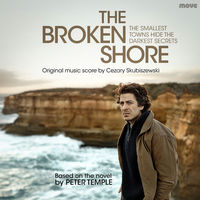
The Broken Shore
This CD won Best Soundtrack Album at the APRA/AMCOS Screen Music Awards on 12 November 2014. It is Cezary Skubiszewski’s original score for the film The Broken Shore.
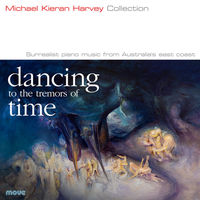
Dancing to the Tremors of Time
A collection of music reflecting the art of Mona – eclectic, surreal and powerful. Michael Kieran Harvey performs new works for solo piano by seven Australian composers.
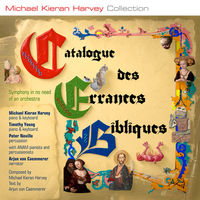
Catalogue des Errances Bibliques
Michael Kieran Harvey’s epic Catalogue des Errances Bibliques deploys eight keyboardists and four percussionists with spoken narration by Arjun von Caemmerer: twenty-five musical pieces alternating with twenty-five short narratives.