Listen & tracks
6 of 49 tracks have a preview · 2 works · 154:40
-
Winter Journey, Op. 89 (D. 911)Franz Schubert 25 movements79:17
- 1 Good Night 6:08
- 2 The Weather Vane 2:08
- 3 Frozen Tears 2:38
- 4 Numbness 2:50
- 5 The Linden Tree 4:44
- 6 Flood Water 4:25
- 7 On the River 3:33
- 8 A Look Backward 2:20
- 9 Will o’ the Wisp 3:04
- 10 Rest 3:33
- 11 Dream of Spring 4:20
- 12 Solitude 2:45
- 13 The Post 2:39
- 14 The Old Man 3:05
- 15 The Crow 2:00
- 16 Last Hope 2:08
- 17 In the Village 2:54
- 18 The Stormy Morning :54
- 19 Illusion 1:24
- 20 The Sign Post 4:40
- 21 The Inn 4:24
- 22 Courage 1:31
- 23 The False Suns 2:56
- 24 The Hurdy-Gurdy Man 4:12
- 25 The Hurdy-Gurdy Man (alternative ending) 4:02
-
Winterreise, Op. 89 (D. 911)Franz Schubert 24 movements75:23
- 201 Gute Nacht 6:10
- 202 Die Wetterfahne 2:03
- 203 Gefror’ne Tränen 2:34
- 204 Erstarrung 2:51
- 205 Der Lindenbaum 4:47
- 206 Wasserflut 4:25
- 207 Auf dem Fluße 3:37
- 208 Rückblick 2:15
- 209 Irrlicht 3:03
- 210 Rast 3:38
- 211 Frühlingstraum 4:17
- 212 Einsamkeit 2:56
- 213 Die Post 2:35
- 214 Der greise Kopf 3:03
- 215 Die Krähe 1:58
- 216 Letzte Hoffnung 2:09
- 217 Im Dorfe 2:56
- 218 Der stürmische Morgen :55
- 219 Täuschung 1:24
- 220 Der Wegweiser 4:38
- 221 Das Wirtshaus 4:26
- 222 Mut 1:29
- 223 Die Nebensonnen 3:02
- 224 Der Leiermann 4:12
Franz Schubert’s Winter Journey is widely regarded as the greatest of all song cycles for solo voice with piano, and by some as his greatest work. The cycle takes around seventy minutes and sets twenty-four poems by Wilhelm Müller (1794–1827) on unrequited love, alienation, atheism and the contemplation of suicide.
Although Winterreise stands among Schubert’s final masterpieces, it remains a youthful work in every sense. Müller wrote the poems in his late twenties, Schubert began the music just after turning thirty, and the protagonist is a recently jilted youth. That undercuts any claim that only singers who have endured decades of misfortune can perform it – a claim that gives little credit to intelligence and imagination.
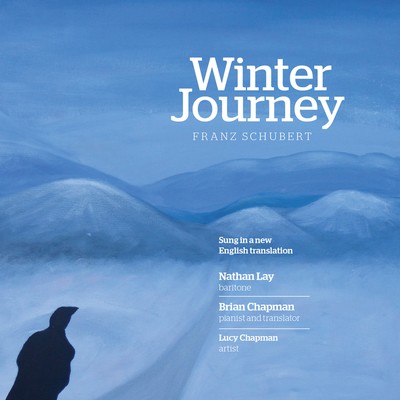
Written originally for tenor, Winterreise has since the twentieth century become at least as much the baritone’s province. Here the songs are given in keys generally lower than the tenor originals. Brian Chapman prepared a new singable English translation to widen the audience beyond those who already love the German, while his wife, painter Lucy Chapman, made twenty-four images inspired by the poems, in the line of artists such as Lotte Lehmann and Helga Kvam.
In the artist’s words
Translation into English of the rhyming poetry of Winterreise is fraught with difficulties, beginning with the common German idiom of verbal compression – the conflation of multiple concepts into a single compound word. Another difficulty derives from the fact that one is setting new words to old music and, as far as possible, the music has to remain unaltered; in the event, there are a few instances where compromise has had to be admitted, but no more significant than that already present in Schubert’s score where, in successive verses of a strophic song, the text might be articulated across the same melodic phrase with different numbers of syllables. Alignment of stressed syllables with the music’s rhythm has often necessitated a considerable degree of poetic licence in the ordering of words within sentences and phrases. Should this alignment be viewed as compromised in some instances, it should be noted that Schubert did not shrink from using a discordant, wailing three-note phrase in bar 12 of No. 6 (Wasserflut – Flood Water) to express the word “Weh” (woe) in the first verse and then using the same anguished phrase to express the preposition “auf” (in) in the second verse. The remaining major requirements have been that the general sense and specific imagery of Müller’s poems should be faithfully mirrored, while his original rhyming patterns should be matched exactly. In publishing this new translation it is a pleasure for me to acknowledge the commitment and support of Nathan Lay whose helpful observations and suggestions have resulted in substantial improvements to my initial draft. I hope that this new translation might help to widen the audience for this wonderful masterpiece.
Reviews
Here is a considerable undertaking. Baritone Nathan Lay and pianist Brian Chapman have recorded Schubert’s superlative song-cycle in two languages, the English translations by Chapman himself. As well, the CD booklet incorporates illustrations by the accompanist’s wife Lucy – one picture per lied, the art designated by its creator as Nature Surrealism. This Lay/Chapman enterprise has many attractions, the chief one being the excellent relationship between the artists which shows an unflagging empathy at work throughout both versions of the 24-part sequence. You’d expect a note-perfect rendition of each page these days, given the powers of recording studios to mask technical flaws. But you don’t expect to come across a consistent meeting of interpretative minds such as you find here. Yes, there’s a temptation to put the credit for this at Chapman’s door, given his years of chamber music experience and status as a top-class accompanist. But that would detract from the baritone’s clear, consistently lyrical line which, if it’s not at the rich timbral level of formidable male Schubert singers who graced the last century, is as satisfying and rewarding as comparable performances from his contemporaries in this country.
… an interesting double take on Franz Schubert’s greatest song cycle, Winterreise. As well as the original German version of the arrangements of Wilhelm Müller’s 24 poems, Chapman has put together his own English translation, and both are performed back to back on this classy and beautifully recorded double disc set from independent Melbourne label Move Records. Lay has an open, expressive and mellow timbre, and his experience as an operatic regular in his hometown – he won the 2016 International Opera Award among other prizes – means that he has a talent for inhabiting each stage of the hero’s tragic journey. The chemistry between singer and accompanist is strong, as is the judgement of tempo, dynamic and phrasing. Lay’s attention to the text, in both languages, is spot on and we feel we are witnessing both the stark and joyless landscape as well as the disturbing disintegration of the traveller’s mind. Attractively presented, both sets of lyrics are accompanied by Chapman’s informative notes on the musical aspect of each song as well as a painting by his wife, Dutch-born artist Lucy Chapman, and there’s a bonus track – an alternative accompaniment to The Hurdy-Gurdy Man. ★★★½
This is a lavishly presented double account of surely the finest song cycle ever written … Australian baritone Nathan Lay has a rich, full voice: expressive and with impeccable control, and his ardently youthful performances are highly pleasing … successful translations … each song is illustrated by Chapman’s artist wife Lucy … a highly worthwhile project.
Artists

Nathan Lay
baritone
Nathan Lay completed his Bachelor of Music at the Melba Conservatorium of Music in 2008, and has since established a career in the Melbourne opera, oratorio, and concert scene. He has won the National Liederfest, Australian Music Events’ Opera Scholar of the Year, the Royal Melbourne Philharmonic Aria, and placed 3rd in the Herald Sun Aria.
Franz Schubert
composer
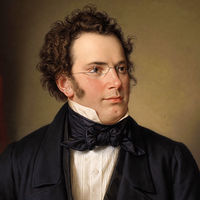
Franz Schubert (1797–1828) was an Austrian composer of the late Classical and early Romantic eras. In only thirty-one years he left a vast body of work, including over six hundred Lieder, and remains among the most frequently performed composers.

Lucy Chapman
Brian Chapman
piano
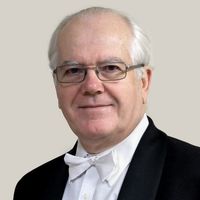
Born in England in 1944, Brian Chapman studied piano in Brisbane with Nora Baird from 1952, and in Melbourne from 1954 with Lindsay Biggins, J.A. Steele and Roy Shepherd. After obtaining his AMusA performing diploma in 1958, he discontinued piano lessons the following year for five years, returning to study with Roy Shepherd in 1964.
Digital booklet
Digital booklet Notes, texts and credits — read online or download the PDF Download the PDFPerformers
- Nathan Lay · baritone
- Brian Chapman · piano
Technical credits
-
Contributor
Lucy Chapman
-
Producer
Brian Chapman
-
Recording Engineer
Martin Wright
-
Venue
Move Records Studio
Details
- List price
- $45.00 AUD
- Total playing time
- 154 minutes 40 seconds
- Release date
- 8 Jun 2019
- Category
- Classical
- Musical work copyright
- © 2019 Move Records
- Sound recording copyright
- ℗ 2019 Move Records
- Catalogue
- MCD 594
- EAN
- 9314574059427
More to explore
Crossing Paths
Ensemble Liaison and the Tony Gould Trio take turns across the programme: each piece is heard first in a scored reading, then in an improvised jazz response that opens the same melodic and harmonic material to fresh colour.
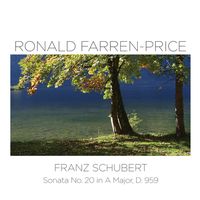
Franz Schubert: Sonata No. 20 in A Major, D. 959
Australian pianist Ronald Farren-Price brings intimacy and power to Schubert’s late Sonata No. 20 in A major, D. 959, balancing virtuosity with a deep feeling for the work’s melodic beauty and shifting moods.
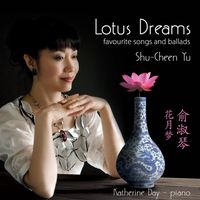
Lotus Dreams
Soprano Shu-Cheen Yu and pianist Katherine Day present eighteen favourite songs and ballads, from Brahms and Schubert to Chinese and Irish folk airs, a personal path through Lieder and art song.
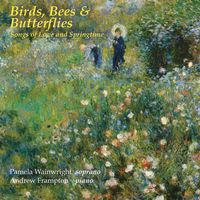
Birds Bees and Butterflies
Songs of love and springtime sung by Pamela Wainwright and accompanied by Andrew Frampton.
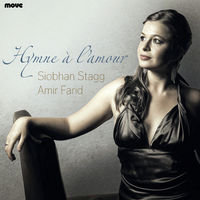
Hymne à l’amour
Hymne à l’amour is an exquisite collection of art songs from soprano Siobhán Stagg and pianist Amir Farid. The programme traces the frailty of the human condition through flirtation, deep love and heartbreaking truths.
Lady Sings the Viol
The concept behind Lady Sings the Viol was a CD of “covers”: five singers, alone and together, take songs from 1300 to the present, from Piaf and Schubert to John Paul Jones and Elena Kats-Chernin.