Listen & tracks
3 works · 64:37
-
String Quartet in D major, Op. 20, No. 4, Hob. III:34Franz Joseph Haydn 4 movements23:03
- 1 i. Allegro di molto 7:53
- 2 ii. Un poco Adagio e affettuoso 8:41
- 3 iii. Menuet alla Zingarese. Allegretto 1:41
- 4 iv. Presto e scherzando 4:48
-
String Quartet in E-flat major, Op. 20, No. 1, Hob. III:31Franz Joseph Haydn 4 movements18:35
- 5 i. Allegro Moderato 5:41
- 6 ii. Menuet. Un poco Allegretto 3:52
- 7 iii. Affettuoso e sostenuto 5:15
- 8 iv. Finale. Presto 3:47
-
String Quartet in G minor, Op. 20, No. 3, Hob. III:33Franz Joseph Haydn 4 movements22:59
- 9 i. Allegro con Spirito 6:18
- 10 ii. Menuet. Allegretto 3:56
- 11 iii. Poco Adagio 9:02
- 12 iv. Finale. Allegro di molto 3:43
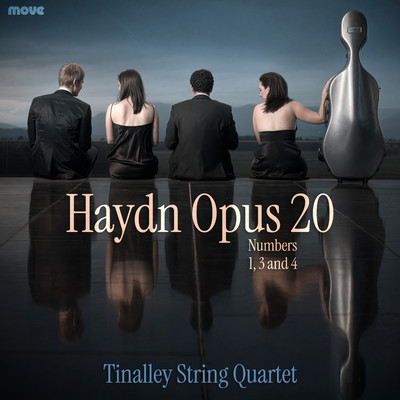
In writing his Opus 20 set of string quartets, Haydn pioneered a new voice of expression. Composed in 1772, these works heralded a new age in string quartet composition and would define a genre that would serve as an outlet for many composers’ finest contemplations.
The programme pairs three of the set — Nos. 4, 1 and 3 — recorded at Banff in January 2011 after the ensemble’s first-prize win there.
In the artist’s words
In writing his Opus 20 set of string quartets, Franz Joseph Haydn (1732–1809) pioneered a new voice of expression. Composed in 1772, these works heralded a new age in string quartet composition and would define a genre that would serve as an outlet for many composers’ finest contemplations.
Haydn’s String Quartet in D Major Opus 20, No.4 is ground-breaking for its inventiveness and expression. One can well appreciate Goethe’s famous quote as he described this new and exciting approach to string quartet writing as “four rational people conversing”. Perhaps most notable for its compositional exploration is the second movement, entitled Un poco adagio e affettuoso. Composed as a Theme and Variations, Haydn features each instrument as a solo voice, which is surprising enough, but it is the sublime, expressive lyricism of the Theme that makes this movement truly extraordinary. Haydn uses the cello, viola and 2nd violin not as accompaniment to the sustained lyricism of the principal line, but as tools for casting shades of colour and conversational interest through harmonic inflections and suspensions.
At the Theme’s return after the third variation, the addition of the sotto voce marking creates yet a different atmosphere, which is haunting in character. This carries through to the end of the movement with inspirational use of suspensions, at times lamenting with the voice of angels, culminating in a question of high importance played in unison.
Haydn continues searching, guiding us through a passage of disquiet. His use of dynamics at the end is very avant garde, even shocking, finishing dramatically and resoundingly in pianissimo.
What follows this movement is also unusual – not a typical minuet dance but a ‘gypsy’, rustic minuet which is angular and lopsided due to Haydn’s intentional displacement of the beat. But in a curious twist this serves as a welcome relief to the seriousness of the previous movement, making it a joy to play!
The String Quartet in E flat Major Opus 20, No.1 is an excellent example of how Haydn paved a new path forward, which is reflected in his advanced use of the ensemble as four equally expressive and important voices. Focusing on the development of the first movement, all voices contribute to the conversation equally, initially with a flowing descending scale then leading to intense interplay between the first violin and cello against tensely held harmonic suspensions played by the second violin and viola.
Haydn takes this idea of equality and conversation even further in the third movement. In this most profound musical offering, four voices come together in complete understanding, trust and harmony to speak as one most perfect instrument. This movement entitled Affetuoso e sostenuto is serenely plaintive, like a prayer of thanksgiving. In listening to this movement, although the listener is presented with a principal line, one is drawn in to an atmosphere created by the ensemble as a whole, with moments of clarity from each instrument or pair of instruments that shine brightly through the texture. In writing such music, Haydn developed the voice of string quartet writing and greatly influenced the future of classical music.
In the Finale, Haydn takes us away from this serene place of worship presenting the listener with a jubilant and most animated conversation. The listener is left in high spirits - the music fades away into the ether with the words “Soli Deo et cuique suum” - “To God alone and to each his own”.
The g minor quartet, Opus 20, No. 3 is a wonderfully dramatic work. It is adventurous for its choice of key, sudden outrageous outbursts and somewhat angular rhythms, coupled with unexpected interjections. It is one of two quartets in the Opus 20 set that is written in a minor key, but unlike its counterpart Opus 20 No.5 in f minor, the g minor quartet is not so immediately dark in character; apart from the dramatic opening theme, much of the exposition is in the major. It is not until we are lead through the development and on to the recapitulation that Haydn unleashes his brooding, dark side.
This sense of brooding is carried through to the second movement Minuet where the opening five bar phrase in a minor key creates an uneasy and disturbed atmosphere. This atmosphere is broken only briefly in the Trio, for it is not until the Minuet fades away into the third movement that the listener can feel at peace. And it is a most angelic peace that Haydn offers, displaying beautiful lyricism from all voices, but particularly the first violin and the cello. The drama returns in the Finale with expressive use of silence, virtuosic interplay and creative dynamic shifts.
Reviews
Although the Tinalley String Quartet have been performing together for over a decade, it is only now that they have released their first recording - devoted to three of Haydn’s six Sun quartets. Written in the 1770s at the same time that Cook was making his first explorations of the Australian East coast, this cycle is an appropriate choice for an Australian ensemble. The Quartet has been mentored by many of the world’s finest ensembles including the St. Lawrence, Keller and Takács quartets and like these bands, have attained that all too rare balance of intellectual enquiry and technical virtuosity which sets apart the finest quartets in the field. And here are the quartets with which Tinalley are most conversant having played them often in recital both here and overseas. The Op. 20 is a pioneer in its means of expression, in that Haydn had defined in what Goethe suggests in the best quartet writing always is - an ever-changing conversation between four instruments. And it is this new approach which would lead the way forward in the Austro-Hungarian quartet writing from Mozart and Beethoven, through to Bartók and Ligeti. Similarly, Haydn achieves something new by bringing together seemingly disparate ideas - serenades with folksong and gypsy music… Here’s a disc which can hold its own amongst other newcomers. Australian music-making at truly a world level. ★★★★½
Although recorded back in 2011, this compilation of Haydn String Quartets from opus 20 has only been released now in 2014. It’s been well worth the wait.
From first note to last, the four musicians hit all the right buttons. Banff, in Canada, was the scene for one of the Tinalley players’ best moments – and if the quality which informs this compilation is anything to go by and the ensemble maintains its sharp focus on what it plays – the Tinalley musicians could well be on a fast track to international success.
Michelle Wood coaxes a warm-toned stream of finely fashioned sound from her cello, profoundly expressive but always within the line and contour of good taste. But it is perhaps invidious to single out any one player because all four are clearly as one in revealing the essence of whatever they essay. It’s a rare pleasure to listen to playing that is so committed to musicianship at its highest.
The gypsy minuet movement of the Quartet number 4 in D is informed by an engaging bucolic quality. It’s presented with an appealing freshness. And the finale, a little gem of scurrying insouciance, makes the finale a delight.
One of the spin offs for the Tinalley Quartet as winner of the 9th Banff International String Quartet Competition was the opportunity to make a compact disc recording – and this is it. The sheer professionalism brought to bear on this recording is unambiguous evidence that the Tinalley players are worthy winners of the prize.
A decade of life has seen the Tinalley String Quartet go from success to success, garnering international attention with a first-prize win at the Banff International String Quartet Competition. This new recording, canvassing half of the epochal Op. 20 quartets, makes a superb contribution to the discography of the Haydn string quartets, and marks another major achievement in the life of this quartet.
Haydn wrote almost 70 string quartets and in writing his Opus 20 set of string quartets he pioneered a new voice of expression. Composed in 1772, these three works heralded a new age in string quartet composition and became a template for many of his contemporaries and followers… In this performance members of the quartet rise easily to the challenges necessary to fulfil the various emotional demands the music makes on them. The general control and musical achievement is exemplary and I hope to hear them perform more often. Tinalley has become one of many chamber music groups who’ve done the OS commitment and have been there winning awards and we’re proud of them. ★★★★★
Extraordinarily superior playing in very sophisticated and deeply felt interpretations.
They play with dedication in every note, in every well-crafted phrase that emerges with a judicious mix of spontaneity and maturity
The Tinalleys play with superb uniformity and each player can blend their sound or jump into the fray with beautiful solos. These qualities are only the beginning for a string quartet’s musical journey. Their intonation is excellent — even the slightest variance can stick out like a sore thumb. No sore thumbs, here. Yet, I know of three very famous quartets whose wonky intonation (sharp first violins, primarily) almost kneecapped them. What saved them is the final part of the musical equation. Personality. The three quartets in question had musical charisma in spades. So, where does the Tinalley stand?
This is where time together is important. Ten years of togetherness shows in the risks they take and the obvious trust they have in one another. More time is required to develop its corporate identity — I put the CD on for some friends and they felt the playing wonderful but not especially idiomatic. That may be a little harsh — if you have a need for a recording of these amazing quartets, the Tinalleys will do nicely.
The three Haydn Quartets from Opus 20 (1772) were a great choice for their prize recording. The quartets went a long way to making ‘Papa’ Haydn the ‘Papa’ of the string quartet. They are filled with rhythmic fire, wonderful melodies, variations (here is where the individual players get to really shine), and rock solid musical forms. They were written when Haydn was 40 and echo the ‘Sturm und Drang’ movement (Storm and Stress) and feature intense and stirring elements. I’m ashamed to say I did not know the music before this recording. I urge you to use this CD as a launching point to discover other Haydn chamber masterpieces.
Will the Tinalleys develop the unique qualities of stellar groups like the Alban Berg, Emerson, Amadeus, Hagen, LaSalle, Busch, etc.? Only time will tell. Individually, they are excellent musicians. But, are they world class? That’s where the soccer comparison comes in. I first listened to the CD on the upstairs system which flanks the flat screen. As I listened casually, and watched England’s ‘superstars’ get clobbered by Costa Rica’s journeyman players, my thoughts fell to chamber groups and their development.
The Tinalley is comprised of first desk, Australian orchestral musicians. That, in itself is fine, but the Berlin and Vienna orchestras have their own quartets. They are wonderful and comprise world class players but are no better corporately than the Tinalleys. There are recordings of the world’s greatest string players dabbling in quartets (think Neymar on first violin, Suarez on second, Messi on viola, and Ronaldo on cello). I can’t think of one that is distinctive. Just like the world class players of England, Spain and Italy are heading home early from this World Cup, little Uruguay, Greece, etc go through. The Tinalley String Quartet is not the ‘Socceroos’ from Australia (also going home early), its Uruguay. Very good quality but coupled with the great spirit, drive and teamwork that’s needed to conquer musical Everests.
So, a fine achievement all around, from Canada’s amazing Banff Centre that hosts the competition and provides training, Move Records, which produced a wonderful recording, full of ambiance, clarity and a wide, deep soundstage, and the Tinalley String Quartet. A great quartet in the making.
This recording opportunity formed part of the Australian Tinalley Quartet’s first prize in the ninth International Banff String Quartet Competition (2007). For various reasons the end product, captured in 2011, has taken an age to reach the catalogue, but the wait has been worthwhile.
These performances are technically assured, warm-toned, beautifully blended and ideally balanced. The Tinalley’s approach to articulation is especially striking: the players separate some notes that are normally syncopated in the finale of no.1 and ignore much ‘traditional’ slurring. They characterise Haydn’s differing moods with sharp insights (especially in the cheeky finale of no.4), relish his developing dramatic language, occasionally add ornamentation in repeats, and make telling use of silence as an expressive device (finale of no.3). They draw full value from his digressions to remote keys and his excursion into folk music (in no.4’s extrovert Menuetto alla zingarese) and communicate detail vividly, yet bring to the music breadth, control and cohesiveness (as in the Affettuoso of no.1).
The Tinalley String Quartet is one of the best-known and successful Australian string quartets in the 21st century. They have performed in Europe, the US, Canada and Australia. When I received this CD, there was an expectation of accomplishment which on the whole, was met. They present a conservative interpretation of these three famous string quartets by Haydn. The sublime tone of the first violinist perfectly matches the second violin and viola in their accompanying roles. The cellist sounded grainy but still blended in well with the other players. Tempi, especially in the final movements were on the steady side, while phrase-endings were not always treated with the level of care and detail expected… Overall an enjoyable CD...
Artists
Franz Joseph Haydn
composer
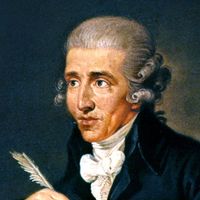
Franz Joseph Haydn (1732–1809) was an Austrian composer of the Classical period, central to the making of the symphony, the string quartet and the piano trio. A vast body of chamber, orchestral and sacred music from his long career shaped the language of his age.
Tinalley String Quartet
ensemble
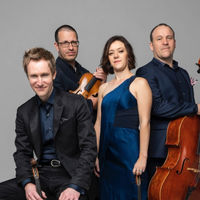
Tinalley String Quartet has rapidly achieved recognition as one of the most exciting quartets, not only in their home of Australia but also on the world stage.
Digital booklet
Digital booklet Notes, texts and credits — read online or download the PDF Download the PDFPerformers
- Tinalley String Quartet · ensemble
- Adam Chalabi · violin
- Justin Williams · viola
- Michelle Wood · cello
- Lerida Delbridge · violin
Technical credits
-
Producer
Theresa Leonard
-
Recording Engineer
Daniel Keinath
Mark Willsher
-
Editing Engineer
Hazel Burns
-
Venue
The Banff Centre
Details
- List price
- $25.00 AUD
- Total playing time
- 64 minutes 37 seconds
- Release date
- 1 May 2014
- Category
- Classical
- Genre
- Classical Era
- Musical work copyright
- © 2011 Tinalley String Quartet
- Sound recording copyright
- ℗ 2014 Move Records
- Catalogue
- MD 3374
- EAN
- 9314574337426
More to explore
Geoffrey Tozer in Concert: Canberra 1987
This live recording of pianist Geoffrey Tozer was made in June 1987, during a series of four recitals marking his twenty-fifth anniversary as a performer.
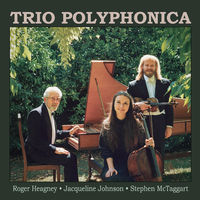
Trio Polyphonica
Trio Polyphonica was active from 1980 to 1990, with a repertoire spanning more than three centuries. This recording gathers chamber trios by Vivaldi, C.P.E. Bach, Haydn, J.S. Bach and Francesco Zappa.
Continental Drift
Continental Drift features compositions for two bass flutes and cello. As the Earth’s continents drift across the ocean floor, new music makes its own slow migration around the globe, across time and space into various lands and cultures.
Birds Bees and Butterflies
Songs of love and springtime sung by Pamela Wainwright and accompanied by Andrew Frampton.
Sydney Opera House Concert Hall Grand Organ
Historic recordings from the 1979 inaugural recital series that launched the Sydney Opera House Concert Hall Grand Organ, Ronald Sharp’s vast mechanical-action instrument.
Concert Organ Masterpieces
Masterpieces from the concert organ repertoire, played by Thomas Heywood on the restored Hill organ at St John’s Church, Toorak. The programme draws on his 1997 Grand Organ Concerts at the church.