Listen & tracks
3 of 8 tracks have a preview · 3 works · 47:49
-
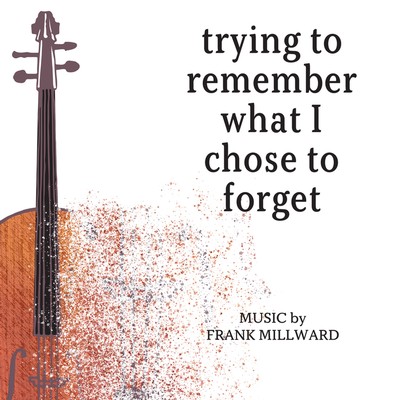
Trying to Remember What I Chose to ForgetFrank Millward 3 movements17:39
- 1 i. Partial Reflection 4:33
- 2 ii. Memoire Omissions 5:02
- 3 iii. Tangled Tango 8:04
-
Contact – Connect – TracerFrank Millward 3 movements14:48
- 4 i. Contact 4:28
- 5 ii. Connect 5:14
- 6 iii. Tracer 5:06
-
Sadness to MadnessFrank Millward 2 movements15:22
- 7 i. Sad 7:07
- 8 ii. Mad 8:15
The movement titles map emotional soundscapes of an explorer searching for landmarks and voices that speak of how and what we choose to remember. Memoire Omissions leaves things unspoken; Tangled Tango blurs the act of remembering; Sadness to Madness traces the tragedy of forgetting. Contact, Connect and Tracer are three euphemisms used in the remembering of wars.
As a nation, have we forgotten the White Australia Policy – a policy aimed at limiting non-white immigration, and which by default embedded the binary of white and “other” in Australian and international memory? Terra nullius, nobody’s land? Only as recently as the 1967 referendum did amendments to Sections 51 and 127 of the Constitution finally acknowledge the existence of Indigenous peoples in Australia.
In the political climate of 2023 these were among the things to remember when voting on a proposed law to alter the Constitution to recognise the First Peoples of Australia by establishing an Aboriginal and Torres Strait Islander Voice.
In the artist’s words
This music is an exploration of trying to remember what I thought I had chosen to forget. A collection of pieces, a scrutiny of the music that forms an identity when sounds remembered are joined with those chosen to be forgotten.
Personal identity is a construct of things we assemble to identify ourselves. A list of achievements of who we think we are. A curriculum vitae, a bio, a thumbnail of a life so far lived. Usually showing our best side, we hope to be considered likeable, honest, worthy or even laudable.
The things we choose to forget are rarely included in such remembering. Of course, this is dependent on how much control we have over the making of our identity, because identity can be formed by things that may spin out of control, sometimes highlighting things we would choose to forget.
Identity can also be associated with a culture. The character of a culture is made up of people’s stories, often an accumulation of the wishing to be remembered. The depth and strength of a culture is its ability to acknowledge the things that would rather be forgotten, for it is in such acknowledgement that the truth of self-knowing builds strength, growth and the ability to survive.
To live the sounds we have become is to sing the music of an honest existence.
Cultural depth lies in the balance of honest admission, self-knowledge and the wisdom to live life in the philosophic formation of an evolving openness to honest self-appraisal. A strong culture embraces and traces connections and contact points that salute the sadness and madness of the tangled tango, danced in its unfolding.
It is marked by historical points of admission and truth, remembered, forgotten, hidden and in plain sight. Its memoires detail an understanding of the difference between myth and reality, an acknowledgement of injustice and a willingness to admit and correct wrong doings.
Reviews
Sonatas for our uncertain times superbly played and recorded. Frank Millward has long been Australia’s arch-provocateur operating under the radar. By turns knotty, poetic and plaintive, this trio of sonatas for piano and, variously, violin, viola and cello, serve as reminders that he is also a composer convinced that music has a point and purpose. Millward is savvy and shrewd enough to disguise his multiple agendas with music that calls for intricacy, virtuosity and sensitivity in equal measure.
Yet another compositional voice that has passed me by, Millward is best known for his collaborations with film makers and stage artists, although chamber music is a respectable element in his catalogued output. His language runs to the jazz/popular/sonic art vocabularies. Matters are further complicated by several works being sub-sets or spin-offs from larger constructs; it’s an instance of cross-transference, something like trying to chart Sculthorpe’s string quartets. Still, this recording is Millward’s first for Move Records and it features three exceptional musicians. Yet another compositional voice that has passed me by, Millward is best known for his collaborations with film makers and stage artists, although chamber music is a respectable element in his catalogued output. His language runs to the jazz/popular/sonic art vocabularies and his performances seem to tend to pre-recorded. In fact, much of his work has been recorded on three CDs, including a piano works collection by Sally Mays. Matters are further complicated by several works being sub-sets or spin-offs from larger constructs; it’s an instance of cross-transference, something like trying to chart Sculthorpe’s string quartets. This recording is Millward’s first for Move Records and it features three exceptional musicians.
Artists
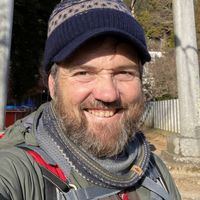
Graeme Jennings
violin, viola
Australian violinist, violist, conductor, improviser, educator, Graeme Jennings, is a former member of the legendary Arditti String Quartet (1994-2005).
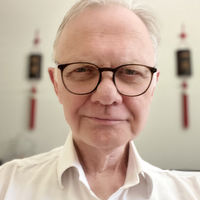
Frank Millward
composer
Frank is an Australian / Italian composer, performer and educator. His music occupies a space between traditional and futuristic, emphasising the importance of the continuity of experience in the interplay between past and present.
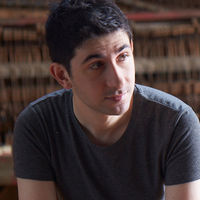
Alex Raineri
piano
Alex Raineri is an active recitalist, concerto soloist and chamber musician. Alex is the Artistic Director of the Brisbane Music Festival and is a passionate exponent of contemporary music, having given over 130 World Premieres to date.
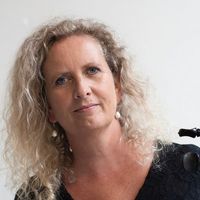
Trish Dean
violoncello
Tasmanian born Trish Dean is the co-Artistic Director and cellist of Ensemble Q, with whom she is a national and regional touring artist for Musica Viva and Company in Residence at QPAC.
Digital booklet
Digital booklet Notes, texts and credits — read online or download the PDF Download the PDFPerformers
- Graeme Jennings · violin, viola · tracks 1–6
- Alex Raineri · piano
- Trish Dean · violoncello · tracks 7 and 8
Technical credits
-
Recording Engineer
Geoff McGahan
Matt Hitchcock
-
Mixing Engineer
Geoff McGahan
Paul Draper
-
Venue
Farmhouse Studio, Chandler
Queensland Conservatorium, Griffith University
Details
- List price
- $25.00 AUD
- Total playing time
- 47 minutes 49 seconds
- Release date
- 17 Jul 2023
- Category
- Classical
- Musical work copyright
- © 2023 Frank Millward
- Sound recording copyright
- ℗ 2023 Move Records
- Catalogue
- MCD 642
- EAN
- 9314574064223
More to explore
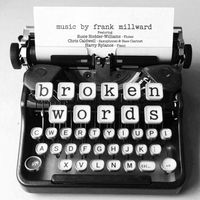
Broken Words
Chamber works for concert flute, alto flute and piccolo; baritone saxophone, bass clarinet and alto saxophone; and piano by Frank Millward. Broken Words explores how technology is reshaping musical communication and meaning.
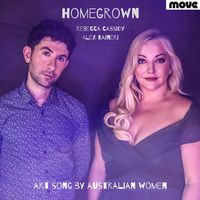
Homegrown
Themes of nature, motherhood, and a profound spiritual connection to place pervade Homegrown — art song by Australian women composers, performed by soprano Rebecca Cassidy and pianist Alex Raineri.
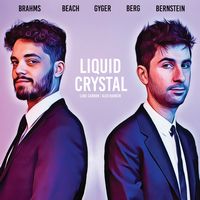
Liquid Crystal
Clarinetist Luke Carbon and pianist Alex Raineri offer a varied duo programme spanning Brahms, Berg, Beach, Bernstein and Elliott Gyger, framed as a personal mixtape of cherished clarinet and piano works.