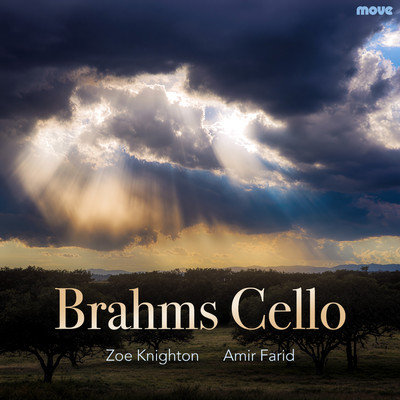
Listen & tracks
4 of 10 tracks have a preview · 5 works · 68:03
-
Cello Sonata No. 1 in E minor, Op. 38Johannes Brahms 3 movements28:23
- 1 i. Allegro non troppo 14:39
- 2 ii. Allegretto quasi menuetto 5:58
- 3 iii. Allegro 7:46
-
Sonata No. 2 in F, Op. 99Johannes Brahms 4 movements29:58
- 4 i. Allegro vivace 8:54
- 5 ii. Adagio affettuoso 8:00
- 6 iii. Allegro passionato 7:58
- 7 iv. Allegro molto 5:06
-
8 Von ewiger Liebe, Op. 43, No. 1 Johannes Brahms 4:34
-
9 Meine Liebe ist grün, Op. 63, No. 5 Johannes Brahms 1:42
-
10 Die Mainacht, Op. 43, No. 2 Johannes Brahms 3:26
It's uncanny how certain composers can “fit” certain performers as comfortably as a well-worn pair of slippers, and that is exactly how Zoe felt when she heard Amir playing Brahms a number of years ago.
Having explored a vast amount of repertoire together over nearly 15 years, it was inevitable they would turn to the two sonatas for piano and cello by Johannes Brahms. Knighton plays a modern Australian cello made in Castlemaine by Rainer Beilharz. The three songs, originally sung in German, find an unexpectedly natural home and act as enticing entrées to these seminal works.
In the artist’s words
One of my favourite memories from a concert is hearing Amir play the opening of the B major trio Op. 8 by Brahms and since then, we have been planning to record these sonatas. Given Amir’s love of lieder and his incomparable ability to bring out the best in singers when he plays with them, I couldn’t resist asking him to choose three of his favourite songs by Brahms to pair with these two sonatas for cello and piano.
Brahms learnt the cello as a child before he went on to become known as a pianist, so it is no surprise that his first offerings as a duo sonata involves cello. One of the first contacts Brahms made upon arriving in Vienna was with Dr. Josef Gänsbacher, a teacher of singing at the Conservatory and an administrator of the Singakademie. Gänsbacher was also an accomplished cellist, and in 1862, Brahms began to write his first duo sonata for him.
Three movements were written for the work in that year, but the Adagio Brahms originally wrote was destroyed. Many suspect the original Adagio was reworked to go with the second sonata. Brahms was infamous for destroying less than adequate manuscripts so the truth may be that the Adagio fell victim to the furnace.
At the initial read through of the sonata, Gänsbacher complained that he was being drowned out by the richly voiced piano part. “I can’t even hear myself,” he proclaimed. Apparently Brahms could only respond with “You’re lucky.”
Other composers (namely Liszt and his school of followers) of the time were far more obsessed with orchestral rather than chamber music but at this point in his compositional career, Brahms chose smaller ensembles. His two sextets, piano quintet, horn trio were written close to the first sonata for cello and piano and rather than following the trend of programmatic music and Liszt’s fascination with music having a reference to literature, Brahms, like his predecessor Beethoven, was composing “pure” music. The sheer romanticism within this sonata is best described by Walter Niemann: “so rich and fervent in its inspiration, both human and spiritual.” Whether or not it had an impact on the writing, I like to remember that Brahms was on holiday with his unrequited love, Clara Schumann at the time of writing.
There is a famous photo of Brahms with his friends. Brahms is seated and behind him is the cellist, Hausmann. Hausmann (who was the cellist in Joachim’s quartet) has his arms over Brahms, pretending to play him like a cello. Quite literally playing Brahms! Hausmann was responsible for reviving the first sonata and it was he who implored Brahms to write its successor. Hausmann and Joachim were the inaugural players in Brahms’ double concerto.
The second sonata is best summed up by Elisabet von Herzogenberg who received a manuscript from Brahms. She wrote:
“I’d like to hear you yourself play the Scherzo, with its driving power and energy (I can hear you constantly snorting and grunting in it!) No one else would succeed in playing it as I imagine it: agitated without rushing, legato and yet inwardly restless and propulsive. Needless to say, we revelled in the beautiful warm sounds of the Adagio, and especially at the magnificent moment when we find ourselves again in F-sharp major, which sounds so marvellous. I really do want to point this moment out to you, because it brings a tear to my eye whenever I hear it. It has such nostalgia and love.”
When I think of Brahms, my mind doesn’t immediately turn to lieder or songs but his gift of setting words to music is a worthy successor to Schubert. He purposefully avoided the texts from the great German poets as he believed great poetry had no need of music. These three songs definitely illustrate the 19th century word painting tradition and perhaps Brahms would forgive this arrangement where no words are heard at all.
Artists
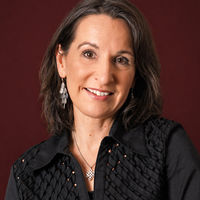
Zoe Knighton
cello
Zoe Knighton is at the forefront of a new generation of performers intent on forging an innovative path for the enjoyment of classical music. A founding member of Flinders Quartet, she is a leading Melbourne cellist and chamber musician.
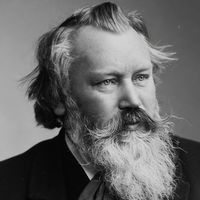
Johannes Brahms
composer
Johannes Brahms (1833–1897) was a German composer and pianist of the Romantic period. His music for piano, chamber ensemble, orchestra, and voice remains central to the concert repertoire.
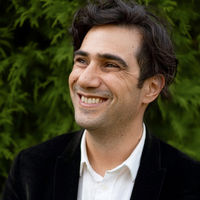
Amir Farid
piano
Amir Farid has been described as a highly creative musician – a pianist of great intelligence and integrity who brings strong musical substance to all that he does, imbuing it with his own experience and understanding, and who distinguishes himself for all the right reasons.
Digital booklet
Digital booklet Notes, texts and credits — read online or download the PDF Download the PDFPerformers
- Zoe Knighton · cello
- Amir Farid · piano
Technical credits
-
Recording Engineer
Martin Wright
Vaughan McAlley
-
Editing Engineer
Vaughan McAlley
-
Mastering Engineer
Martin Wright
-
Venue
Move Records Studio
Details
- List price
- $25.00 AUD
- Total playing time
- 68 minutes 3 seconds
- Release date
- 15 May 2024
- Category
- Classical
- Musical work copyright
- © 2024 Move Records
- Sound recording copyright
- ℗ 2024 Move Records
- Catalogue
- MD 3451
- EAN
- 9314574345124
More to explore
Schumann Cello
Cellist Zoe Knighton and pianist Amir Farid continue their partnership in a programme of short works by Clara and Robert Schumann, pairing song transcriptions with chamber pieces for cello and piano.
Bach Cello
Debate still rages over the origins and purpose of Bach’s cello suites. Were they written for court cellists Christian Ferdinand Abel and Christian Bernhard Linke, for the unusual violoncello da spalla, or as progressive exercises for Bach himself?
Northern Cello
Music for cello from northern European composers. Zoe Knighton and pianist Ian Munro centre the programme on Grieg’s romantic sonata, with Sibelius’s Op. 78 pieces, Vasks’s solo Gramata Cellam and Pärt’s Fratres.
Russian Cello
Enter the world of Russia. Zoe Knighton and Amir Farid present unknown works alongside much-loved classics. The recording celebrates a romanticism in composition inspired by the combination of cello and piano.
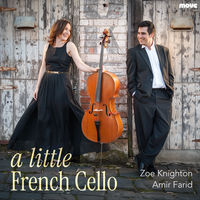
A Little French Cello
A charming collection from the rich French school of the late nineteenth century. Cello sonority and piano clarity make the programme both approachable and moving. Zoe Knighton and Amir Farid are masters of their art.
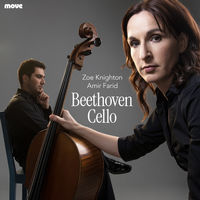
Beethoven Cello
Cellists often bemoan the lack of a cello concerto by Beethoven – and rightly so, but these eight works for cello and piano are the envy of many other instruments. The complete cello sonatas and variations of Beethoven are here on this two-CD set.
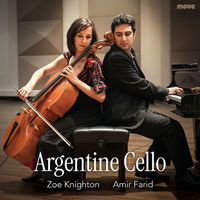
Argentine Cello
More than Piazzolla alone: seven Argentine composers shape a cello-and-piano programme of tango, pampas colour and lyric nationalism, played by Zoe Knighton and Amir Farid.

Mendelssohn Cello
Mendelssohn is often cast as a composer who lived a charmed life, and whose music therefore lacks depth. The glory of that music, its likeability, and his gift for celebrating humanity remain primary reasons for its lasting hold.