Giovanni Paolo Cima
Giovanni Paolo Cima’s early seventeenth-century sonatas are among the first independent instrumental works of the Italian Baroque: single-movement, through-composed pieces for violin, cornett and continuo that join thematic integration with room for virtuoso display.
Working in Milan as organist and director of music, he published the Concerti ecclesiastici in 1610, a collection that pairs conservative church music with more adventurous sonatas for two, three and four instruments. His trio sonata for violin, cornett and basso continuo was among the earliest of its kind in print. On recordings of seventeenth-century Italian chamber music those sonatas sit beside Castello, Fontana, Marini and Uccellini as experimental writing that helped free instruments from a purely supporting role and let players show both imagination and skill.
Compositions by Giovanni Paolo Cima appear on
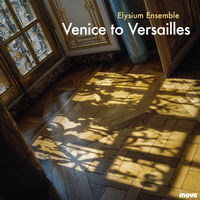
Venice to Versailles
Venice and Versailles stand for the two dominant Baroque styles in Europe: Venice for the robust, joyous exuberance and barocco character of the Italian manner, and Versailles for the refinement, delicacy, elegance and douceur of the French.
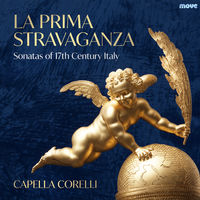
La Prima Stravaganza
Sonatas of 17th-century Italy from Capella Corelli: a window on instrumental music as it found its own voice, from the experimental works of Cima, Castello, Montalbano, Fontana, Frescobaldi, Marini and Uccellini through to Corelli.