Johannes Ockeghem
Johannes Ockeghem wrote masses, motets and chansons at the centre of early Renaissance polyphony. Surviving works include canonic and freely composed masses and Marian motets whose independent voices and wide-ranging bass lines shape the Franco-Flemish sound.
His securely attributed catalogue is modest: around fourteen masses, among them the earliest surviving polyphonic Requiem, fewer than ten motets and some twenty chansons. Half the masses work from cantus firmus; others, including Missa prolationum (built from mensuration canons) and Missa cuiusvis toni (designed to be sung in any mode), seem freely invented yet still sound expressive rather than merely clever. Bass parts often roam and keep their own rhythm, so the texture stays open and each line holds its character. Marian motets such as Alma redemptoris mater, Salve regina and Intemerata Dei mater move with patient, interlocking polyphony. Younger composers, Josquin among them, answered that craft with their own motets and with Nymphes des bois, the famous déploration that sets his name among the teachers of the next generation.
Compositions by Johannes Ockeghem appear on
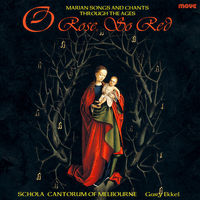
O Rose So Red
Melbourne-based Schola Cantorum, directed by Gary Ekkel, present chants, songs and motets that honour the Virgin Mary across more than a thousand years of sacred repertoire.
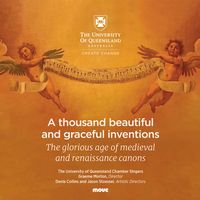
A Thousand Beautiful and Graceful Inventions
Subtitled ‘The glorious age of medieval and renaissance canons’, this programme of late Middle Ages and Early Modern choral music is sung by the University of Queensland Chamber Singers under Graeme Morton. The illustrated booklet has programme notes by Denis Collins and Jason Stoessel, with complete texts.