Listen & tracks
4 of 17 tracks have a preview · 13 works · 47:07
-
1 Kyrie Anonymous 2:02
-
2 Sanctus Anonymous 2:09
-
3 Gloria Spiritus et alme Matteo da Perugia 5:10
-
4 Gloria Ad modum tube Guillaume Du Fay 2:03
-
5 Prenez sur moi Johannes Ockeghem 2:25
-
6 En venant de Lyon Jean Mouton :50
-
7 Qui ne regrettroit Jean Mouton 1:46
-
8 Adieu mes amours Jean Mouton 1:22
-
9 Ave Maria, gratia plena Prioris 1:44
-
10 Se congié prens Josquin des Prez 3:56
-
11 Christi Virgo dilectissima Adrian Willaert 7:01
-
Missa Sacerdotes DominiGiovanni Pierluigi da Palestrina 2 movements9:15
- 12 Sanctus – Pleni sunt coeli – Osanna – Benedictus – Osanna 6:58
- 13 Agnus Dei 2:17
-
Missa Pro vigiliis ac feriis in canonePaolo Agostini 4 movements7:24
- 14 Kyrie 1:16
- 15 Sanctus – Osanna – Benedictus – Osanna 4:05
- 16 Agnus Dei 1:20
- 17 Sit nomen Domini :43
In the artist’s words
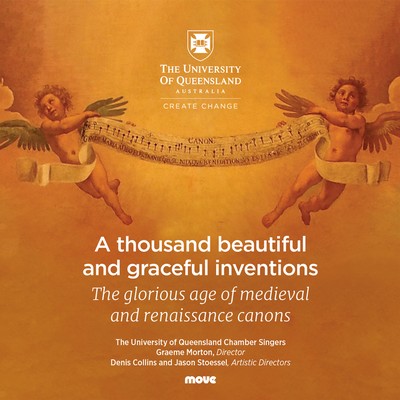
Musicians have always delighted in music that demonstrates ingenuity, grace and skill. Listeners are all familiar with how melodies may be shared, exchanged or tossed around between voices and instruments, from the mighty fugues of Bach to the simple rounds such as Frère Jacques (Are you sleeping) that are so beloved of children and the adults around them.
A common approach running through many centuries of music is the canon – a composition that is based on voices starting one after the other with the same melody and managing to sing the same notes and rhythms but with each voice beginning at different times. Composers exploited the attractiveness and potential of canon in myriad ways: from experimenting with different time distances separating voice entries to manipulating how high or low the first voice’s melody can be in relation to the following voices. Some composers even went so far as to write two or three canons that could be performed at the same time as part of a single composition (the result is called a double or triple canon). All of these techniques have remained staples of a composer’s training even to the present day. Yet, the golden age of canonic composition was the late Middle Ages and Early Modern era. From the early fourteenth to early seventeenth centuries, musicians explored canon’s every permutation.
Moreover, they used canons as vehicles for many of the most expressive artistic creations in the entire history of music. Canons formed the bedrock not only of music created for use in church, but they were also used for setting texts of secular, and sometimes quite earthy orientation. The present recording offers a tour of the magnificent world of graceful canonic inventions, from anonymous works only recently rediscovered to masterpieces for large and small combinations of voices that rigorously or playfully apply the musician’s art to texts for prayer, relaxation, and amusement.
Reviews
One can hear daily many compositions by the most excellent Adrian Willaert which, in addition to being full of a thousand beautiful and graceful inventions, are eruditely and elegantly composed.
Artists

The University of Queensland Chamber Singers
choir
Graeme Morton
director
Graeme Morton shapes choral programmes that move from late medieval and Renaissance canons to contemporary Australian sacred works, drawing a serene, resonant sound from chamber choirs in cathedral acoustic.
Josquin des Prez
composer
Josquin des Prez shaped Renaissance vocal polyphony into something keenly expressive: independent voices that imitate, answer and lock around the text. Masses, motets and chansons still sound alive in the throat.
Giovanni Pierluigi da Palestrina
composer
Palestrina's sacred polyphony balances proportion and serenity with crystalline text. His masses and motets move in smooth, carefully controlled lines where dissonance yields to consonance and every voice serves the liturgy.
Paolo Agostini
composer
Guillaume Du Fay
composer
Jean Mouton
composer
Jean Mouton's early sixteenth-century motets and masses unfold in supple, equal-voiced polyphony, often built on canons. The writing keeps every line singing, with continuous melodic flow rather than sharp textural contrast.
Johannes Ockeghem
composer
Johannes Ockeghem wrote masses, motets and chansons at the centre of early Renaissance polyphony. Surviving works include canonic and freely composed masses and Marian motets whose independent voices and wide-ranging bass lines shape the Franco-Flemish sound.
Matteo da Perugia
composer
Prioris
composer
Adrian Willaert
composer
Adrian Willaert (c. 1490–1562) was a Flemish composer of the High Renaissance, founder of the Venetian School and long-serving maestro di cappella at St Mark’s, Venice.
Digital booklet
Digital booklet Notes, texts and credits — read online or download the PDF Download the PDFPerformers
- The University of Queensland Chamber Singers · choir
- Graeme Morton · director
Technical credits
-
Contributor
Denis Collins
Jason Stoessel
-
Producer
Kathryn Morton
-
Recording Engineer
David Spearritt
-
Venue
St Agatha's Catholic Church, Clayfield (tracks 1, 2, 4–11)
St John’s Cathedral, Brisbane (tracks 3, 12–17)
Details
- List price
- $25.00 AUD
- Total playing time
- 47 minutes 7 seconds
- Release date
- 15 Jan 2025
- Category
- Choral
- Genres
- Early Music, Choral & Sacred
- Musical work copyright
- © 2024 The University of Queensland Chamber Singers
- Sound recording copyright
- ℗ 2024 Move Records
- Catalogue
- MCD 663
- EAN
- 9314574066326
More to explore
Bards of Faith and Passion
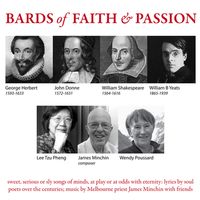
Jim Minchin sets poems by writers at play or at odds with eternity: soul-poet lyrics across the centuries, from anonymous Latin verse and the metaphysicals to Yeats, Shakespeare and living voices.
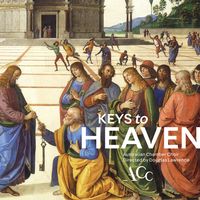
Keys to Heaven
The Australian Chamber Choir opens with the first recording of Agata della Pietà’s cantata Ecce nunc, written in eighteenth-century Venice by an orphan of the Ospedale della Pietà and reconstructed by Elizabeth Anderson. Sacred works by Palestrina and Allegri complete the programme.
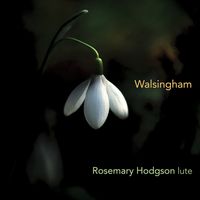
Walsingham
Renowned Australian lutenist Rosemary Hodgson’s Walsingham gathers Elizabethan lute variations on a sacred ballad into a contemplative Marian rondo of mysticism and pilgrimage.
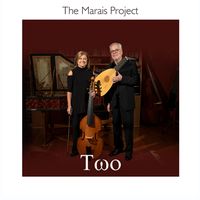
Two
Two brings together Marais Project founding members Jennifer Eriksson, viola da gamba, and Tommie Andersson, gallichon, theorbo and baroque guitar. Each plays alternate brackets of solos before they join in a splendid suite by Marin Marais.
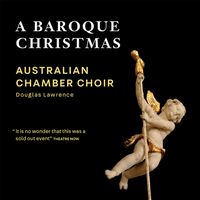
A Baroque Christmas
The music on this CD is a historical Christmas “pick of the pops”, from the late 1400s to the end of the Baroque period. Directed by Douglas Lawrence, the Australian Chamber Choir offers a programme recorded live in concert during their 2019 European tour. The 17 tracks are drawn from lesser-known seasonal works, championing a sublime repertoire that is all too often neglected.
The Garden Party
The Marais Project’s anniversary disc The Garden Party has a festive flavour, mixing world-premiere Marais arrangements and Eriksson’s title track with earlier Move recordings across French baroque, Swedish folk and South American song.