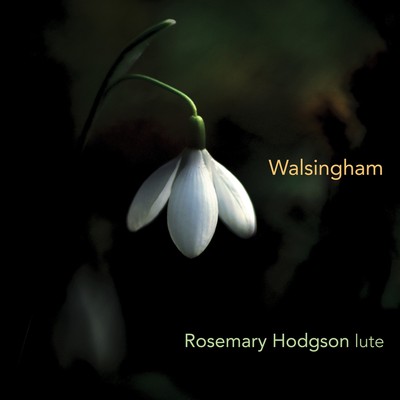
Listen & tracks
21 works · 68:07
-
1 Walsingham Anonymous 3:17
-
2 The Voice William Byrd 2:25
-
3 Anthony Pavyn Anthony de Countie 2:57
-
4 Walsingham Francis Cutting 3:42
-
5 Sir Walter Raleigh's Galliard Francis Cutting 1:48
-
6 A Pavane by Mr Johnson John Johnson 5:35
-
7 Walsingham John Johnson 3:27
-
8 Fantasia Gregorij Gregorius Huwet 2:40
-
9 Galliarde Monsieur Gregorij Gregorius Huwet 1:55
-
10 Pavan Edward Collard 5:39
-
11 The Maye Galliard Edward Collard 2:00
-
12 As I went to Walsingham Edward Collard 4:26
-
13 As it fell on a Holly Eve Anthony Holborne 1:05
-
14 Walsingham Anthony Holborne 1:02
-
15 Jest Anthony Holborne 1:47
-
16 Walsingham John Marchant 5:24
-
17 Fantasia John Marchant 3:30
-
18 Galliard on Walsingham John Dowland 2:02
-
19 Pavan John Dowland 6:06
-
20 Sir John Souch's Galliard John Dowland 1:52
-
21 Walsingham John Dowland 5:28
In the 11th century the Virgin Mary appeared to the noblewoman Richeldis de Faverches in Norfolk, England. At Walsingham a shrine to the Holy Family was built, and it became a spiritual destination for English and international pilgrims alike. When Henry VIII dissolved the monasteries in the 16th century, a lament for that holy place was embedded in a song whose tune, known as Walsingham, captured the imagination of Renaissance composers.
Inspired by the famous ballad, seven Elizabethan lutenists wrote variations on Walsingham for the lute. The number seven carries weight in many religions, and numerological mysticism around seven runs through human culture from the days of the week to the seven chakras. Following works such as Dowland’s Lachrimae, or Seven Tears figured in Seven Passionate Pavans, and Bach’s Goldberg Variations, Rosemary Hodgson gathers settings by John Dowland, John Johnson, Edward Collard, John Marchant, Francis Cutting, Gregorius Huwet and Anthony Holborne into a contemplative Marian rondo: a world premiere recording by Australia’s pre-eminent lute player.
Hodgson maintains a vibrant career as soloist and chamber musician. Known for remarkable sensitivity and technique, she has built an international reputation for concert presentations and solo lute recordings of captivating subtlety.
In the artist’s words
Pilgrimage is an age-old quest of spiritual devotion, where people journey, often on foot, to a sacred place. It is present in many of the world’s major religions and cultures and provides the opportunity to connect with both earthly beauty and higher divinity: to reconcile, refresh or restore. Pilgrims and their destinations have contributed to a flowering of culture of their own, as is the case in the small English village of Walsingham.
As if emerging through the misty plains of Norfolk, this programme begins mysteriously with a set of anonymous variations from the last of the Matthew Holmes’ lute books (Nn. 6.36). They are one of two sets of variations on Walsingham appearing in this treasured manuscript, which was penned sometime between 1605–1615. They hint of an earlier time, with delicate counterpoint punctuating the cadences, whilst lyrical and idiomatic scales and arpeggios reflect the emerging French style brisé that was popular in the works of Ballard and his contemporaries in the early 17th century. They are the only set of variations in C minor and gently launch us on a musical journey that contains further variations by another seven lute composers.
Noblewoman Richeldis de Faverches experienced multiple apparitions of the Virgin Mary in the 11th century, and mystical elements are reflected through The Voice, also known as The Ghoste, The Spyrites or The Spyrites Tune. It is a work by William Byrd, probably arranged from a pre-existing tune and present in the Fitzwilliam Virginal Book, in which Byrd is the best-represented composer. This lute version is from the Folger ‘Dowland’ manuscript and sits beautifully on the instrument.
Anthony de Countie is listed as the ‘royal lewter’ for the first period of Elizabeth I’s Tudor court, making Anthony Pavyn perhaps the oldest piece in this programme. Evoking medieval times of the priory with its open fifth chords, the melancholic F minor harmony promotes a deepening contemplation with hymn-like solemnity.
When Henry VIII dissolved the monasteries, there was much grief surrounding the loss of sacred places throughout England, and the priory in turn was disbanded in 1538. It is thought that a song emerged as a lament for the destruction of the Marian shrine, and numerous poems exist around the ballad, including one by Sir Walter Raleigh entitled ‘As you came from the Holy Land of Walsingham’.
Both the galliard and variations of the Walsingham tune exist in the second of the Holmes lute books, compiled in the golden age of English lute music around 1595–1600. The bulk of the settings for lute begin with an A-flat major chord and end in F major, as is the case in Francis Cutting’s Walsingham. The encoded mysticism of seven variations, and this rather perfect Renaissance numerology, is found in four of the seven variation sets in this recording.
If this programme were a Renaissance archway, at its height would stand the works of Edward Collard. This rarely heard, and largely unrecorded, composer succeeded John Johnson at the Elizabethan court in 1598, perhaps only for a year. His relatively small output of nine lute pieces gives a tantalising glimpse into his deep understanding of his instrument and sophisticated knowledge of both polyphony and ornamentation.
By contrast, one of the most recognisable composers of the English Renaissance is Anthony Holborne. As it fell on a Holly Eve is a line from Edmund Spenser’s poem The Shepherd’s Calendar. Holborne’s Walsingham from the same manuscript is the shortest of all the lute solos inspired by the ballad: a single, purely melodic version that opens with his idiomatic six-note chord, which demands that ‘time be taken’, perhaps symbolic of the Renaissance ideal that grief is not able to be rushed.
John Dowland, the most represented and influential English lute composer, was shaped by his travels to the continent and employment in Christian IV’s Denmark. His unrivalled sense of melody in solos such as Galliard on Walsingham and Sir John Souch’s Galliard has seen him become one of the most beloved composers of his time, and ours. The Pavan in G minor is closely related to his most famous work, the Lachrimae Pavan. Finishing this grand rondo is Dowland’s Walsingham. Like Marchant’s variations, the higher key of G major symbolises hope. Perhaps musical contemplation of this haunting tune mirrors today’s resurgence of pilgrimage to the Norfolk village. For no longer is Walsingham a place of loss or division, but an ecumenical destination, gathering people of all faiths and nations to reflect on finding one’s own holy ground, or place of peace.
Artists
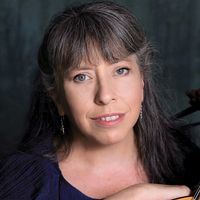
Rosemary Hodgson
lute
Australian lutenist, Rosemary Hodgson maintains a vibrant career as soloist and chamber musician. Known for her remarkable sensitivity and technique, she has established an international reputation for outstanding concert presentations and solo lute recordings, of captivating subtlety.

William Byrd
composer
William Byrd wrote English Renaissance polyphony that still defines the choral repertory: Latin motets of fierce concentration, three Masses of luminous restraint, Anglican services and anthems, plus keyboard and consort music of dancing invention.
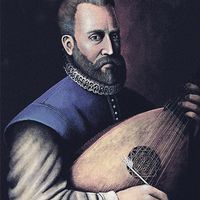
John Dowland
composer
John Dowland's lute songs and ayres carry a rare, deliberate melancholy: tears that fall in measured pavans, love that stings in galliards, darkness that still sings. His music remains the living heart of the English Renaissance songbook.

Edward Collard
composer
Anthony de Countie
composer
Francis Cutting
composer
Francis Cutting (c.1550–1595/6) was an English lutenist and composer of the Renaissance. Among the earliest named English lute composers, he left about fifty works of high quality.
Anthony Holborne
composer
Anthony Holborne (c. 1545–1602) was an English composer of music for lute, cittern and instrumental consort in the reign of Elizabeth I. His printed collections remain among the richest surviving sources of short Elizabethan consort and plucked-string pieces.
Gregorius Huwet
composer
John Johnson
composer
John Marchant
composer
Digital booklet
Digital booklet Notes, texts and credits — read online or download the PDF Download the PDFPerformers
- Rosemary Hodgson · lute
Technical credits
-
Producer
Thomas Grubb
-
Recording Engineer
Thomas Grubb
-
Editing Engineer
Thomas Grubb
-
Venue
XO Studios, Brunswick
-
Credit
Stephen Gottlieb
Details
- List price
- $25.00 AUD
- Total playing time
- 68 minutes 7 seconds
- Release date
- 19 Sep 2022
- Category
- Early music
- Genre
- Early Music
- Musical work copyright
- © 2022 Rosemary Hodgson
- Sound recording copyright
- ℗ 2022 Move Records
- Catalogue
- MCD 637
- EAN
- 9314574063721
More to explore
Music of the Spanish Renaissance
La Compañia's first CD gathers seventeen Spanish Renaissance works on period instruments with soprano Vivien Hamilton, including cues heard in the film Elizabeth but omitted from its commercial soundtrack.
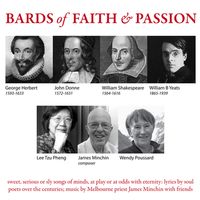
Bards of Faith and Passion
Jim Minchin sets poems by writers at play or at odds with eternity: soul-poet lyrics across the centuries, from anonymous Latin verse and the metaphysicals to Yeats, Shakespeare and living voices.
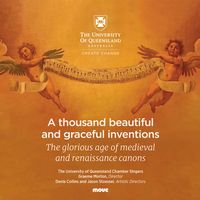
A Thousand Beautiful and Graceful Inventions
Subtitled ‘The glorious age of medieval and renaissance canons’, this programme of late Middle Ages and Early Modern choral music is sung by the University of Queensland Chamber Singers under Graeme Morton. The illustrated booklet has programme notes by Denis Collins and Jason Stoessel, with complete texts.
Australian Monody
The Marais Project is joined by countertenor Russell Harcourt for a collection of largely Australian songs and instrumental works, spanning light and darkness, love and loss.
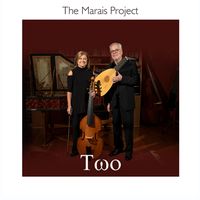
Two
Two brings together Marais Project founding members Jennifer Eriksson, viola da gamba, and Tommie Andersson, gallichon, theorbo and baroque guitar. Each plays alternate brackets of solos before they join in a splendid suite by Marin Marais.
The Garden Party
The Marais Project’s anniversary disc The Garden Party has a festive flavour, mixing world-premiere Marais arrangements and Eriksson’s title track with earlier Move recordings across French baroque, Swedish folk and South American song.