Listen & tracks
2 of 17 tracks have a preview · 17 works · 53:55
-
1 El Balenton de los Zielos Diego de Pontac 2:16
-
2 Oy, Joseph Francisco Guerrero 2:40
-
3 A un niño llorando Francisco Guerrero 3:25
-
4 El Fuego Matheo Flecha the Elder 2:57
-
5 Fantasía suelta del quarto tono Enríquez de Valderrábano 2:02
-
6 De Antequera sale el moro Miguel de Fuenllana 5:15
-
7 Hola Han pastorcillos Dom Gabriel de S. João 2:13
-
8 Rodrigo Martinez Anonymous 2:16
-
9 Si habrá en este baldrés? Juan del Encina 3:09
-
10 Claros y frescos rios Alonso Mudarra 4:07
-
11 Si me llaman, a mi llaman Alonso Mudarra 3:10
-
12 Niño Dios d'amor herido Francisco Guerrero 3:25
-
13 Levanta, Pascual Juan del Encina 5:10
-
14 Pero que seja a gente Anonymous 2:53
-
15 Partístesos, mis amores Juan del Encina 3:02
-
16 La Spagna Heinrich Isaac 1:44
-
17 Hoy comamos y bebamos Juan del Encina 4:11
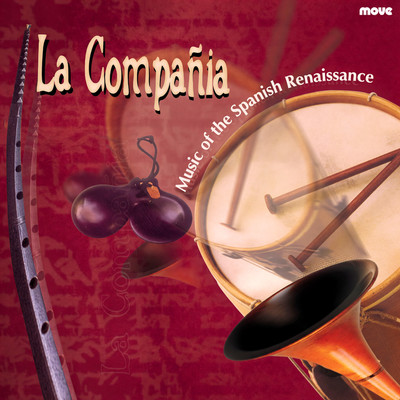
Featuring previously unreleased music heard in the Elizabeth soundtrack, this was La Compañia's first recording: period instruments and the voice of soprano Vivien Hamilton across seventeen Spanish Renaissance works.
Cornetto, shawms, recorder, sackbuts, vihuela and percussion colour a programme of Guerrero, Enzina, Mudarra, Flecha and others. The music is rhythmic, colourful and spontaneous, in the spirit of a 16th-century minstrel band, including pieces the group played for the 1998 film that were left off the commercial soundtrack album.
Reviews
The music is extremely attractive … helps you set the scene of drums, sackbuts and cornetts … The playing seems confident, assured and confident
an attractive mix … the performances here are a constant delight … a gem of a recording
A thumping good recording.
a feast for the ears
The appeal of the music is high … the musical preparation is thorough and the recording well-balanced and forward.
an excellent ensemble performing an unusual and beautiful repertoire … I heartily recommend that you buy yourself a copy
Artists
La Compañia
ensemble
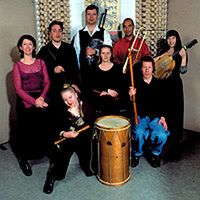
La Compañia, established in 1997, is dedicated to the music of the 16th century with a primary focus on loud winds and percussion, improvisation being a key element of the group's performance.
Miguel de Fuenllana
composer
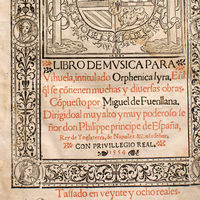
Miguel de Fuenllana (c.1500–1579) was a Spanish Renaissance vihuelist and composer, blind from birth. His Seville publication of 1554, Orphénica Lyra, remains a cornerstone of the vihuela repertoire.

Diego de Pontac
composer
Juan del Encina
composer
Juan del Encina’s villancicos and secular songs give early Spanish Renaissance lyric a clear, speech-led voice: flexible rhythms shaped to the verse, plain strong harmonies, and three- and four-part writing that keeps the text forward.
Matheo Flecha the Elder
composer
Dom Gabriel de S. João
composer
Francisco Guerrero
composer
Francisco Guerrero (1528–1599) was a Spanish Renaissance composer and Catholic priest, admired for sacred motets and masses as well as secular songs that long outlived him in cathedral and court repertory.
Heinrich Isaac
composer
Alonso Mudarra
composer
Alonso Mudarra (c. 1510–1580) was a Spanish Renaissance composer and vihuelist. His 1546 Seville print Tres libros de musica en cifras para vihuela holds the earliest surviving music for the four-course guitar.
Enríquez de Valderrábano
composer
Spanish Renaissance vihuelist and composer whose 1547 Silva de sirenas gathers fantasias, diferencias, sonetos and song settings ordered by difficulty, including works for one or two vihuelas, with voice, and transcriptions from Josquin, Morales and others.
Digital booklet
Digital booklet Notes, texts and credits — read online or download the PDF Download the PDFPerformers
- La Compañia · ensemble
- Vivien Hamilton · soprano
- Danny Lucin · cornetto, mute cornet
- Mitchell Cross · soprano and spanish alto shawm, bells
- Racheal Cogan · soprano and alto recorders
- Bob Collins · tenor sackbut, spanish bagpipes
- Glenn Bardwell · tenor sackbut
- Rosemary Hodgson · vihuela de mano
- Christine Baker · long drum, darabuka, tambourine
- Mara Saiz · castanets
Technical credit
-
Recording Engineer
Thomas Grubb
Details
- List price
- $25.00 AUD
- Total playing time
- 53 minutes 55 seconds
- Release date
- 2000
- Categories
- Classical, Early music
- Genres
- Early Music, Vocal & Opera
- Musical work copyright
- © 2000 Move Records
- Sound recording copyright
- ℗ 2000 Move Records
- Catalogue
- MD 3225
- EAN
- 9314574322521
More to explore
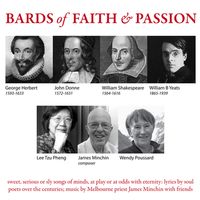
Bards of Faith and Passion
Jim Minchin sets poems by writers at play or at odds with eternity: soul-poet lyrics across the centuries, from anonymous Latin verse and the metaphysicals to Yeats, Shakespeare and living voices.
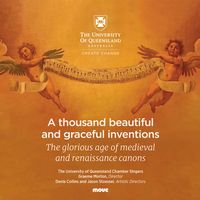
A Thousand Beautiful and Graceful Inventions
Subtitled ‘The glorious age of medieval and renaissance canons’, this programme of late Middle Ages and Early Modern choral music is sung by the University of Queensland Chamber Singers under Graeme Morton. The illustrated booklet has programme notes by Denis Collins and Jason Stoessel, with complete texts.
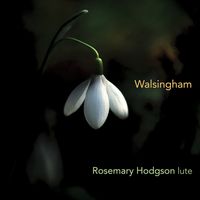
Walsingham
Renowned Australian lutenist Rosemary Hodgson’s Walsingham gathers Elizabethan lute variations on a sacred ballad into a contemplative Marian rondo of mysticism and pilgrimage.
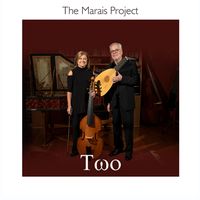
Two
Two brings together Marais Project founding members Jennifer Eriksson, viola da gamba, and Tommie Andersson, gallichon, theorbo and baroque guitar. Each plays alternate brackets of solos before they join in a splendid suite by Marin Marais.
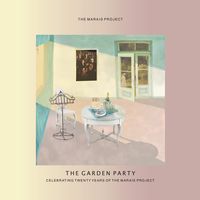
The Garden Party
The Marais Project’s anniversary disc The Garden Party has a festive flavour, mixing world-premiere Marais arrangements and Eriksson’s title track with earlier Move recordings across French baroque, Swedish folk and South American song.
The Green Brain Cycle
Michael Kieran Harvey’s ninety-two-minute multi-instrument solo cycle draws on Frank Herbert’s 1966 ecological novel The Green Brain, pairing intense keyboard writing with Arjun von Caemmerer’s concrete poetry and spoken passages.