Orlando Gibbons
Orlando Gibbons wrote English madrigals, verse anthems, full anthems and keyboard music at the hinge of Renaissance and Baroque practice: lucid polyphony, rhetorical force without bombast, and lines that lodge in the ear like The Silver Swan.
The First Set of Madrigals and Motets still travels as consort song: What Is Our Life?, Ah Dear Heart, Fair Is the Rose, Trust Not Too Much, Fair Youth, and the evergreen Silver Swan, their close voicing made for voices and viols. Sacred works keep English texts to the fore. The eight-part O clap your hands together opens with real splendour; verse anthems such as This is the record of John give the solo line technical bite and plain speech rather than display. Two Evensong settings balance full and verse writing. Keyboard fantasias treat several subjects in dense three- and four-part counterpoint; pavans and galliards grow simple ideas at length. Hymn tunes and anthems keep his voice inside living liturgy. The sound is clean, purposeful and still immediate.
Compositions by Orlando Gibbons appear on
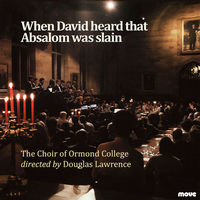
When David heard that Absalom was slain
The Choir of Ormond College specialised in liturgical music of the 16th and 20th centuries. This recording also includes psalm settings, among them Allegri’s Miserere, a setting of the penitential Psalm 51 once reserved for the Sistine Chapel in Holy Week.
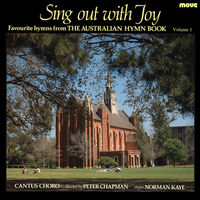
Sing Out With Joy
Cantus Choro, directed by Peter Chapman, sings seventeen favourite hymns from the Australian Hymn Book. Norman Kaye’s imaginative organ accompaniments give the well-known settings fresh dramatic shape and room for the choir to breathe.
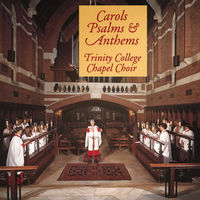
Carols Psalms and Anthems
Under the direction of Professor Emeritus Peter Godfrey, CBE, the Trinity College Chapel Choir offers a striking programme of rarely heard carols, psalms and anthems spanning several centuries of sacred choral writing.