Listen & tracks
12 works · 45:00
-
1 I sat down under His shadow Edward Bairstow 1:31
-
2 Magnificat Orlando Gibbons 3:20
-
3 Nunc Dimittis Orlando Gibbons 2:15
-
4 Set me as a seal upon Thine heart William Walton 3:06
-
5 Lord, we beseech Thee Adrian Batten 1:39
-
Canticles for Evening PrayerGordon Kerry 2 movements4:47
- 6 First 3:05
- 7 Second 1:42
-
8 When David Heard that Absalom was slain Thomas Tomkins 4:29
-
9 Miserere Gregorio Allegri 11:10
-
10 Psalm 23 John Goss 2:17
-
11 Psalm 42 Samuel Sebastian Wesley 4:16
-
12 Psalm 137 George Mursell Garrett 3:15
-
13 Sing unto the Lord Christopher Tye 2:55
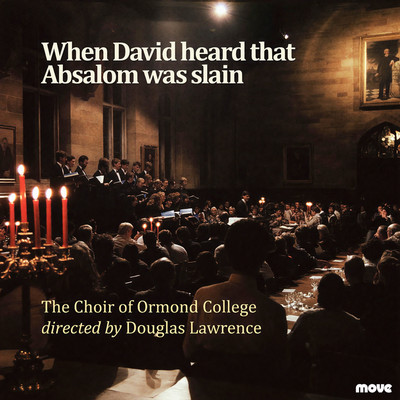
This CD also includes Australian composer Gordon Kerry’s Canticles for Evening Prayer, written for the choir in 1983. The programme ranges from Tudor anthems and Anglican chant to Walton and Bairstow, recorded unedited in the Dining Hall of Ormond College, Melbourne, late in 1985.
In the artist’s words
Founded in 1982 by Douglas Lawrence, the Choir of Ormond College was established for the purposes of providing liturgical music for the College’s weekly chapel services, and to present a number of major choral works in concert each year. The choir has given a series of subscription concerts each year since its inception, has been a regular participant in the Melbourne International Festival of Organ and Harpsichord, and has performed in many of the major concert venues in and around Melbourne. In addition to this, and a number of broadcast engagements, the choir toured New Zealand in February 1985 to great critical acclaim.
The first eight tracks on this recording show the choir in two of its specialist areas, the liturgical music of the 16th and 20th centuries.
Organist and composer Sir Edward Bairstow is chiefly remembered for his contributions to the music of the English church. His short anthem I sat down under His shadow is an attractive example of his work, showing an interest in modal harmonic progressions and a mastery of the many possible sonorities of the ensemble. The text is taken from the Song of Songs.
Like many English composers the Tudor master Orlando Gibbons wrote a number of settings of the Magnificat and Nunc Dimittis. These canticles, the songs of Mary and Simeon as found in the Gospel of St Luke, are properly found in the Evensong liturgy as responses to Old and New Testament lessons respectively. Gibbons, who composed for the Chapel Royal, makes use of the customary division of the choir for beautiful antiphonal effects.
The late Sir William Walton is remembered for large works such as Belshazzar’s Feast, the concertos and his collaboration with Dame Edith Sitwell in Façade. He also composed a great deal of choral music, including the wedding anthem Set me as a seal upon Thine heart, the text of which is also drawn from the Song of Songs. Like the Bairstow piece, this displays a mastery of choral sonorities within a simple, direct musical language. The soloists in this performance are Gordon Kerry (tenor) and Claire Wells (soprano).
Adrian Batten was another composer of the 16th century, a period which saw the uneasy transition from Roman Catholicism to Anglicanism. This was a period perhaps unequalled in the concentration of musical creativity, with a vast amount of music being composed for the liturgy of the new church. Batten’s Lord, we beseech Thee shows the essentially simple style preferred by the reformers of the church, where every word of the vernacular could be understood.
The Canticles for Evening Prayer were written by Melbourne composer Gordon Kerry in 1983 for the Choir of Ormond College. Musically, they attempt to blend a number of stylistic concerns: a complex harmony of twelve-note music; the antiphony of much English church music; and the simple sonorities of medieval organum. This translation of the Magnificat and Nunc Dimittis is taken from the Jerusalem Bible, and is used by kind permission of the publishers, Messrs Darton, Longman and Todd, and Doubleday and Company.
Thomas Tomkins was organist of the Chapel Royal during the latter part of the 16th century and composed much music for the liturgy. When David heard that Absalom was slain is not, strictly speaking, a liturgical piece, but a highly moving part-song dramatising King David’s grief at the loss of his son.
Tracks 9 to 13 are given over to settings of selected psalms.
The first is the famous Miserere of Gregorio Allegri, a setting of the penitential Psalm 51 originally used only in the Sistine Chapel during Holy Week. The story of the young Mozart’s memorizing and later transcribing the work is now legendary. Other versions were, however, disseminated by Mendelssohn and in England by Dr Burney, the grandfather of historical musicology. The soloist is Anne Hunter. At one point in this piece the College bell is heard striking nine. This Miserere was not edited and indeed, there is no edit on the entire recording!
We include also three settings to Anglican chant. This very simple hypnotic form, which allows for the flexible declamation of prose texts regardless of the syllabation of each line, grew out of the harmonisation of Gregorian chant practised in Europe by composers as early as Josquin. With the revival of interest in Catholic ritual brought about by the Oxford Movement in the early 19th century, Anglican chant became a popular medium for Psalms and canticles. A great many cathedral and collegiate musicians composed chant settings, and three of these are represented here: John Goss, organist of St Paul’s Cathedral, London; the famous Samuel Sebastian Wesley; and G. M. Garrett, organist of St John’s College, Cambridge. The four-part harmony of the chants is often accompanied by organ; it is the custom of this choir, however, to sing the chants unaccompanied.
Christopher Tye, another great Tudor composer, brings this recording to a close with the anthem Sing unto the Lord, a setting of verses from Psalm 30. The musical language is exuberant and daring, particularly in the opening passage with its chromatic ambiguities. The text gives thanks for God’s salvation.
Artists
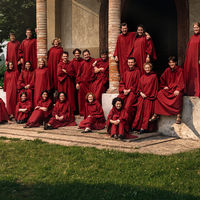
The Choir of Ormond College
choir
The Choir of Ormond College has, since its founding in 1982 under Douglas Lawrence, become the first Australian choir to earn ongoing international recognition for its concert and recorded work.
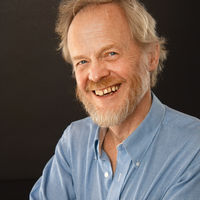
Douglas Lawrence
director
Melbourne organist Douglas Lawrence is Director of Music at The Scots' Church and Teacher of the Organ at the University of Melbourne. He founded the Choir of Ormond College and directed it from 1982 to 2006.
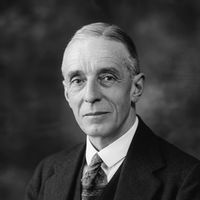
Edward Bairstow
composer
Edward Bairstow (1874–1946) was an English organist and composer in the Anglican church music tradition. He served as Organist of York Minster from 1913 until his death.
Gordon Kerry
composer
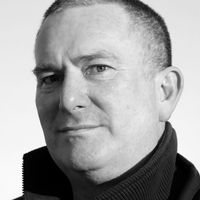
Gordon Kerry's music ranges from the symphonic through chamber music to choral music and opera. Australian orchestras, chamber ensembles, festivals and soloists commission him regularly, as do ensembles in the USA and Europe.
Christopher Tye
composer
Christopher Tye (c. 1505–before 1573) was an English Renaissance composer and organist, noted for sacred choral music and chamber polyphony. Only a fraction of his output survives, among it masses, anthems and a celebrated series of In nomines.
William Walton
composer
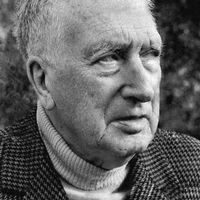
William Walton wrote across film, opera and the concert hall. His catalogue includes Belshazzar's Feast, the Viola Concerto, coronation marches such as Orb and Sceptre, and the light, demanding Five Bagatelles for guitar.

Gregorio Allegri
composer
Gregorio Allegri (c. 1582–1652) was an Italian Catholic priest and composer of the Roman School. He is best known for his Miserere, a setting of Psalm 51 written for the Sistine Chapel.
Adrian Batten
composer
Adrian Batten wrote Anglican church music in the early seventeenth century, including verse anthems that alternate full choir and soloists over an independent organ part. His sacred writing is serious and devotional, with skilful counterpoint shaped for liturgy rather than display.
George Mursell Garrett
composer
George Mursell Garrett composed service settings, anthems and Anglican chants for the English church. His chant for Psalm 126 is among the settings that still shape cathedral and collegiate psalmody.
Orlando Gibbons
composer
Orlando Gibbons wrote English madrigals, verse anthems, full anthems and keyboard music at the hinge of Renaissance and Baroque practice: lucid polyphony, rhetorical force without bombast, and lines that lodge in the ear like The Silver Swan.
John Goss
composer
John Goss wrote English church music marked by graceful vocal lines and careful word-setting. His hymn tune for Praise, my soul, the King of heaven remains one of the most familiar congregational melodies in the Anglican repertory.
Thomas Tomkins
composer
Thomas Tomkins (1572–1656) was a Welsh-born composer of the late Tudor and early Stuart period, a leading voice in English sacred music, madrigals and keyboard writing.
Samuel Sebastian Wesley
composer
Samuel Sebastian Wesley composed almost exclusively for the Anglican church. His anthems and hymn tunes, from extended verse settings to Aurelia and Lead me, Lord, still shape cathedral and parish worship.
Digital booklet
Digital booklet Notes, texts and credits — read online or download the PDF Download the PDFPerformers
- The Choir of Ormond College · choir
- Douglas Lawrence · director
- Roderick Junor · organ
Technical credits
-
Recording Engineer
Martin Wright
-
Venue
Ormond College Dining Hall
-
Credit
David Evans
Gordon Kerry
Details
- List price
- $20.00 AUD
- Total playing time
- 45 minutes 0 seconds
- Release date
- 1986
- Categories
- Choral, Classical
- Genres
- Choral & Sacred, Early Music
- Musical work copyright
- © 1986 Move Records
- Sound recording copyright
- ℗ 1986 Move Records
- Catalogue
- MD 3064
- EAN
- 9314574306422
More to explore
Keys to Heaven
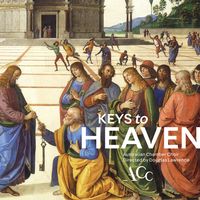
The Australian Chamber Choir opens with the first recording of Agata della Pietà’s cantata Ecce nunc, written in eighteenth-century Venice by an orphan of the Ospedale della Pietà and reconstructed by Elizabeth Anderson. Sacred works by Palestrina and Allegri complete the programme.
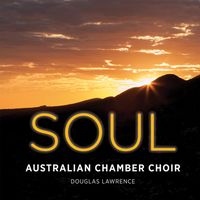
Soul
Douglas Lawrence OAM leads the Australian Chamber Choir through sacred music spanning Renaissance polyphony, early Baroque splendour and African-American spirituals.
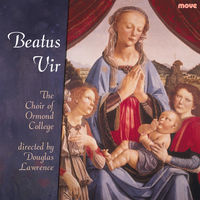
Beatus Vir
Recorded live on their 1999 European tour, the Choir of Ormond College under Douglas Lawrence presents small-scale sacred works in up to eight parts by Palestrina, Gesualdo, Handl, Gabrieli, Monteverdi, Stanford and Rheinberger.
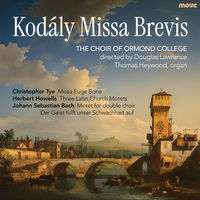
Kodály Missa Brevis
Recorded on their 1997 European tour in Northern Italy and Germany, the Choir of Ormond College sings Kodály’s Missa Brevis, with works by Tye, Howells and Bach.
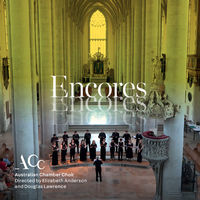
Encores
Directed by Douglas Lawrence, the Australian Chamber Choir gathers favoured concert encores in a programme that shows the ensemble at its most immediate and engaging.
Gold
The Australian Chamber Choir, directed by Douglas Lawrence, performs works by eight Australian composers. From Gordon Kerry’s Shakespeare setting to Malcolm Williamson’s English Eccentrics, the programme turns individual voices into pure gold.