Thomas Morley
Thomas Morley's madrigals and balletts are among the most singable music of Elizabethan England: light, quick-moving part-songs that took Italian models and made them English. Choirs still reach for pieces such as Now is the Month of Maying and Sing we and chant it.
Morley was a leading figure of the English Madrigal School, writing secular vocal music that stays bright, dance-like and clear in texture. His well-known ballett Now is the Month of Maying shows the style at its most open and rhythmic; Sing we and chant it carries the same easy lilt into consort and choral programmes. Beside the madrigals he wrote sacred music, keyboard pieces and music for broken consort, and his Plaine and Easie Introduction to Practicall Musicke remains a key window onto how sixteenth-century musicians thought about composition and performance. On record his work often sits among other Renaissance part-songs, where its colour and forward motion still cut through.
Compositions by Thomas Morley appear on
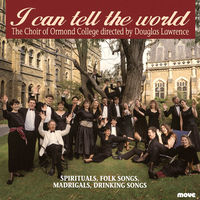
I Can Tell The World
Saucy Purcell rounds, madrigals, drinking songs, spirituals and English folk settings from one of Australia's finest choirs, directed by Douglas Lawrence.
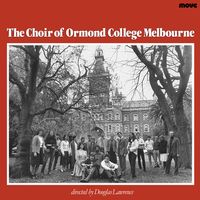
The Choir of Ormond College Melbourne
Directed by Douglas Lawrence, who led chapel music at Ormond College, Melbourne, for more than twenty years, this recording presents the college choir in English church music of the sixteenth and twentieth centuries.