Listen & tracks
12 works · 36:58
-
1 Rejoice in the Lord Alway Anonymous 2:41
-
2 Nolo Mortem Peccatoris Thomas Morley 3:21
-
3 Exsultate Justi Ludovico Grossi da Viadana 2:38
-
4 Deliver us, O Lord our God Adrian Batten 1:21
-
5 O Sing joyfully Adrian Batten 2:02
-
6 Magnificat William Byrd from the Second Service 4:04
-
7 Nunc Dimittis William Byrd from the Second Service 2:19
-
8 Adam Lay Ybounden Boris Ord 1:16
-
9 Let all mortal flesh keep silence Edward Bairstow 3:35
-
10 A Hymn to the Virgin Benjamin Britten 2:50
-
11 Let all mortal flesh keep silence Gustav Holst 3:33
-
12 Lord, Thou hast been our Refuge Ralph Vaughan Williams 7:18
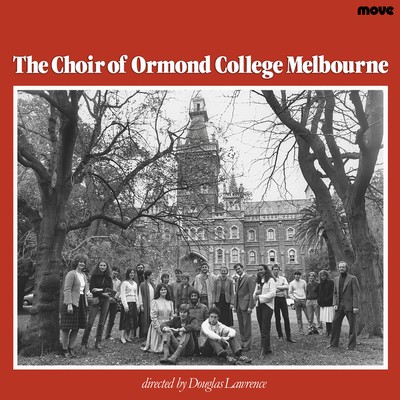
Founded in 1982 by choirmaster Douglas Lawrence, the Choir of Ormond College drew twenty-two auditioned singers, mostly from the college student body.
Beyond public concerts, the choir served the religious life of the college, supplying liturgical music for weekly chapel services in term. In that setting it specialised in two great periods of English church music: the sixteenth and the twentieth centuries.
Recorded in July 1983 at St Patrick’s Cathedral, Melbourne, the programme sets Tudor anthems and Byrd’s organ-accompanied Second Service Magnificat and Nunc Dimittis beside twentieth-century works by Ord, Bairstow, Britten, Holst and Vaughan Williams.
In the artist’s words
The formation of the Church of England and its insistence on English as the primary language of the liturgy led to a demise of many of the musical forms associated with the Roman Church. Accordingly, composers were obliged to modify existing forms or evolve new ones to adequately set the English language. As a result, liturgical music of this time focuses on two principal forms, the anthem and the service, replacing the Latin motet and the plainchant rendering of the Magnificat and Nunc Dimittis.
‘Rejoice in the Lord Alway’, once erroneously attributed to John Redford, is representative of the anthem style at this time. The word setting is mainly syllabic, with rhythmic impetus being provided by the use of imitation, as at the beginning of the piece. The text is taken from Philippians, Chapter IV (vv. 4–7).
William Byrd’s Second Service is a setting of the Magnificat and Nunc Dimittis and is representative of the formal conception of these canticles at the time. Whereas the anthems composed in the sixteenth century were largely written without independent accompaniment, the service is accompanied by the organ throughout and uses soloistic writing for different sections of the choir.
The so-called English Renaissance in music began in the late nineteenth century and produced a number of distinctively English composers. A common interest among composers, particularly in the first half of the present century, was in the exploration of older British music. This took the form of the collection of folk music and the revival of music from the Tudor period.
The unaccompanied eight-part anthem A Hymn to the Virgin was written in 1930 by the then sixteen-year-old Benjamin Britten, with text from a fifteenth-century poem. The poem is unusual in its alternation of English and Latin lines, and Britten mirrors this in the division of the choir into two groups of four parts each, one group for each language.
Ralph Vaughan Williams’s motet ‘Lord, Thou hast been our Refuge’, for semi-chorus, chorus, trumpet and organ, is a setting of verses from Psalm 90 in the semi-chorus, while the full chorus sings the hymn ‘O God, our Help in Ages Past’ to the tune St Anne.
Artists
The Choir of Ormond College
choir
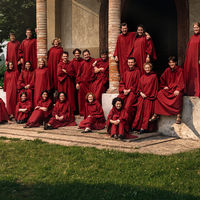
The Choir of Ormond College has, since its founding in 1982 under Douglas Lawrence, become the first Australian choir to earn ongoing international recognition for its concert and recorded work.
Douglas Lawrence
director
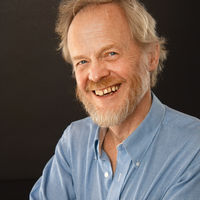
Melbourne organist Douglas Lawrence is Director of Music at The Scots' Church and Teacher of the Organ at the University of Melbourne. He founded the Choir of Ormond College and directed it from 1982 to 2006.
Edward Bairstow
composer
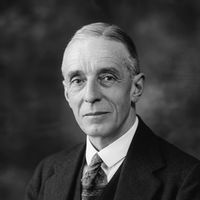
Edward Bairstow (1874–1946) was an English organist and composer in the Anglican church music tradition. He served as Organist of York Minster from 1913 until his death.
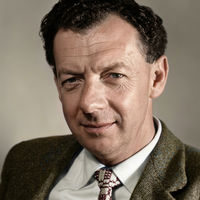
Benjamin Britten
composer
Edward Benjamin Britten (1913–1976) was an English composer, conductor and pianist. His operas are firmly established in the international repertoire, and more of them are played worldwide than those of any other composer born in the twentieth century.
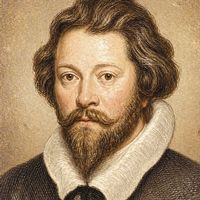
William Byrd
composer
William Byrd wrote English Renaissance polyphony that still defines the choral repertory: Latin motets of fierce concentration, three Masses of luminous restraint, Anglican services and anthems, plus keyboard and consort music of dancing invention.
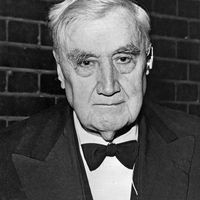
Ralph Vaughan Williams
composer
Ralph Vaughan Williams (1872–1958) was an English composer of nine symphonies, operas, ballets, and a large body of choral and vocal music. Drawing on Tudor polyphony and English folk-song, he helped free British music from its nineteenth-century German models.

Adrian Batten
composer
Adrian Batten wrote Anglican church music in the early seventeenth century, including verse anthems that alternate full choir and soloists over an independent organ part. His sacred writing is serious and devotional, with skilful counterpoint shaped for liturgy rather than display.
Gustav Holst
composer
Gustav Holst’s music moves from the cosmic sweep of The Planets to spare, singing folk and Christmas settings that choirs still reach for. His arrangements of English song and carols carry a clear line and a quiet ceremonial glow.
Thomas Morley
composer
Thomas Morley's madrigals and balletts are among the most singable music of Elizabethan England: light, quick-moving part-songs that took Italian models and made them English. Choirs still reach for pieces such as Now is the Month of Maying and Sing we and chant it.
Boris Ord
composer
Boris Ord is remembered for one carol: his spare setting of the medieval text Adam lay ybounden. It remains a fixture of English Christmas programmes and of the Festival of Nine Lessons and Carols tradition he helped shape at King’s College, Cambridge.
Ludovico Grossi da Viadana
composer
Digital booklet
Digital booklet Notes, texts and credits — read online or download the PDF Download the PDFPerformers
- The Choir of Ormond College · choir
- Douglas Lawrence · director
- Graeme Lieschke · organ · all except tracks 1–5, 8–10
- Andrew Mott · trumpet · track 12
- Lenore Stephens · soprano · track 11
- Peter Balabanski · baritone · track 11
Technical credits
-
Recording Engineer
Martin Wright
-
Venue
St. Patrick's Cathedral, Melbourne
-
Credit
Howard Birnstihl
Details
- List price
- $20.00 AUD
- Total playing time
- 36 minutes 58 seconds
- Release date
- 1983
- Categories
- Choral, Classical
- Genres
- Choral & Sacred, Early Music
- Musical work copyright
- © 1983 Move Records
- Sound recording copyright
- ℗ 1983 Move Records
- Catalogue
- MD 3054
- EAN
- 9314574305425
More to explore
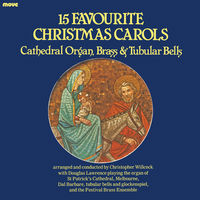
15 Favourite Christmas Carols
Christmas carols without choir or singers, heard in the acoustics of St Patrick’s Cathedral, Melbourne. Cathedral organ, brass ensemble and tubular bells carry fifteen familiar carols in special arrangements by Christopher Willcock.
The Choir of Ormond College Live
A live retrospective for the Choir of Ormond College’s twenty-first year, gathering concert recordings from 1985 to 2000 under Douglas Lawrence, from Britten’s Festival Te Deum and Fauré’s Requiem to Bach, Palestrina, Poulenc and lively encores.
Kodály Missa Brevis
Recorded on their 1997 European tour in Northern Italy and Germany, the Choir of Ormond College sings Kodály’s Missa Brevis, with works by Tye, Howells and Bach.
Bach Byrd Britten
The Choir of Ormond College, directed by Douglas Lawrence, presents Bach, Byrd and Britten. Bach’s motet Lobet den Herrn, alle Heiden and Byrd’s Mass for Four Voices stand beside Britten’s Five Flower Songs and A Ceremony of Carols.
Encores
Directed by Douglas Lawrence, the Australian Chamber Choir gathers favoured concert encores in a programme that shows the ensemble at its most immediate and engaging.
Gold
The Australian Chamber Choir, directed by Douglas Lawrence, performs works by eight Australian composers. From Gordon Kerry’s Shakespeare setting to Malcolm Williamson’s English Eccentrics, the programme turns individual voices into pure gold.