Ralph Vaughan Williams
Ralph Vaughan Williams (1872–1958) was an English composer of nine symphonies, operas, ballets, and a large body of choral and vocal music. Drawing on Tudor polyphony and English folk-song, he helped free British music from its nineteenth-century German models.
Following his father's death in 1875 he was taken by his mother, Margaret Susan née Wedgwood (1843–1937), great-granddaughter of the potter Josiah Wedgwood, to live with her family at Leith Hill Place in the Surrey Hills. He was also related to the Darwins, Charles Darwin being a great-uncle. Though born into the privileged intellectual upper middle class, Vaughan Williams never took that position for granted and worked all his life for the democratic and egalitarian ideals in which he believed.
As a student he studied piano, “which I never could play, and the violin, which was my musical salvation.” After Charterhouse School he attended the Royal College of Music under Charles Villiers Stanford. He read history and music at Trinity College, Cambridge, where his friends included the philosophers G. E. Moore and Bertrand Russell, then returned to the RCM to study composition with Hubert Parry. A fellow pupil was Leopold Stokowski; in 1896 both studied organ under Sir Walter Parratt. Stokowski later performed six of Vaughan Williams's symphonies for American audiences, making the first recording of the Sixth Symphony in 1949 with the New York Philharmonic and giving the U.S. premiere of the Ninth in Carnegie Hall in 1958.
Another RCM friendship, crucial to his development, was with Gustav Holst, whom he met in 1895. From then on they spent ‘field days’ reading through and criticising each other's works in progress.
His composition developed slowly. It was not until he was thirty that the song Linden Lea became his first publication. He mixed writing with conducting, lecturing and editing, notably of Henry Purcell and the English Hymnal. Lessons with Max Bruch in Berlin in 1897 were followed in 1907–08 by three months in Paris with Maurice Ravel, a decisive step in his orchestral style.
In 1904 he discovered English folk songs and carols, then fast disappearing as literacy and printed music undermined the oral tradition. He travelled the countryside transcribing and preserving many himself, later folding melodies into his own music. The work did much to raise appreciation of traditional English song; he later served as president of the English Folk Dance and Song Society, which named its Vaughan Williams Memorial Library after him.
In 1905 he conducted the first concert of the newly founded Leith Hill Music Festival at Dorking, a post he held until 1953.
He was forty-one when the First World War began. Though he could have avoided service or sought a commission, he enlisted as a private in the Royal Army Medical Corps. After gruelling work as a stretcher bearer in France and Salonika he was commissioned in the Royal Garrison Artillery on 24 December 1917. Prolonged gunfire began the hearing loss that led to severe deafness in old age. In 1918 he was appointed Director of Music, First Army, which eased his return to musical life.
After the war a mystical vein appears in A Pastoral Symphony (Symphony No. 3), drawing on his ambulance service, and in Flos Campi for solo viola, small orchestra and wordless chorus. From 1924 a new phase brought lively cross-rhythms and clashing harmonies: Toccata marziale, the ballet Old King Cole, the Piano Concerto, the oratorio Sancta Civitas (his favourite choral work) and the ballet Job: A Masque for Dancing, drawn from Blake rather than the Bible. The period culminated in the Symphony No. 4 in F minor (1935), whose almost unrelieved tension and dissonance startled listeners used to his pastoral manner. “I don't know if I like it,” he said, “but it's what I meant.” He later made his only commercial recording of it, with the BBC Symphony Orchestra for HMV. He was appointed to the Order of Merit in 1935, having previously declined a knighthood.
A mature lyrical phase followed: Five Tudor Portraits; the Serenade to Music (a Shakespeare setting for orchestra and sixteen vocal soloists, written as a tribute to Sir Henry Wood); and the Symphony No. 5 in D, which he conducted at the Proms in 1943. Many heard it as a swan song, yet he pressed on. The Symphony No. 6 (1946) received a hundred performances in its first year; admirers and critics alike read grim programmes into its finale, which the composer refused to endorse.
Before his death in 1958 he completed three further symphonies. The Seventh, Sinfonia Antartica, grew from his 1948 score for Scott of the Antarctic. The Eighth (1956) was followed by the weightier Symphony No. 9 in E minor (1956–57), at first received coolly and now often heard as a fitting close to the cycle. Other late works include a Tuba Concerto, An Oxford Elegy, the Christmas cantata Hodie, and an arrangement of The Old One Hundredth Psalm Tune for the coronation of Queen Elizabeth II. He left unfinished a Cello Concerto, the opera Thomas the Rhymer, and music for the Christmas play The First Nowell, completed by Roy Douglas.
For all his church music, his second wife described him as “an atheist … [who] later drifted into a cheerful agnosticism.” In the opera The Pilgrim's Progress he renamed Bunyan's Christian as Pilgrim. Familiar hymn tunes include Sine nomine (“For All the Saints”) and “Down Ampney” (“Come Down, O Love Divine”), named for his birthplace.
In the 1950s he supervised Decca recordings of all but the Ninth Symphony with Sir Adrian Boult and the London Philharmonic. He died on 26 August 1958, the night before sessions for the Ninth were to begin; Boult told the players their performance would be a memorial. He was buried in Westminster Abbey.
He married Adeline Fisher in 1896; she died in 1951 after years of arthritis. From 1938 he was close to the poet Ursula Wood, who became his literary adviser and, after Adeline's death, his second wife (1953). She wrote the libretto for The Sons of Light and contributed to The Pilgrim's Progress and Hodie, and later published a biography of him.
His music is often called characteristically English: familiar yet deep, lyrical and melancholic, rooted in folk tune and ancient landscape. Ravel, his teacher for three months in 1908, called him the only pupil who did not write music like Ravel.
Compositions by Ralph Vaughan Williams appear on

The Remarkable Norman Kaye
Move Records has gathered material for this CD paying tribute to the wonderful Norman Kaye. The main focus is the musician and organist, without forgetting his acting career.
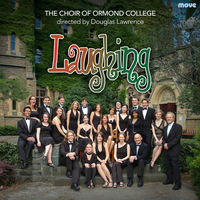
Laughing
The internationally acclaimed Choir of Ormond College, directed by Douglas Lawrence, turns to the lighter side of a cappella singing across jazz, madrigal and spiritual repertoire.
Sing Together Alleluia
Hymns sung by the Sing Alleluia Music Ministry Team, drawn from Sing Alleluia, appear in Together in Song: Australian Hymn Book II. The selection favours material not already on the earlier two-disc companion set.
Songs and Praises
Favourite hymns from the Australian Hymn Book, Vol. 3. Choir and organ fill Trinity College Chapel, Melbourne, with the thrilling sound that hymn lovers know so well.
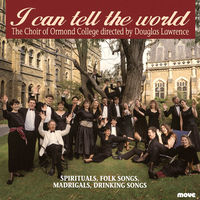
I Can Tell The World
Saucy Purcell rounds, madrigals, drinking songs, spirituals and English folk settings from one of Australia's finest choirs, directed by Douglas Lawrence.
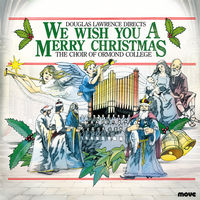
We Wish You a Merry Christmas
The Choir of Ormond College, directed by Douglas Lawrence, presents a varied selection of twenty-eight Christmas carols. Familiar favourites sit beside Bach and Pachelbel organ pieces and twentieth-century settings.
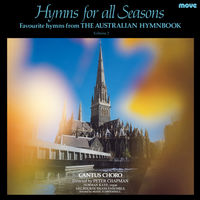
Hymns For All Seasons
Sixteen further hymns from Cantus Choro, recorded in the grand acoustic of St Patrick's Cathedral, Melbourne. The programme opens with Advent and follows the great events of the Christian year, with Norman Kaye at the organ and the Melbourne Brass Ensemble.
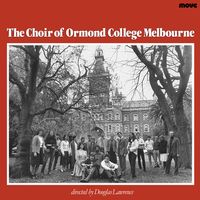
The Choir of Ormond College Melbourne
Directed by Douglas Lawrence, who led chapel music at Ormond College, Melbourne, for more than twenty years, this recording presents the college choir in English church music of the sixteenth and twentieth centuries.
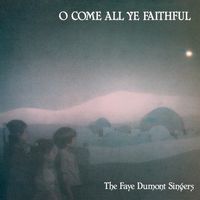
O Come All Ye Faithful
A Melbourne choir under Faye Dumont, whose Christmas programme shows variety and finesse as part of its charter.
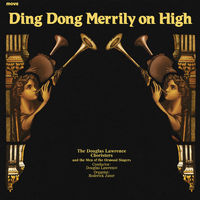
Ding Dong Merrily on High
A baker's dozen of well-loved traditional Christmas carols featuring children's and men's voices. Recorded in the magnificent acoustics of St Patrick's Cathedral, Melbourne.
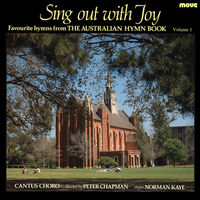
Sing Out With Joy
Cantus Choro, directed by Peter Chapman, sings seventeen favourite hymns from the Australian Hymn Book. Norman Kaye’s imaginative organ accompaniments give the well-known settings fresh dramatic shape and room for the choir to breathe.
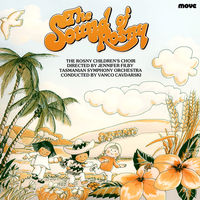
The Sound of Rosny
The Australian Rosny Children's Choir and the Tasmanian Symphony Orchestra present songs from other lands, Chinese and Australian repertoire, and cantata movements by Vaughan Williams and Don Kay.
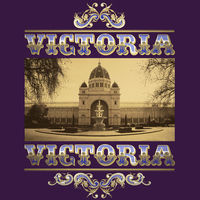
Victoria Victoria
A double CD of Victoria’s 150th Gala Choral Concert, given in the Royal Exhibition Building, Melbourne, in 1985. A thousand-voice choir and orchestra under Richard Divall frame Léon Caron’s prize-winning Victoria Cantata of 1880.
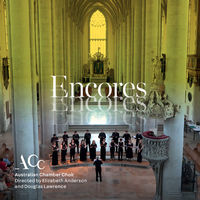
Encores
Directed by Douglas Lawrence, the Australian Chamber Choir gathers favoured concert encores in a programme that shows the ensemble at its most immediate and engaging.
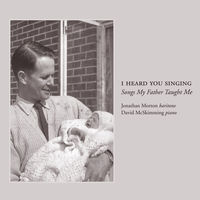
I Heard You Singing: Songs My Father Taught Me
Baritone Jonathan Morton's first solo album is a personal programme of English art song, drawn from cycles and favourites his father once sang around the family piano.