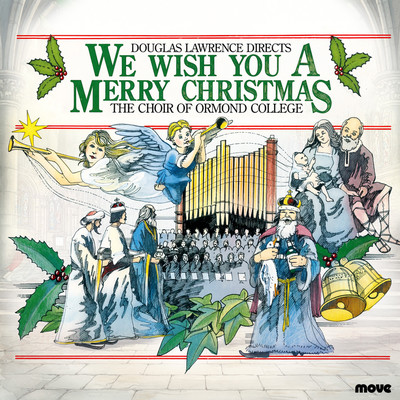
Listen & tracks
1 of 28 tracks have a preview · 25 works · 65:52
-
1 We Wish You a Merry Christmas Traditional 1:35
-
2 Sans Day Carol Traditional 3:01
-
3 Angels from the Realms of Glory Traditional 3:52
-
4 All This Time This Song Is Best William Walton 2:01
-
5 Away in a Manger William J. Kirkpatrick 2:20
-
6 Up! good Christen folk, and listen from Piae Cantiones 1:13
-
7 A Babe Is Born I Wys Frederick Bainton 2:21
-
8 Ding Dong! Merrily on High Traditional 1:38
-
In dulci jubiloJohann Sebastian Bach 2 movements3:25
- 9 Chorale 1:25
- 10 Trio 2:00
-
11 Whence Is That Goodly Fragrance Flowing? Traditional 4:07
-
12 The Blessed Son of God Ralph Vaughan Williams 2:34
-
13 Good King Wenceslas from Piae Cantiones 3:02
-
14 Tomorrow Shall Be My Dancing Day Traditional 1:50
-
In dulci jubiloJohann Sebastian Bach 2 movements4:07
- 15 Double Canon 1:32
- 16 Fantasia 2:35
-
17 Past Three O’Clock Traditional 2:59
-
18 Adam lay ybounden Boris Ord 1:07
-
19 God Rest You Merry, Gentlemen Traditional 2:20
-
20 Coventry Carol Traditional 2:19
-
21 The Holly and the Ivy Traditional 2:45
-
22 The Three Kings Peter Cornelius 2:22
-
Vom Himmel hoch, da komm ich herJohann Pachelbel 2 movements5:30
- 23 Trio 1:45
- 24 Fugue 3:45
-
25 All My Heart This Night Rejoices Johann Georg Ebeling 2:14
-
26 Personent hodie from Piae Cantiones 2:43
-
27 A Spotless Rose Herbert Howells 2:53
-
28 What Cheer! (Carol for New Year’s Day) William Walton 1:34
Tracks range across ‘We wish you a merry Christmas’, ‘Sans Day Carol’, ‘A babe is born I wys’, In dulci jubilo, ‘Good King Wenceslas’, ‘The holly and the ivy’, ‘The three kings’, the Coventry Carol and many more. It is a disc made for repeated seasonal listening.
Recorded at St Patrick’s Cathedral, Melbourne, with John Mallinson at the organ, the programme mixes English and French traditional carols with organ interludes by Bach and Pachelbel and settings by Walton, Howells, Holst and Vaughan Williams.
Reviews
The Ormond Choir continues to impress: tackling the difficult or taxing head-on and effecting lucid, enthusiastic performances.
These Australian voices fetched long and loud applause on Saturday evening in the church of Santa Maria of Aracoeli.
Throughout, their singing was of an exceptionally high standard - fresh, spontaneous sounding, unpretentious, beautifully in tune.
Regardless of whether the choral works were early or contemporary, in this performance they became vivid and understandable. Vocal line, a crystal clear transparency of intonation, a dynamic rendition of the text which showed the finest colour gradations: All this combined to carry us to floating heights ...
The performance was of rare quality with clear enunciation and rhythmic liveliness (Britten’s Missa Brevis) ... a very polished and musically intelligent ensemble.
Artists
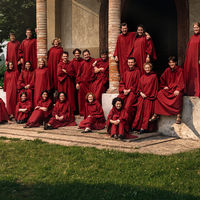
The Choir of Ormond College
choir
The Choir of Ormond College has, since its founding in 1982 under Douglas Lawrence, become the first Australian choir to earn ongoing international recognition for its concert and recorded work.
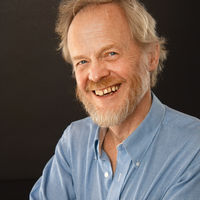
Douglas Lawrence
director
Melbourne organist Douglas Lawrence is Director of Music at The Scots' Church and Teacher of the Organ at the University of Melbourne. He founded the Choir of Ormond College and directed it from 1982 to 2006.
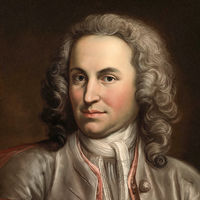
Johann Sebastian Bach
composer
Johann Sebastian Bach (1685–1750) was a German composer and organist of the late Baroque. His sacred and secular music for choir, orchestra, organ and solo instruments remains among the foundations of the Western concert and church repertory.
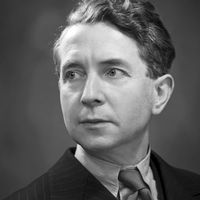
Herbert Howells
composer
Herbert Howells wrote Anglican church music of rare harmonic warmth and contemplative beauty, from carol-anthems such as A Spotless Rose to Latin motets and organ works steeped in the Tudor tradition.
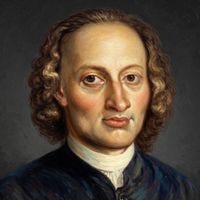
Johann Pachelbel
composer
Johann Pachelbel (1653–1706) was a German Baroque composer, organist and teacher who brought the south German organ tradition to its peak. His chorale preludes, fugues and keyboard variations place him among the central figures of the middle Baroque.
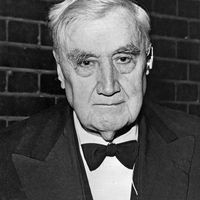
Ralph Vaughan Williams
composer
Ralph Vaughan Williams (1872–1958) was an English composer of nine symphonies, operas, ballets, and a large body of choral and vocal music. Drawing on Tudor polyphony and English folk-song, he helped free British music from its nineteenth-century German models.
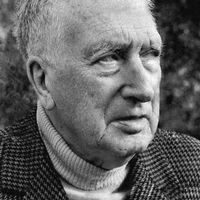
William Walton
composer
William Walton wrote across film, opera and the concert hall. His catalogue includes Belshazzar's Feast, the Viola Concerto, coronation marches such as Orb and Sceptre, and the light, demanding Five Bagatelles for guitar.

Ivor Atkins
arranger
Sir Ivor Atkins (1869–1953) was an English organist, choirmaster and composer who served Worcester Cathedral for more than fifty years and long directed the Three Choirs Festival.
Frederick Bainton
composer
Peter Cornelius
songwriter, composer
Peter Cornelius is best known for The Three Kings, the Christmas song in which a solo voice moves against the chorale How brightly shines the morning star. It comes from his 1856 cycle Weihnachtslieder and remains a staple of carol programmes.
Johann Georg Ebeling
composer
Paul Gerhardt
songwriter
Gustav Holst
arranger
Gustav Holst’s music moves from the cosmic sweep of The Planets to spare, singing folk and Christmas settings that choirs still reach for. His arrangements of English song and carols carry a clear line and a quiet ceremonial glow.
Reginald Jacques
arranger
Reginald Jacques's arrangements of traditional Christmas carols have become fixtures of the choral repertoire. Settings such as Good King Wenceslas, The Holly and the Ivy and Angels from the Realms of Glory still ring out in churches and concert programmes every December.
William J. Kirkpatrick
composer
William J. Kirkpatrick was a gospel hymn composer whose 1895 setting of Away in a Manger is one of the two melodies most often sung to the carol.
Martin Luther
songwriter
Martin Luther’s Christmas hymns sit at the heart of the Lutheran chorale tradition: plain-spoken texts and sturdy tunes written for congregations to sing, still heard in seasonal programmes from the Renaissance through Bach and beyond.
James Montgomery
songwriter
James Montgomery's hymn and carol texts remain central to congregational singing. His words are heard here among favourite hymns and Christmas carols, including Angels from the Realms of Glory.
John Mason Neale
songwriter
John Mason Neale's hymn translations and carols remain staples of English-speaking worship and Christmas repertoire, from Good King Wenceslas to O come, O come, Emmanuel and other medieval texts he brought into common use.
Boris Ord
composer
Boris Ord is remembered for one carol: his spare setting of the medieval text Adam lay ybounden. It remains a fixture of English Christmas programmes and of the Festival of Nine Lessons and Carols tradition he helped shape at King’s College, Cambridge.
John Rutter
arranger
John Rutter writes and arranges choral music that sits easily with choirs and congregations: Christmas carols, hymns for the church year, and extended sacred works whose melodies are built for the human voice.
Martin Shaw
arranger
Arthur Warrell
arranger
Arthur Warrell is known for his arrangement of the traditional West Country carol We Wish You a Merry Christmas.
David Willcocks
arranger
David Willcocks’s carol arrangements and descants give traditional Christmas melodies a clear, ceremonial lift: bright upper lines, firm harmony, and textures built for choir and congregation. On these discs his settings sit among the season’s most familiar favourites.
Charles Wood
arranger
Charles Wood is remembered for Anglican church music that still fills cathedral and parish services: Magnificat and Nunc dimittis settings, anthems, and carol arrangements that gave Renaissance tunes fresh English life.
George Ratcliffe Woodward
songwriter, arranger
George Ratcliffe Woodward wrote the words that make Renaissance dance tunes ring as Christmas carols. His verses for melodies such as the French tune behind Ding Dong Merrily on High still fill choirs and cathedrals every December.
Digital booklet
Digital booklet Notes, texts and credits — read online or download the PDF Download the PDFPerformers
- The Choir of Ormond College · choir · tracks 1–8, 11–14, 17–22, 25–28
- Douglas Lawrence · director · tracks 1–8, 11–14, 17–22, 25–28
- John Mallinson · organ · tracks 2, 9–11, 13, 15–17, 19, 23, 24 and 26
Technical credits
-
Recording Engineer
Martin Wright
-
Venue
St. Patrick's Cathedral, Melbourne
Details
- List price
- $15.00 AUD
- Total playing time
- 65 minutes 52 seconds
- Release date
- 1989
- Categories
- Choral, Christmas
- Genres
- Christmas, Choral & Sacred
- Musical work copyright
- © 2002 Move Records
- Sound recording copyright
- ℗ 1989 Move Records
- Catalogue
- MD 3079
- EAN
- 9314574307924
More to explore
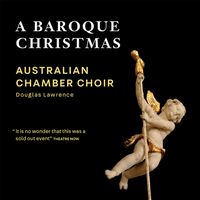
A Baroque Christmas
The music on this CD is a historical Christmas “pick of the pops”, from the late 1400s to the end of the Baroque period. Directed by Douglas Lawrence, the Australian Chamber Choir offers a programme recorded live in concert during their 2019 European tour. The 17 tracks are drawn from lesser-known seasonal works, championing a sublime repertoire that is all too often neglected.
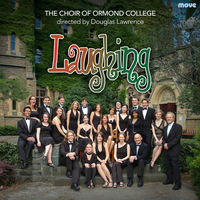
Laughing
The internationally acclaimed Choir of Ormond College, directed by Douglas Lawrence, turns to the lighter side of a cappella singing across jazz, madrigal and spiritual repertoire.
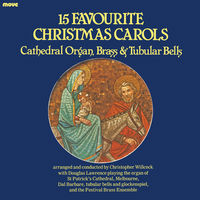
15 Favourite Christmas Carols
Christmas carols without choir or singers, heard in the acoustics of St Patrick’s Cathedral, Melbourne. Cathedral organ, brass ensemble and tubular bells carry fifteen familiar carols in special arrangements by Christopher Willcock.

Merry Christmas
Elizabeth Anderson and friends put a fresh twist on Christmas carols: eight tracks packaged as a Christmas card, with a vibrant cover and space for a personal inscription.
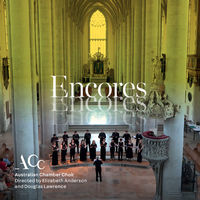
Encores
Directed by Douglas Lawrence, the Australian Chamber Choir gathers favoured concert encores in a programme that shows the ensemble at its most immediate and engaging.
Gold
The Australian Chamber Choir, directed by Douglas Lawrence, performs works by eight Australian composers. From Gordon Kerry’s Shakespeare setting to Malcolm Williamson’s English Eccentrics, the programme turns individual voices into pure gold.