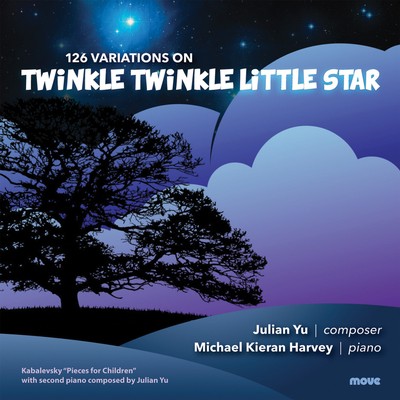
Listen & tracks
15 works · 127:31
-
1 Twinkle Twinkle Little Star (TTLS) theme Julian Yu :18
-
2 TTLS complete theme Julian Yu :40
-
CounterpointJulian Yu 9 movements2:11
- 3 First species :16
- 4 Second species :11
- 5 Third species :13
- 6 Fourth species :16
- 7 Fifth species :13
- 8 TTLS Canon :16
- 9 TTLS invertible :16
- 10 TTLS Non-imitative counterpoint :14
- 11 TTLS Invertible non-imitative counterpoint :16
-
Signature motifsJulian Yu 2 movements:46
- 12 Signature motifs 2 voices :17
- 13 Signature motifs 3 voices :29
-
J. S. Bach’s famous theme with the cantus firmusJulian Yu 3 movements4:05
- 14 TTLS with the cantus firmus :52
- 15 TTLS Invention :46
- 16 Kleine Fuge 2:27
-
HarmonyJulian Yu 11 movements3:21
- 17 TTLS harmonised with primary triads :18
- 18 TTLS harmonised with primary triads, altered melody :16
- 19 TTLS Non-harmonic tones :16
- 20 TTLS Harmonic sequence :16
- 21 TTLS Secondary dominants :15
- 22 TTLS Suspension :14
- 23 TTLS Chromatic passing (1) :21
- 24 TTLS Chromatic passing (2) :20
- 25 TTLS Harmonic progression :24
- 26 TTLS Quartal chords :21
- 27 TTLS Pentatonic scale :20
-
Texture and FigurationJulian Yu 10 movements4:12
- 28 TTLS Alberti bass :14
- 29 TTLS Allegro appassionato (Ballade in G minor Op. 23 by Chopin) :19
- 30 TTLS Allegro delicato :18
- 31 TTLS Tempo di gavotta (Gavotte by F. J. Gossec) :14
- 32 TTLS Andante affettuoso alla Liszt (Three Concert Études No. 3) :32
- 33 TTLS Moderato grazioso a Mendelssohn (Song of Spring from Songs Without Words Op. 62 No. 6) :13
- 34 TTLS A la polonaise (Chopin’s Polonaise in A major Op. 40 No. 1) :15
- 35 TTLS Tempo di valse (J. Strauss’ Tales from the Vienna Woods) :13
- 36 TTLS Moderato e con grandezza :31
- 37 TTLS Song without voice – music for the left hand alone 1:23
-
Some TricksJulian Yu 10 movements6:27
- 38 TTLS Melodic development 1:57
- 39 TTLS Palindrome :14
- 40 TTLS Scherzino :14
- 41 TTLS Black and White :27
- 42 TTLS Golden Star Dance (Chinese folk tune Wild Dance of the Golden Snake) :28
- 43 TTLS Crab Canon :35
- 44 TTLS Crab Canon – full :32
- 45 TTLS Quodlibet (Mozart, Mendelssohn, folk and children’s songs) :49
- 46 TTLS Dovetailing (Frère Jacques) :19
- 47 Is Jacques still asleep? :52
-
Composers and GenresJulian Yu 30 movements43:37
- 48 Bach Prelude (Prelude in C minor, from The Well-Tempered Clavier, Book I) :24
- 49 Giulio Caccini Ave Maria 2:35
- 50 Pachelbel Canon 2:13
- 51 Vivaldi Spring 1:26
- 52 Schubert “Impromoments Musical” :55
- 53 Hanon “Canon on Hanon” :17
- 54 Mozart “Rondo alla Twinka” (Rondo alla Turca) 1:14
- 55 Shostakovich Piano Concerto No. 1 :23
- 56 Bartók in Bagpipers style :35
- 57 Beethoven “Für Estelle” (“Für Elise”) :35
- 58 Strauss Radetzky March 1:01
- 59 Bizet Habanera from Carmen 1:09
- 60 Ravel Bolero :58
- 61 Saint-Saëns Danse Macabre 1:05
- 62 Grieg “Edvard’s Dance” 2:07
- 63 Chopin Étude 1:08
- 64 Khachaturian Toccata :59
- 65 Dvořák “Little Star over the New World” 2:10
- 66 Tchaikovsky “Rondo” (The Nutcracker) 1:19
- 67 Rimsky-Korsakov Sheherazade 2:40
- 68 Mussorgsky “Preview of Pictures at an Exhibition” 1:59
- 69 Brahms Symphony No. 1 1:24
- 70 Schumann Carnaval and Piano Concerto in A minor 1:04
- 71 Liszt “Little Star Rhapsody” 3:23
- 72 Debussy “Faun in Moonlit Snow” 2:09
- 73 Gershwin “Rap in Light Blue” (Rhapsody in Blue) 1:39
- 74 Puccini Nessun Dorma (Turandot) 1:27
- 75 Rachmaninov Prelude in G minor 1:18
- 76 Prokofiev “Three Oranges” (The Love for Three Oranges) 2:19
- 77 Copland “Rodeo Rhythm” (Rodeo) 1:42
-
Tonality and AtonalityJulian Yu 9 movements2:52
- 78 Canon using bitonality (minor 9th) :24
- 79 Canon using bitonality (major 7th) :23
- 80 Canon using bitonality (major 6th) :22
- 81 TTLS with contrasting melody in a different key :14
- 82 TTLS with contrasting melody and harmony in different keys :15
- 83 TTLS harmonised with increased dissonance :17
- 84 TTLS A free atonal harmonisation :16
- 85 TTLS two strands of parallel triads :17
- 86 TTLS two strands of parallel triads (mirror image) :24
-
Twelve-Tone and SerialismJulian Yu 6 movements3:20
- 87 TTLS The twelve-tone series :18
- 88 Sad Story :36
- 89 Twinkle Twinkle is not “in tune” :19
- 90 Schoenberg in Gavotte style (Suite für Klavier, Op. 25) :39
- 91 Webern “Pointillism” (Variationen, Op. 27) :20
- 92 Berg Sonate (Piano Sonata Op. 1) 1:08
-
Boundless PossibilitiesJulian Yu 20 movements17:15
- 201 TTLS Modes of limited transposition :08
- 202 Messiaen “Étoiles Exotiques” (Oiseaux Exotiques) :57
- 203 Joji Yuasa Cosmos Haptic 2:06
- 204 Takemitsu “Uninterrupted Song of Love” (Pause Ininterrompue) 1:27
- 205 Ligeti “Con Spirito” (Musica Ricercata) :31
- 206 Stravinsky “The Soldier’s March” (The Soldier’s Tale) 1:06
- 207 Witold Lutosławski Taniec (Little Suite for Symphony Orchestra) 1:14
- 208 Kabalevsky Clowns Op. 30 No. 20 :36
- 209 TTLS Minimalism Minitude 1:10
- 210 TTLS Notation Phantasy 1:37
- 211 Using numbers to find a new rhythm :21
- 212 TTLS new rhythm :20
- 213 TTLS Reinvention :57
- 214 TTLS Tone Cluster and Graphic Notation :18
- 215 Sudden Incident (Music Notation) :20
- 216 Astralita – My Little Star (in the style of Julian Yu) :49
- 217 TTLS Bagatelle :42
- 218 Pentatude (study based on the number 5) :47
- 219 Autumn Evening (haiku one note) :48
- 220 Ancient Pool (haiku two notes) 1:01
-
Popular MusicJulian Yu 5 movements3:44
- 221 TTLS Disco :26
- 222 TTLS Ragtime (Scott Joplin’s Maple Leaf Rag) 1:01
- 223 TTLS Boogie :26
- 224 TTLS Jazz 1:01
- 225 TTLS Blues :50
-
Folk MusicJulian Yu 9 movements10:50
- 226 “Star-kura” (folk tune Sakura) :40
- 227 “The Stars are High” (Chinese style) 1:06
- 228 Chinese folk ornamentation 1:05
- 229 Heterophony in Chinese music :35
- 230 Beat in Peking Opera 1:01
- 231 stAr-irang (Korean folksong Arirang) :45
- 232 “The Starlark” (Romanian folk tune Ciocîrlia [The Skylark]) :56
- 233 Philogamelania (Indonesian gamelan music) 1:24
- 234 Finale – Passacaglia 3:18
-
Pieces for Children for two pianosDmitri Kabalevsky 38 movements23:53
- 235 Little Song, Op. 39: No. 1 :22
- 236 Short Polka, Op. 39: No. 2 :13
- 237 Marching Tune, Op. 39: No. 3 :14
- 238 Lullaby, Op. 39: No. 4 :19
- 239 Play, Op. 39: No. 5 :19
- 240 Short Scherzo, Op. 39: No. 6 :16
- 241 A Funny Event, Op. 39: No. 7 :28
- 242 Melody, Op. 39: No. 8 :38
- 243 Dance, Op. 39: No. 9 :15
- 244 March, Op. 39: No. 10 :16
- 245 Autumn Song, Op. 39: No. 11 :42
- 246 Joke, Op. 39: No. 12 :17
- 247 Waltz, Op. 39: No. 13 :31
- 248 Little Fairy Tale, Op. 39: No. 14 :18
- 249 Race, Op. 39: No. 15 :21
- 250 Sad Story (1), Op. 39: No. 16 :37
- 251 Folk Dance, Op. 39: No. 17 :27
- 252 Gallop, Op. 39: No. 18 :22
- 253 Prelude, Op. 39: No. 19 :48
- 254 Clowns, Op. 39: No. 20 :29
- 255 Improvisations, Op. 39: No. 21 1:09
- 256 Novelette, Op. 39: No. 22 :36
- 257 Slow Waltz, Op. 39: No. 23 :48
- 258 Happy Journey, Op. 39: No. 24 :28
- 259 Cross-Patch, Op. 89: No. 12 :15
- 260 A Little Hedgehog, Op. 89: No. 8 :13
- 261 My Little Stubborn Brother, Op. 89: No. 27 :33
- 262 Dance, Op. 27: No. 27 :51
- 263 A Little Prank, Op. 27: No. 13 1:04
- 264 Sad Story (2), Op. 27: No. 6 1:01
- 265 Dramatic Fragment, Op. 27: No. 30 2:45
- 266 Ditty, Op. 27: No. 2 :47
- 267 Meadow Dance, Op. 27: No. 17 :40
- 268 Fairy Tale, Op. 27: No. 20 1:02
- 269 Song of the Cavalry, Op. 27: No. 29 :51
- 270 Playing Ball, Op. 27: No. 5 :39
- 271 Waltz Time, Op. 27: No. 1 :42
- 272 Étude, Op. 27: No. 26 1:17
The collection demonstrates many approaches to composition across classical styles as well as popular and folk genres from different countries.
Early pieces explore counterpoint, harmony, melodic development, texture and figuration, tonality and atonality.
Later pieces are deliberate, often hilarious parodies of well-known works. They range from Baroque, Classical and Romantic models, with a brief nod to popular and jazz repertoire, through twentieth-century serial and minimalist schools. The set closes with imitations of folk music from several Asian countries.
Disc two also includes Kabalevsky’s Pieces for Children for two pianos, with a second piano part composed by Julian Yu.
In the artist’s words
In 2010 Zen-On Music in Japan published my piano album of the above title containing over 100 variations on Twinkle, Twinkle Little Star. The aim of these was to show many different composition techniques, while also being great fun to play. The album proved very popular and was quickly published in China as well.
In this CD, pianist legend Michael Kieran Harvey plays the complete album brilliantly. Michael is well-known as a champion of Australian contemporary composition, so it may come as a surprise to hear him playing such tuneful, simple music – until he gets to the later pieces, some of which are quite modern and challenging.
Where did my idea come from to write so many variations? It came from a joke that I heard once about a leader who, after giving a speech, led the crowd in singing a song – except that, in his nervousness, he sang the right words and rhythm to the wrong melody, causing general hilarity. This mishap, interchanging the words and melody of two different songs, gave me to realise that in composition one could interchange the rhythm and melody, or melody and harmony, texture and so on, of two or more different pieces.
When teaching composition, I often demonstrate different ways of varying a given theme. Students frequently ask me questions such as, “How many harmonic and contrapuntal treatments of this theme are possible?”; “How might a Romantic composer have treated this theme?”; or “How can I create an atonal piece of music out of a tonal theme?” Although the themes they ask about are all different, I thought that it might be helpful to use just one theme to illustrate many different compositional techniques and styles and show the myriad ways in which one can modify a theme, that is, to show how unity can beget diversity.
The collection is deliberately popular in its approach, and aims to be humorous and interesting, in order to convey the feeling that ‘classical music’ need not be serious, high-brow or unreachable. The variations present a wide range of familiar musical styles, highlighting the differences between them.
Many of the variations are deliberately reminiscent of well-known works, created by taking the work in question as a base and substituting, merging, piecing together or superimposing the notes of Twinkle, Twinkle Little Star. Some famous pieces that are difficult to play in their original form have been simplified during the process of imitation, in order to make these variations accessible to pianists with a medium level of proficiency.
The collection is intended mainly as an introduction to classical music styles, but at the end there are also some variations based on popular and folk music genres from different countries.
For the casual listener these pieces will provide hours of fun and entertainment, while the more serious listener may learn much about the process of composition by studying them in conjunction with the piano album.
Reviews
Julian Yu’s 126 Variations on Twinkle Twinkle Little Star for piano is a tour de force of compositional craft, brilliantly interpreted by pianist Michael Kieran Harvey.
Julian Yu has already had significant success with his variations on Twinkle Twinkle Little Star as a pedagogical sheet music publication first in Japan and then in China. The work showcases the myriad of compositional techniques that composers have traditionally brought to the theme and variations genre; and being a theme of only six short seven-note phrases, it lends itself to this extraordinary number of variational exercises. The result is a major work that can be encompassed within the span of a standard concert program but not quite within the span of one CD. The remainder of the second CD comprises yet another unusual arrangement experiment: Yu has written (with the necessary permissions) a second piano part to thirty-eight of Dmitri Kabalevsky’s Pieces for Children (mainly from Op 39 and Op. 27), again with the intention of parading his palette of compositional/arrangement techniques. Variations on “Twinkle Twinkle” have been tackled by composers as diverse as Mozart and Alvin and the Chipmunks, but none with the same exhaustive and (some might say) exhausting result as Julian Yu. In order to get some order into his enterprise Yu has grouped his efforts under headings such as “counterpoint”, “harmony”, “texture and figuration”, “some tricks”, “composers and genres”, “tonality and atonality”, “twelve-tone and serialism”, “boundless possibilities”, “popular music” and “folk music”. The earlier contrapuntal, harmonic, textural and “trick” variations are well crafted but rather staid with the exception of a rather brilliant Bach-styled invention (track 15). When we get to the “composers and genres”, Yu’s talent of stylistic parody shines through with variations based on canonical works. The best of these are treatments of Bach’s “Prelude in C minor, Book 1”, Vivaldi’s “Spring”, Saint-Saëns’ “Dance Macabre”, Puccini’s “Nessun Dorma”, Rachmaninov’s “Prelude in G Minor” and Copland’s “Rodeo”.
Yu’s variations using bitonal, atonal, serial and symmetrical scale techniques are also very clever and aurally attractive.
With the exception of his ragtime parody, the five movements in the “popular” category fall a bit flat, but Yu’s decorative approach in his Japanese, Korean, Indonesian and Chinese variations provides a fitting end to the monumental work.
As for the Kabalevsky, Yu’s approach is reverential rather than in any way imposing or inappropriately flamboyant.
Michael Kieran Harvey’s performances are very impressive. It is wonderful to hear the subtlety of his playing of simple textures (even single lines) because we are so used to hearing him play dazzling virtuosic music. Particularly impressive is the flawless rhythmic flow of his overdubbing of the second piano part in the Kabalevsky pieces.
Artists

Michael Kieran Harvey
piano
Australian pianist and composer Dr Michael Kieran Harvey FAHA is among the foremost interpreters of contemporary piano music of his generation. A champion of Australian music, he regularly commissions new work and has performed with the country’s leading contemporary ensembles and orchestras.

Julian Yu
composer
Julian Yu is a multi-award-winning Australian composer whose musical language is imbued with elegance and expressiveness, both enhanced by impeccable craft and a special attention to detail.

Dmitri Kabalevsky
composer
Digital booklet
Digital booklet Notes, texts and credits — read online or download the PDF Download the PDFPerformers
- Michael Kieran Harvey · piano
Technical credits
-
Recording Engineer
Vaughan McAlley
-
Editing Engineer
Vaughan McAlley
-
Mastering Engineer
Martin Wright
-
Venue
Move Records Studio
-
Front cover
Benjamin Thomas
-
Photography
Pia Johnson
-
Star and cat drawings; programme notes
Julian Yu
Details
- List price
- $25.00 AUD
- Total playing time
- 127 minutes 31 seconds
- Release date
- Nov 2015
- Category
- Classical
- Genres
- Contemporary Classical, Children's
- Musical work copyright
- © 2015 Move Records
- Sound recording copyright
- ℗ 2015 Move Records
- Catalogue
- MD 3404
- EAN
- 9314574340426
More to explore
70 More Variations on "Twinkle Twinkle Little Star"
The tune “Twinkle Twinkle Little Star” has fascinated and irritated composers through the ages. In this second collection Julian Yu has commissioned a staggeringly diverse cornucopia of stylistic arrangements. Michael Kieran Harvey tackles scores from the frivolous to the frenetic, the fragile to the fragrant, the popular to the profound.
Dancing to the Tremors of Time
A collection of music reflecting the art of Mona – eclectic, surreal and powerful. Michael Kieran Harvey performs new works for solo piano by seven Australian composers.
Move 50
Twenty-four Australian composers mark Move Records’ fiftieth year with short new works gathered on this commemorative disc.
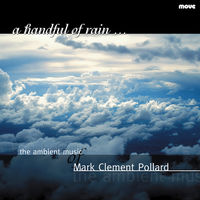
A Handful of Rain
Inspired by Javanese gamelan and Japanese Shinto music, Mark Clement Pollard's ambient concert works pursue beauty and simplicity. A Handful of Rain gathers this acclaimed Australian composer's popular style from the mid-1990s.
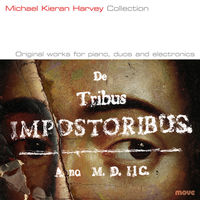
De Tribus Impostoribus
This is a new collection of works by acclaimed Australian pianist and composer Michael Kieran Harvey, bringing together music spanning more than two decades of his distinctive and adventurous creative practice.
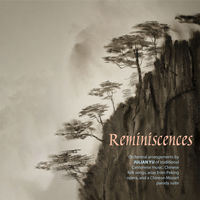
Reminiscences
This is Julian Yu's second collaboration Guangzhou Pearl River Symphony Orchestra, this time of orchestrations and arrangements of Chinese folk songs and musical excerpts.