Listen & tracks
5 works · 78:31
-
French Overture, BWV 831Johann Sebastian Bach 8 movements32:18
- 1 i. Ouverture 9:03
- 2 ii. Courante 2:51
- 3 iii. Gavottes 1 and 2 3:48
- 4 iv. Passepieds 1 and 2 3:23
- 5 v. Sarabande 3:46
- 6 vi. Bourrées 1 and 2 3:27
- 7 vii. Gigue 2:58
- 8 viii. Echo 3:02
-
Overture in F major, BWV 820Johann Sebastian Bach 5 movements10:24
- 9 i. Ouverture 3:01
- 10 ii. Entrée 3:04
- 11 iii. Menuet and Trio 2:15
- 12 iv. Bourrée 1:17
- 13 v. Gigue :47
-
Capriccio on the departure of a beloved brother, BWV 992Johann Sebastian Bach 6 movements12:24
- 14 i. Arioso, Adagio: ‘Friends Gather and Try to Dissuade Him from departing’ 2:24
- 15 ii. (Andante): ‘They Picture the Dangers Which May Befall Him’ 1:42
- 16 iii. Adagiosissimo (or Adagissimo): ‘The Friends’ Lament’ 3:18
- 17 iv. (Andante con moto): ‘Since He Cannot Be Dissuaded, They Say Farewell’ :52
- 18 v. Allegro poco: ‘Aria of the Postilion’ (Aria di postiglione) 1:22
- 19 vi. ‘Fugue in Imitation of the Postilion’s Horn’ (Fuga all’imitazione della cornetta di postiglione) 2:46
-
Aria Variata, BWV 989Johann Sebastian Bach 11 movements16:31
- 20 Theme 2:32
- 21 i. Variation 1 1:10
- 22 ii. Variation 2 1:13
- 23 iii. Variation 3 1:30
- 24 iv. Variation 4 1:26
- 25 v. Variation 5 1:13
- 26 vi. Variation 6 2:08
- 27 vii. Variation 7 :58
- 28 viii. Variation 8 :58
- 29 ix. Variation 9 1:01
- 30 x. Variation 10 2:22
-
31 Fantasia and Fugue in A minor, BWV 944 Johann Sebastian Bach 6:54
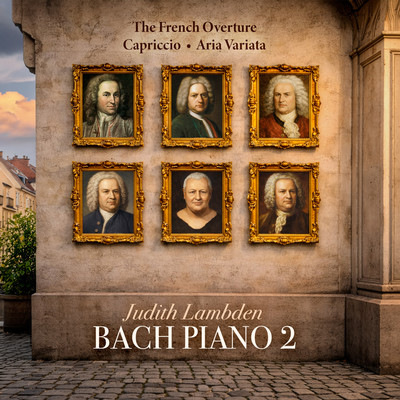
This recording crowns 17 years of Judith Lambden’s expanding Bach keyboard repertoire. Bach Piano 2 gathers five substantial works: the French Overture, the Overture in F major, the Capriccio, the Aria Variata, and the Fantasia and Fugue in A minor.
The French Overture is a unique work. Its imposing opening movement of about 14 minutes yields to a sequence of contrasting dances. The Overture in F major, also in the French style, is an earlier and less grand piece, yet it shares the same dotted rhythms across six movements.
Capriccio in B-flat major (BWV 992) on the Departure of his Beloved Brother unfolds sorrow, fear and grief across six distinct movements. Aria Variata (BWV 989), with its sparse and plain rhythm, invites rich ornamentation that fills and enhances the long sustained notes. Fantasia and Fugue in A minor was written for organ; this is Franz Liszt’s arrangement for piano.
In the artist’s words
Having played and recorded Bach’s Suites: the six French Suites, the six English Suites and the six Partitas, nothing could have prepared me for the awe-inspiring magnificence, delight and charm of a later work, a single lengthier Suite, and the French Overture.
Bach only began publishing his works for keyboard in 1731, the year he turned forty-six. The six Partitas were his Opus 1 – “Clavier-Übung Volume 1” (Keyboard Practice). Four years later a second volume came out, containing the Italian Concerto and the French Overture. Bach wanted to show his skill in translating the Italian style, as well as the contrasting French style (also called “Art Galant”), to the keyboard.
The French Overture is a unique work. Its opening movement is about 14 minutes in length, and is very imposing and impressive. It is like grandiose and stately processional music to be played in a cathedral. After faster contrapuntal sections, the slow, formal opening music is repeated, with its pointed, dotted rhythms. The sombre key of B minor lends the music a grave, serious character. I have omitted one of the repetitions to better suit modern day tastes.
There are 10 more much shorter dances, presented in pairs, the first one repeated after the second, but this time without the internal repeats. Unusually, this French Overture does not include an Allemande.
The solemn and noble Courante is in 3/2 rhythm, in the French style. Next are graceful Gavottes, then with piquant charm, Passepieds including trills and mordents. The slow dance, an intense and passionate Sarabande, in triple time follows. Next follow two Bourrées – lively and energetic, and then a sprightly Gigue in bouncing rhythm. This would usually be the final dance of a Suite, but Bach gives an extra virtuoso piece to end this great invention. It is Echo, which has markings ‘piano’ and ‘forte’ to give dynamic contrasts.
This is an earlier, and less grand, work than the French Overture. The Opening movement or “Overture” has the same dotted rhythms, and this miniature work is in the French style. It is in 6 movements.
J.S. Bach was born in 1685, and orphaned at the age of ten. He was put into the care of a brother Johann Christoph Bach, fifteen years his senior. This brother taught the younger Bach keyboard and composition. Another older brother – Johann Jacob Bach, an oboist, went to Sweden to join the orchestra of the Swedish King Charles XII in 1704. It is thought that this Capriccio of farewell was written in honour of this brother. It is an early work of Bach, then still in his teenage years. It is his only piece of programme music (one that tells a story).
The work is in six movements, each of them fairly short, totalling about twelve minutes. First is Arioso – gently pleading. His friends are trying to dissuade him from leaving. Second is Andante (Fugato) – a short Fugue in which they warn him of the dangers and misfortunes which may befall him. Third is Adagissimo (very slow) – a sorrowful lament in the form of a Passacaglia, with figured bass only. The player must fill in the chords. Fourth is an Aria – a sad ornamented melody, saying goodbye. Fifth is Aria di postiglione: Adagio poco. The postal coach arrives, blowing its horn (this is shown in music by a downward octave leap). Sixth is Fuga all’imitazione della cornetta di postiglione. This final Fugue movement combines two motives: the subject evoking trumpets, and the countersubject imitating the posthorn.
Aria Variata is a theme with variations and has the additional words “alla maniera Italiana” in its title. It is in A minor, and is a relatively early work from 1709. It consists of ten virtuoso variations, each in binary form with both sections repeated. There is much scope for rich ornamentation with mordents and trills, as rhythmically the music is sparse and plain, and needs filling in to enhance the sustained long notes. There are similarities in form to Bach’s great Goldberg Variations (BWV 988) written much later.
This original for organ is an arrangement for piano by Franz Liszt.
Reviews
Throughout the album, Lambden’s profound connection to Bach’s music is evident, as she brings out the nuances and ever-changing characters of each composition. Her daring vision of negotiating between authentic and innovative performance styles of Bach’s works adds a unique dimension to the recordings.
Artists

Judith Lambden
piano
Distinguished Australian pianist and harpsichordist Judith Lambden has recorded many works on the Move label, among them Schubert’s great B-flat Sonata, Bach’s English and French Suites, the six Partitas, and a wide span of other J.S. Bach keyboard works.
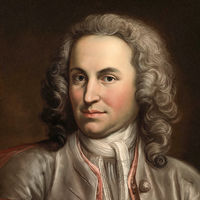
Johann Sebastian Bach
composer
Johann Sebastian Bach (1685–1750) was a German composer and organist of the late Baroque. His sacred and secular music for choir, orchestra, organ and solo instruments remains among the foundations of the Western concert and church repertory.
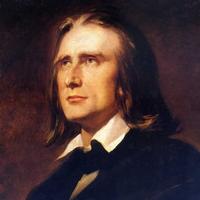
Franz Liszt
arranger
Franz Liszt (1811–1886) was a Hungarian composer, virtuoso pianist, conductor and teacher of the Romantic era. His vast output reshaped piano technique, invented the symphonic poem and pushed harmony toward the twentieth century.
Digital booklet
Digital booklet Notes, texts and credits — read online or download the PDF Download the PDFPerformers
- Judith Lambden · piano
Technical credits
-
Recording Engineer
Blake Stickland
Vaughan McAlley
-
Mastering Engineer
Martin Wright
-
Venue
Move Records Studio
Details
- List price
- $25.00 AUD
- Total playing time
- 78 minutes 31 seconds
- Release date
- 7 Aug 2023
- Category
- Classical
- Genre
- Baroque
- Musical work copyright
- © 2023 Judith Lambden
- Sound recording copyright
- ℗ 2023 Move Records
- Catalogue
- MCD 653
- EAN
- 9314574065329
More to explore
Bach Piano 1
Pianist Judith Lambden continues her long-running survey of Bach’s keyboard works. This programme gathers four early toccatas with the Chromatic Fantasia and Fugue and the Italian Concerto.
Life and Love
Cameron Roberts plays Johann Sebastian Bach at the piano, joining original keyboard works with his own arrangements and those of Busoni and Lipatti.

The Well-Tempered Clavier: Books 1 and 2
Distinguished Australian pianist and harpsichordist Judith Lambden presents J.S. Bach’s complete Well-Tempered Clavier, Books I and II (BWV 846–893), recorded across nine years as a five-CD set.

Bach to China with Yu
Volume 3 of Julian Yu’s clarinet music, with Robert Schubert and ensemble in arrangements that join Chinese folk melody to Western classical craft.
Crossing Paths
Ensemble Liaison and the Tony Gould Trio take turns across the programme: each piece is heard first in a scored reading, then in an improvised jazz response that opens the same melodic and harmonic material to fresh colour.
Shichiseki
Collaborations with violinist Miwako Abe and cellist Alister Barker sit beside solos written for Michael Kieran Harvey by Gabriella Vici and Andrián Pertout, spanning Japanese, Latin American and South Indian influences.