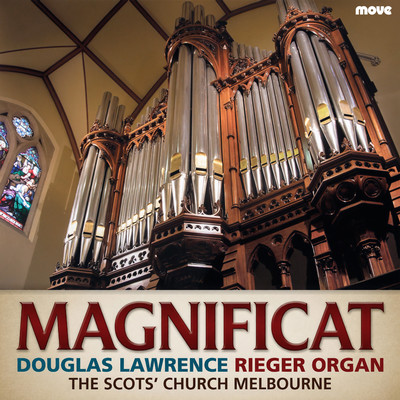
Listen & tracks
2 of 22 tracks have a preview · 15 works · 74:11
-
1 Meine Seele erhebt den Herren Johann Sebastian Bach :26
-
2 Fuga sopra il Magnificat, BWV 733 Johann Sebastian Bach 4:48
-
3 Chorale: Liebster Jesu, wir sind hier, BWV 373 Johann Sebastian Bach :56
-
4 Chorale Prelude: Liebster Jesu, wir sind hier, BWV 731 Johann Sebastian Bach 2:08
-
Trio Sonata 4 in E minor, BWV 528Johann Sebastian Bach 3 movements11:12
- 5 i. Adagio/Vivace 3:08
- 6 ii. Andante 4:50
- 7 iii. Un poco Allegro 3:14
-
8 Chorale: Erbarm dich mein, O Herre Gott, BWV 305 Johann Sebastian Bach 1:25
-
9 Chorale Prelude on Erbarm dich mein, O Herre Gott, BWV 721 Johann Sebastian Bach 3:42
-
10 Prelude and Fugue in G minor, BuxWV 149 Dieterich Buxtehude 7:32
-
11 Chorale: Jesu, meine Freude, BuxWV 60 Dieterich Buxtehude 1:06
-
12 Partita with 10 variations on Jesu, meine Freude Johann Gottfried Walther 11:49
-
Magnificat SuiteMichel Corrette 5 movements7:21
- 13 Plein Jeu :42
- 14 Tierce en Taille 1:51
- 15 Duo a deux Basses 1:10
- 16 Concert de flutes 1:19
- 17 Fuga doppia 2:19
-
Prelude and Fugue in C minor, Op. 37 No. 1Felix Mendelssohn 2 movements8:38
- 18 Prelude 4:36
- 19 Fugue 4:02
-
20 Prelude in E-flat major Gabriel Pierné 3:08
-
21 Choral Dorien Jehan Aristide Alain 4:08
-
22 Fantasie et Fugue in B flat major Alexandre Pierre François Boëly 5:52
The Song of Mary – “My soul magnifies the Lord, and my spirit hath rejoiced in God my Saviour” (Gospel of Luke 1:46–55) – has inspired composers through the ages.
This programme opens with Bach’s Fuga sopra il Magnificat and later turns to movements from two Magnificat Suites by Michel Corrette. The title also points to the magnificence of the Rieger organ in the Scots' Church, Melbourne.
Installed in 2000, the instrument has drawn outspoken praise from many of the world’s most eminent organists. The recording explores its intensely musical colours and the distinct registrations of the German and French schools. In the earlier works the German repertoire rests on the Organo Pleno – a sound founded on the mixtures – while the French pieces are built on the reeds (trumpet, clairon, cromorne, voix humaine): a clear juxtaposition of the two traditions, and a tribute to the organ’s voicer, Oswald Wagner.
The music spans some three hundred years, from Dietrich Buxtehude (born 1637) to Jehan Alain (died 1940).
Reviews
This is the second such recording to feature the recently built Rieger Organ in The Scots' Church in Melbourne, Australia and after hearing it, I am absolutely going to seek out the first.
This well-conceived program shows off the versatility and character of this remarkable instrument... What this recording shows off remarkably well is the versatility of the instrument... Perhaps the most impressive track on the entire outstanding disc is the Buxtehude Prelude and Fugue. All of the voicings are remarkably clear, and Lawrence displays fine rhythmic dexterity and purpose. The massive 32’ brass bass pedals are stunning... Organists and connoisseurs will enjoy the booklet which contains the specifications for the Rieger Organ as well as an internet website address for more information. The booklet also contains mini-essays, presumably written by the organist, which give insight into the registration used for each piece and information on the composers. But whether one is an organist, lifelong enthusiast or novice, there is plenty to enjoy in this disc. Turn it up and enjoy the majesty of the Rieger Organ.
On each track of this anthology (but above all in the German baroque material, to which lesser players too often impart an overwhelming stodginess) Lawrence demonstrates his keen gift for registrations at once idiomatic and ear-catching. Whilst perhaps the recording quality lacks the ultimate in-your-face vividness, the Mendelssohn fugue’s concluding bars will give any speakers a good workout. Further adorning the package are the performer’s own user-friendly booklet notes, a comprehensive stop list, and – a captivating touch, this – sung versions of the chorale melodies Bach employed. What’s not to love?
Douglas Lawrence presents a wide spectrum of works ... beginning with Bach, Buxtehude, Walter, Mendelssohn, Corrette, Pierne, Boely and Alain. All are accomplished with the performer's trademark confidence ... But the real star of the CD is the Rieger organ, an instrument of splendid responsiveness and clear-speaking variety of timbres ... even in its quieter moments is loaded with celebratory ebullience.
Artists
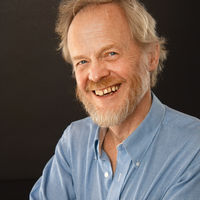
Douglas Lawrence
organ
Melbourne organist Douglas Lawrence is Director of Music at The Scots' Church and Teacher of the Organ at the University of Melbourne. He founded the Choir of Ormond College and directed it from 1982 to 2006.
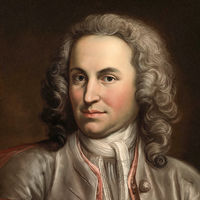
Johann Sebastian Bach
composer
Johann Sebastian Bach (1685–1750) was a German composer and organist of the late Baroque. His sacred and secular music for choir, orchestra, organ and solo instruments remains among the foundations of the Western concert and church repertory.
Dieterich Buxtehude
composer
Dieterich Buxtehude (c. 1637–1707) was a Danish-born organist and composer of the middle Baroque, long based at Lübeck. His organ works remain central to the standard repertoire.
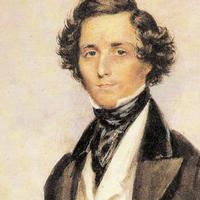
Felix Mendelssohn
composer
Jakob Ludwig Felix Mendelssohn Bartholdy (1809–1847) was a German composer, pianist, organist and conductor of the early Romantic period. His works include symphonies, concertos, oratorios, piano music and chamber music.
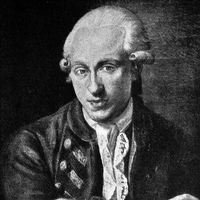
Johann Gottfried Walther
composer
Johann Gottfried Walther (1684–1748) was a German organist, composer, music theorist and lexicographer of the Baroque era. He is remembered for his organ works and for the first major German dictionary of music.

Jehan Aristide Alain
composer
Alexandre Pierre François Boëly
composer
Michel Corrette
composer
Gabriel Pierné
composer
Digital booklet
Digital booklet Notes, texts and credits — read online or download the PDF Download the PDFPerformers
- Douglas Lawrence · organ
- Jacob Lawrence · treble · tracks 1, 3, 8 and 11
- Meredith Cox · alto · tracks 3, 8 and 11
- Lachlan Mackenzie-Spencer · tenor · tracks 3, 8 and 11
- Thomas Drent · bass · tracks 3, 8 and 11
Technical credits
-
Recording Engineer
Martin Wright
-
Editing Engineer
Vaughan McAlley
-
Venue
The Scots' Church, Melbourne
Details
- List price
- $25.00 AUD
- Total playing time
- 74 minutes 11 seconds
- Release date
- 2010
- Categories
- Classical, Organ
- Genres
- Organ, Baroque, Romantic & Impressionist
- Musical work copyright
- © 2010 Move Records
- Sound recording copyright
- ℗ 2010 Move Records
- Catalogue
- MD 3340
- EAN
- 9314574334029
More to explore
Encores
Directed by Douglas Lawrence, the Australian Chamber Choir gathers favoured concert encores in a programme that shows the ensemble at its most immediate and engaging.
Gold
The Australian Chamber Choir, directed by Douglas Lawrence, performs works by eight Australian composers. From Gordon Kerry’s Shakespeare setting to Malcolm Williamson’s English Eccentrics, the programme turns individual voices into pure gold.
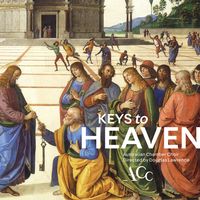
Keys to Heaven
The Australian Chamber Choir opens with the first recording of Agata della Pietà’s cantata Ecce nunc, written in eighteenth-century Venice by an orphan of the Ospedale della Pietà and reconstructed by Elizabeth Anderson. Sacred works by Palestrina and Allegri complete the programme.
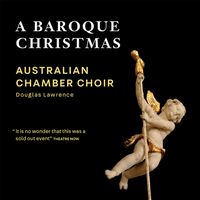
A Baroque Christmas
The music on this CD is a historical Christmas “pick of the pops”, from the late 1400s to the end of the Baroque period. Directed by Douglas Lawrence, the Australian Chamber Choir offers a programme recorded live in concert during their 2019 European tour. The 17 tracks are drawn from lesser-known seasonal works, championing a sublime repertoire that is all too often neglected.
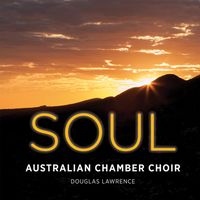
Soul
Douglas Lawrence OAM leads the Australian Chamber Choir through sacred music spanning Renaissance polyphony, early Baroque splendour and African-American spirituals.
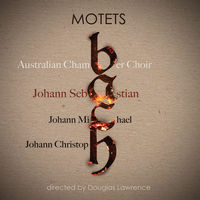
Bach Motets
The Australian Chamber Choir, directed by Douglas Lawrence, performs motets by J.S. Bach with works by Johann Michael Bach and Johann Christoph Bach.