Listen & tracks
6 works · 71:05
-
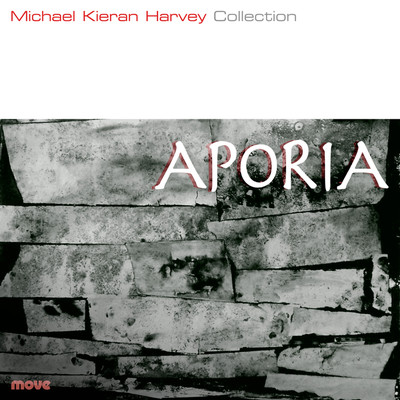
Piano Sonata No. 3 "Aporia" (2016)Michael Kieran Harvey 3 movements20:49
- 1 i. 9:18
- 2 ii. 7:39
- 3 iii. 3:52
-
4 The Broken Dance (2010) David Harris 10:12
-
5 The Unfinished Chorale (2010) David Harris 6:09
-
Homages – Book 1 (2015)Allan Walker 5 movements11:38
- 6 i. … RC with HH in the background – apologies GL 1:25
- 7 ii. … DM 2:37
- 8 iii. … MB and EC – an imagined conversation 1:58
- 9 iv. … AB/BE 2:23
- 10 v. … AS 3:15
-
11 From the Depths (2015) Paul Grabowsky 8:03
-
12 Meditation (2016) – for solo piano Simon Barber 14:14
The great Australian pianist and champion of new music presents his third piano sonata Aporia with works by Paul Grabowsky, David Harris, Allan Walker and Simon Barber.
In the artist’s words
This work was commissioned by Graeme Lee for his wife Margaret. It was written with deepest gratitude for them from December 2015 until January 2016 and was premiered at the Melbourne Recital Centre on 20 May 2016. Trams run outside their home in central Melbourne. The noise of the wheels formed terrifying harmonics and chaotic rhythms. The harmonic series and its inversion (stated at the beginning) form the basis of the work – all pitch and durational material is freely derived from this sequence. The sonata explores the concept of aporia, which is a state of bewilderment, of not being sure of the way forward. This is expressed by the interplay between intuitive and systematised writing.
These contrasting movements from an incomplete series for solo piano seeking to capture the sound of ‘time’s winged chariot hurrying near’, a phrase famously penned by poet Andrew Marvell describing the inescapable tick of the mortal clock. The broken dance alludes to the steps which make up the day, a routine of interruptions and pursuits incomplete, amongst surges of momentum. The pace varies, and light, dark or indifferent in nature, we measure out the steps, until we don’t.
The Unfinished Chorale offers a period of reflection, unsatisfactory in length, as is the nature of these moments, and such is length of a lifetime. Harmonically the piece never really resolves, instead growing and diminishing like waves on the shoreline.
Allan Walker marked his 60th year with four Homages that reflect on the multifaceted modernist tradition of which he is an expert scholar. The first piece of the current cycle (still ongoing in composition) acknowledges both Ruth Crawford and Herbie Hancock; further pieces relate to Donald Martino, Milton Babbitt and Arnold Schoenberg.
Each piece makes reference to a composer or pianist who has been significant in shaping my musical thinking. Although not my intention, the collection turned out to be a mostly American one – composers Milton Babbitt, Elliott Carter, Ruth Crawford, Donald Martino, and jazz pianists Bill Evans and Herbie Hancock. As for the Europeans in the set – Schoenberg, and Berg to a lesser degree, exerted a deep influence on these American composers and Schoenberg as the émigré living in Hollywood for 15 years maybe counts as part-American.
These homages don’t seek to make any kind of obvious imitation of a composer’s style; they are built upon more oblique references such as a compositional technique or gestural quality which I associate with the work of that particular figure. Sometimes two individuals are combined in the one piece (as in i, iii and iv).
i. … RC with HH in the background – apologies GL
Herbie Hancock recalled that, as a member of Miles Davis’ “second great quintet”, the trumpeter asked him during a recording session to stop using his left hand. Taking his advice, Hancock relinquished the harmonic support and rhythmic punctuation typically provided by the left hand. This one-handed approach became one of Hancock’s trademarks in this group especially in fast tempo pieces. This homage begins with this unaccompanied single line idea, becomes more complex and eventually returns to one line (but now doubled as an octave). The pitch material is drawn from the final movement of Ruth Crawford’s 1931 string quartet and uses a rotational technique typical of her atonal music.
ii. … DM
Donald Martino fashioned a highly expressive 12-tone language characterised by a rich and clearly articulated harmony that underpins an often rapidly changing surface. I wrote this not long after my mother’s death and somehow the muffled drums of a funeral march found their way into the piece.
iii. … MB and EC – an imagined conversation
A long melodic line (Elliott Carter) surrounded by mercurial and animated figures (Milton Babbitt) governed by a slice of a Carter-esque large-scale polyrhythm.
iv. … AB/BE
Alban Berg’s music springs to mind when I hear some of Bill Evans’ solo piano work especially in his last recordings. Evans was familiar with and enthusiastic about Berg’s music and they share an essentially lyrical, romantic approach to the keyboard so it seemed natural to link them in this homage. An extra nod towards AB is made by making the last section a rhythmic and pitch palindrome of the first.
v. … AS
A hint of a Viennese waltz and a re-imagining of the charged piano gestures of Schoenberg’s op. 23
The pieces were written for and dedicated to Michael Kieran Harvey, Australia’s champion of new keyboard music. The first performance (i, ii, iii and v) was given by him on 11 September 2015 at the Arts House North Melbourne as part of the Astra Chamber Music Society concert series and the complete set at the Hobart Conservatorium on 19 November 2015.
A young man falls to his death on Sydney Harbour. His friends, in their grief, gather on the Balmain shore and create a mourning site, made of candles, flowers, memorabilia. A quiet pervades the scene, the gentle lapping of waves merging with hushed conversations. The life of the city continues into the dusk, the comings and goings of boats and ferries, the hum of a distant motorway. He has returned to the waters.
… Aus der Tiefen rufe ich, Herr, zu dir … (Out of the Depths) is the first of a set of pieces for Michael Kieran Harvey which have been under discussion for two decades, since the premiere of Grabowsky’s Piano Concerto in 1996. The title refers to J. S. Bach’s cantata based on the Hebrew Psalm 130, ‘Out of the depths I cried’; the new work embracing both jazz-inflected arioso material and chorale-style fragments.
Meditation was written from a post-technological, fantastical perspective beyond the most monotheistic or monocultural absolutism and thus won’t be easily digested by the music industry for sampling. Indeed, this music has no place in the aforementioned culture, does not exist within its terminology and makes only passing reference to templates, self-generated, which, if nothing else, penetrate to a state of being where the superlative will to change supersedes itself in perpetuum, unhesitatingly, ad infinitum, with the (renewed) autonomy of sound arising as an uncensored side-effect.
Artists
Michael Kieran Harvey
piano
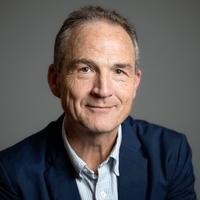
Australian pianist and composer Dr Michael Kieran Harvey FAHA is among the foremost interpreters of contemporary piano music of his generation. A champion of Australian music, he regularly commissions new work and has performed with the country’s leading contemporary ensembles and orchestras.

Simon Barber
composer
Tasmanian born composer Simon Barber studied composition with Don Kay in the mid to late 90s at the Tasmanian Conservatorium of Music in Hobart before relocating to Berlin in 2002.

Paul Grabowsky
composer
Paul Grabowsky is a prominent figure in Australian music, as jazz pianist and composer, artistic director, and founder conductor of the Australian Art Orchestra.
David Harris
composer
David Harris is a Melbourne-based composer and former lecturer in composition at the Elder Conservatorium, University of Adelaide. Since 1980 his prolific output has ranged from hardcore minimalism to post-romantic expression and experimental hybrids.
Allan Walker
composer
Allan Walker is a composer, music researcher, editor and educator.
Digital booklet
Digital booklet Notes, texts and credits — read online or download the PDF Download the PDFPerformers
- Michael Kieran Harvey · piano
Technical credits
-
Editing Engineer
Vaughan McAlley
-
Mastering Engineer
Martin Wright
-
Venue
ABC Studios, Adelaide (tracks 4 and 5)
Move Records Studio
Tasmanian Conservatorium of Music (track 12)
-
Cover illustration
Graeme Lee
Details
- List price
- $25.00 AUD
- Total playing time
- 71 minutes 5 seconds
- Release date
- 6 Jul 2017
- Category
- Classical
- Musical work copyright
- © 2017 Move Records
- Sound recording copyright
- ℗ 2017 Move Records
- Catalogue
- MD 3418
- EAN
- 9314574341829
More to explore
De Tribus Impostoribus
This is a new collection of works by acclaimed Australian pianist and composer Michael Kieran Harvey, bringing together music spanning more than two decades of his distinctive and adventurous creative practice.
The life in between
Michael Kieran Harvey anchors this solo piano programme with Martin Friedel’s final work, …the life in between…, then sets it among virtuoso scores by Pertout, Crossman, Spiers, Selleck and McAlley.
War Sonatas
Three piano sonatas by Michael Kieran Harvey, written as a response to twenty-first-century war. Spoken poems by Arjun von Caemmerer stand between the works, framing a triptych of anger, friendship and warning.
Threnody
Michael Kieran Harvey’s landmark 1995 Astra recital of late twentieth-century Australian piano music returns in a 2024 Move re-master. Premiere recordings by Harvey, Vine, Campbell, McCaughey, Byrne, Humble and Anderson form one continuous programme.
The Sparrow and the Mead Hall
Composed and mostly performed by Michael Kieran Harvey, these 2021 works move from the rarefied extended techniques of Piano Sonata #7 and Liszt–Busoni bravura in the Four Ballades to bebop wit in Lawyers… and metal-edged satire in Death Cap Mushroom.
Shichiseki
Collaborations with violinist Miwako Abe and cellist Alister Barker sit beside solos written for Michael Kieran Harvey by Gabriella Vici and Andrián Pertout, spanning Japanese, Latin American and South Indian influences.