Listen & tracks
2 of 7 tracks have a preview · 1 work · 55:26
-
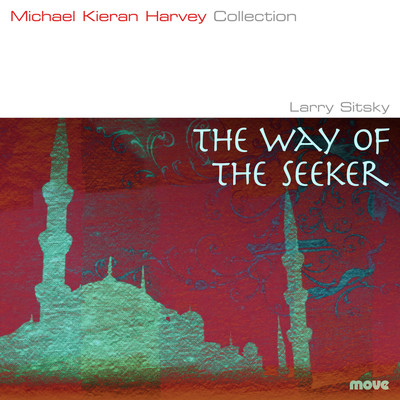
The Way of the SeekerLarry Sitsky 7 movements55:26
- 1 Prologue 5:36
- 2 Birth 12:22
- 3 The Guide 12:18
- 4 The Journey 8:26
- 5 Beyond Time 4:35
- 6 Epilogue: The Man of Light 6:40
- 7 Larry Sitsky introduction 5:29
Six movements follow the sections of Sanai’s Sair al-Ibad ila’l Maad, each a meditation on a quotation and a predominant dynamic, telescoping in length as the music moves from darkness into light.
Harvey’s performance is joined by a spoken introduction from the composer. The work stands in the Liszt–Busoni–Scriabin line and beside Sitsky’s other mystical piano journeys.
In the artist’s words
Sitsky's highly virtuosic work for solo piano The Way of the Seeker (completed 11 December 2004) is dedicated to the Canadian pianist and composer Gordon Rumson. This work takes its title from the English translation of Hakim Sanai's mystical text the Sair al-Ibad ila'l Maad (the Way of the Seeker) written in the 11th century. Abul Majd bin Majdud bin Adam, also known as Hakim Sanai, was one of the three great mystical Mathnavi poets of Persia, the others being Shaikh Faridu'd-Din 'Attar and Jalalu'd-Din Rumi. The youngest of these, Jalalu'd-Din Rumi, expressed his great admiration for Attar and Sanai in writing "Attar is the soul and Sanai its two eyes, I came after Sanai and Attar." In the translation of Sanai's Sair al-Ibad ila'l Maad by Idries Shah, the text is divided into definite sections. In The Way of the Seeker, Sitsky follows these divisions, using quotations from each section as subtitles for each of the six musical movements. Each movement should be understood as a meditation on its corresponding quotation.
i. Prologue … pp … you are not of water, yet stir into movement, not of earth, yet lend it shape.
ii. Birth … mf … there is in the soul an intuition of a superior state.
iii. The Guide … p … for your journey on this arduous path, your only provision will be fire …
iv. The Journey … f … you are prey to evil delusions.
v. Beyond Time … ff … pay the ferryman his fare, and leave behind the world of names …
vi. Epilogue: The Man of Light … pp … the distractions from The Way are many in your world …
The profound influence of Asian mysticism on Sitsky's creative output is evident from the titles of many of his works. The Way of the Seeker is based on thematic material derived from fragments of oriental chant. This theme is clearly stated in octaves at the opening of the piece and hypnotically recurs in various forms throughout each movement. Evocative of shamanistic incantation, this music recalls the sounds of Sitsky's early childhood in Tsientsin, China, where he frequented Buddhist temples, drawn there by the sounds of chanting.
Written in the tradition of Liszt, Busoni, Godowsky and Scriabin, The Way of the Seeker also responds to Sitsky's western musical heritage. A student of the virtuoso pianist and Busoni disciple Egon Petri, Sitsky was initiated into an esoteric understanding of composition that has persisted throughout his entire creative output. Like many of Sitsky's pieces, The Way of the Seeker begins in darkness; the first movement is all in a low register, and ends in light; in this case the Epilogue is quite literally entitled "The Man of Light". This emergence from darkness into light is a recurrent theme in those of Sitsky's pieces that document the various stages of the mystical journey. In this regard The Way of the Seeker can be regarded as a close relative of Sitsky's Twelve Mystical Preludes after the Nuctemeron of Apollonius of Tyana (1991). In composing The Way of the Seeker, Sitsky intended to generate a large-scale virtuosic work from as few pre-compositional determinants as possible. Each of the six movements is assigned a predominant dynamic, but the shaping of these dynamics inside each section is left to the performer. The durations of the movements telescope over the length of the work.
Music is to me a mystic experience, in the broadest understanding of that word; the mystic state can be achieved, even within music, in a number of ways. Taken in such a light, my compositions can then be regarded as biographical milestones on the road to self-awareness.
Franz Liszt invented the piano “recital”, and the music he played was primarily contemporary. The piano recital was for him an experimental, revelatory arena, imbued with a spirit of curiosity, of time travel to a distant future. Larry Sitsky’s monumental work, The Way of the Seeker, is absolutely overflowing with the forward-looking spirit of Liszt, while at the same time paying homage to Busoni and Scriabin and the great mystical pianistic tradition.
Reviews
Rhapsodic! Hugely ambitious! This is Larry Sitsky's State of the Union address. I'm terribly impressed. The piece has a massive architecture, and yet never a sense of gradiosity … there's always a through line. Michael Kieran Harvey is in scintillating form … this is a real meeting of minds. A journey from darkness into light.
Michael Kieran Harvey is a super-virtuoso and musician of great verve and power. But also, he understands sound in a deep and meaningful way. Listen (to) the rhythmic life of his playing, the care and sensitivity to the very quality of the sound as well as the shape and direction of phrases. He can execute a startling number of notes in a very short space of time, evenly and accurately, but always in the service of the music – and here most crucially – its inner meaning. His performance of The Way of the Seeker reveals him in total command and filled with creative fire. This is an outstanding artistic achievement for he indeed 'gets it' and his understanding adds significantly to the potency of the composition.
Artists

Michael Kieran Harvey
piano
Australian pianist and composer Dr Michael Kieran Harvey FAHA is among the foremost interpreters of contemporary piano music of his generation. A champion of Australian music, he regularly commissions new work and has performed with the country’s leading contemporary ensembles and orchestras.
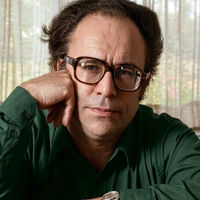
Larry Sitsky
narrator
Larry Sitsky's activities as a composer, pianist, writer, broadcaster and teacher place him among the foremost ambassadors of contemporary Australian piano music. His work has made a lasting contribution to the Australian musical tradition.
Digital booklet
Digital booklet Notes, texts and credits — read online or download the PDF Download the PDFPerformers
- Michael Kieran Harvey · piano · tracks 1–6
- Larry Sitsky · track 7
Technical credits
-
Producer
Brooke Green
-
Recording Engineer
Australian Broadcasting Corporation
Veronika Vincze
-
Editing Engineer
Vaughan McAlley
-
Mastering Engineer
Martin Wright
-
Venue
Hobart Conservatorium
-
Credit
Benjamin Thomas
Judith Crispin
Details
- List price
- $25.00 AUD
- Total playing time
- 55 minutes 26 seconds
- Release date
- 2006
- Categories
- Australian, Classical, Keyboard
- Musical work copyright
- © 2006 Move Records
- Sound recording copyright
- ℗ 2006 Move Records
- Catalogue
- MD 3309
- EAN
- 9314574330922
More to explore
De Tribus Impostoribus
This is a new collection of works by acclaimed Australian pianist and composer Michael Kieran Harvey, bringing together music spanning more than two decades of his distinctive and adventurous creative practice.
The life in between
Michael Kieran Harvey anchors this solo piano programme with Martin Friedel’s final work, …the life in between…, then sets it among virtuoso scores by Pertout, Crossman, Spiers, Selleck and McAlley.

War Sonatas
Three piano sonatas by Michael Kieran Harvey, written as a response to twenty-first-century war. Spoken poems by Arjun von Caemmerer stand between the works, framing a triptych of anger, friendship and warning.
Threnody
Michael Kieran Harvey’s landmark 1995 Astra recital of late twentieth-century Australian piano music returns in a 2024 Move re-master. Premiere recordings by Harvey, Vine, Campbell, McCaughey, Byrne, Humble and Anderson form one continuous programme.
The Sparrow and the Mead Hall
Composed and mostly performed by Michael Kieran Harvey, these 2021 works move from the rarefied extended techniques of Piano Sonata #7 and Liszt–Busoni bravura in the Four Ballades to bebop wit in Lawyers… and metal-edged satire in Death Cap Mushroom.
Shichiseki
Collaborations with violinist Miwako Abe and cellist Alister Barker sit beside solos written for Michael Kieran Harvey by Gabriella Vici and Andrián Pertout, spanning Japanese, Latin American and South Indian influences.