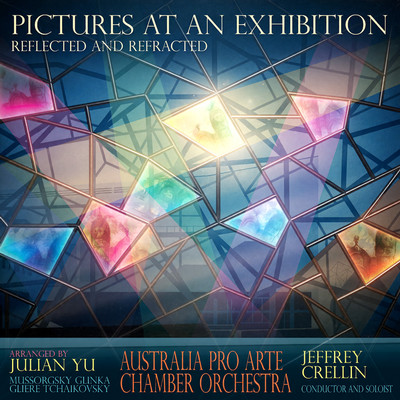
Listen & tracks
2 of 43 tracks have a preview · 4 works · 63:21
-
Pictures at an ExhibitionModest Mussorgsky 16 movements32:08
- 1 Promenade 1:31
- 2 Gnomes 2:34
- 3 Promenade :48
- 4 The Old Castle 4:15
- 5 Promenade :27
- 6 Tuileries – Children’s Dispute After Play 1:04
- 7 Bydlo 2:34
- 8 Promenade :39
- 9 Ballet of the Unhatched Chicks 1:14
- 10 Samuel Goldenberg and Schmuyle 2:35
- 11 Promenade :53
- 12 The Market in Limoges – Astounding News 1:36
- 13 The Catacombs – Roman Sepulchre 1:51
- 14 Talking with the Dead in the Language of the Dead 1:52
- 15 The Hut on Chickens’ Legs: Baba Yaga 2:45
- 16 The Great Gate of Kiev 5:30
-
Coloratura Concerto for Oboe and String OrchestraReinhold Glière 2 movements14:13
- 17 First movement 8:25
- 18 Second movement 5:48
-
19 The Nightingale Mikhail Glinka 6:45
-
The Seasons, Op. 37aPyotr Ilyich Tchaikovsky 2 movements10:15
- 20 No. 6, June – Barcarolle 5:31
- 21 No. 10, October – Autumn Song 4:44
Written in 2001 for sixteen players, Yu’s Pictures treats the famous suite as material for reflection rather than display. Solo viola stands for Mussorgsky walking the gallery; double bass and clarinet become the two Jews; xylophone voices the children in the Tuileries. Hocket, pointillism and carefully judged sound effects—clusters, glissandi, pitchless air—open perspectives Ravel never sought, including quiet quotations of the Chinese melody Han Tian Lei.
Jeffrey Crellin conducts the Australia Pro Arte Chamber Orchestra and is the oboe soloist in Glière’s once little-known coloratura concerto, recast for oboe and strings, and in Yu’s four-variation reading of Glinka’s The Nightingale. Two movements from Tchaikovsky’s The Seasons—June’s Barcarolle and October’s Autumn Song—close the programme in the same intimate orchestral language.
Recorded live and in rehearsal at BMW Edge in October 2005, with The Nightingale taken at Huntingtower School, the disc presents world-premiere performances of all but the Mussorgsky.
In the artist’s words
I first heard this piece on an old 78 rpm record when I was in my first year as a student at the Conservatorium in Beijing, where we had access to a lot of music from the Soviet Union. Whereas most European music left me cold, I was very moved by the melodic beauty of this piece, and in 1982 I made a piano reduction from the orchestral score for recital purposes, as we had no access to a piano version. After migrating to Australia in 1985, I discovered that almost nobody here knew this piece, and it was impossible to find a recording in the shops. Only recently has it gradually become known in the Western world. My arrangement is mostly loyal to the original, except for the short cadenza just before the end of the second movement.
Most people come to Mussorgsky’s piano suite Pictures at an Exhibition via Ravel’s sleek orchestration, only to discover, when they finally hear what Mussorgsky wrote, that the original is altogether darker and more rugged than the Frenchman’s arrangement. In fact Ravel’s is only one of many arrangements: I believe there are now well over 30 versions of the piece, for guitar, for brass quintet, brass band and percussion ensemble. Vladimir Horowitz even made one for piano, which was surely unnecessary. Why would anyone bother with yet another arrangement, you might wonder. You need only listen to a few seconds of Julian Yu’s new version to hear the reason. There is still so much to say about this remarkable piece, and in Yu’s case what he says is very personal.
Perhaps it was the pentatonic nature of Mussorgsky’s introductory Promenade that sent Yu, musically speaking, back to his native China. In my memory of the first performance of Yu’s orchestration, I actually recall there being Chinese instruments, too, but in fact there aren’t any. On the contrary, much of the time Yu seems to be dealing in a deliberately kitschy Western idea of what Chinese music sounds like. His arrangement is full of musical jokes. I remember grinning broadly when I heard it in the concert hall.
Yu uses a small orchestra but he is incredibly resourceful with what is at his disposal, creating one striking effect after another. At the premiere, I remember looking around the orchestra trying to discover which instrument or combination of instruments was producing a particular effect. More than once I could have sworn there was amplification and reverb being used – the music seemed suddenly to have entered a cavernous space – but again it turned out to be merely the result of skilful orchestration.
Listening to Pro Arte playing Mussorgsky’s notes dressed up in Yu’s orchestral clothing you sometimes feel you are hearing them for the first time. In some cases, you are – this is not a strict arrangement by any means – but more often than not it is simply a matter of perspective. And that perspective counts for a lot. Like Ravel before him, Julian Yu has produced a new piece out of Mussorgsky’s original. This CD should be filed under Y, not M.
Reviews
exquisitely refined orchestration ... with a spacious and well-balanced recording, Jeffrey Crellin and his musicians bring us a brilliant performance ... two Tchaikovsky morsels, also splendidly played ... an irresistible disc, complemented by excellent booklet notes
His arrangement is full of musical jokes ... one striking effect after another
Julian Yu’s colourful and imaginative orchestrations of Russian classics make for some fascinating listening.
Appealing selection of works, original ideas, excellent performance
This mix of the familiar and the unfamiliar, both in musical terms, is well thought out, sensitive and beautifully realised
an astonishing disc: imaginative, resourceful, colourful, different
Artists
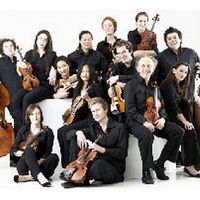
Australia Pro Arte Chamber Orchestra
orchestra
Australia Pro Arte Chamber Orchestra was an Australian chamber orchestra based in Melbourne, Victoria, active in the 1990s and 2000s. With APA, experience the emotionally engrossing and intellectually inspiring works of the baroque era, sprinkled with works of today that celebrate and relate to life as we know it.
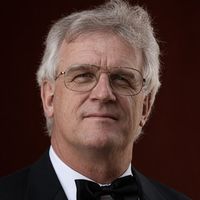
Jeffrey Crellin
conductor, oboe
Jeffrey Crellin is a well-known soloist who has appeared with the Melbourne, Sydney, Adelaide, Queensland and Tasmanian symphony orchestras, as well as orchestras in Germany and Japan. A founding member of the Australian Chamber Soloists, he has also directed the Pro Arte Chamber Orchestra.

Julian Yu
arranger
Julian Yu is a multi-award-winning Australian composer whose musical language is imbued with elegance and expressiveness, both enhanced by impeccable craft and a special attention to detail.
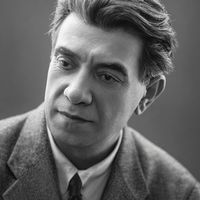
Reinhold Glière
composer
Reinhold Glière composed with broad Slavonic epics and cantabile lyricism, rich harmony and bright orchestral colour. His work runs from the ballet The Red Poppy and the symphony Ilya Muromets to concertos and intimate salon pieces built on long singing lines.
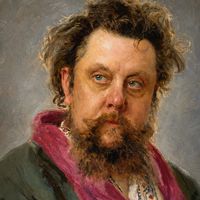
Modest Mussorgsky
composer
Modest Mussorgsky (1839–1881) was a Russian composer of the Romantic period, celebrated for a boldly national voice that stood apart from Western convention. His music turns repeatedly to Russian history, folklore and the vivid colour of everyday speech.
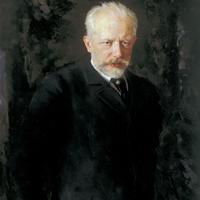
Pyotr Ilyich Tchaikovsky
composer
Pyotr Ilyich Tchaikovsky (1840–1893) was a Russian composer of the Romantic era. His ballets, concertos and orchestral works remain among the most widely performed music in the classical repertoire.

Alexander Alyabyev
composer
Mikhail Glinka
composer
Digital booklet
Digital booklet Notes, texts and credits — read online or download the PDF Download the PDFPerformers
- Australia Pro Arte Chamber Orchestra · orchestra
- Jeffrey Crellin · conductor, oboe
- William Hennessy · concertmaster
- Caroline Henbest · solo viola · tracks 1, 11 and 14
- Andrew Moon · solo double bass · track 10
Technical credits
-
Producer
Jeffrey Crellin
Julian Yu
Martin Wright
-
Recording Engineer
Martin Wright
-
Editing Engineer
Martin Wright
-
Mastering Engineer
Martin Wright
-
Venue
BMW Edge (all except track 19)
Huntingtower School (track 19)
-
Thanks to
Creative Australia
-
Credit
Benjamin Thomas
Jeffrey Crellin
Details
- List price
- $25.00 AUD
- Total playing time
- 63 minutes 21 seconds
- Release date
- 21 May 2008
- Categories
- Classical, Orchestral
- Musical work copyright
- © 2008 Move Records
- Sound recording copyright
- ℗ 2008 Move Records
- Catalogue
- MD 3312
- EAN
- 9314574331226
More to explore
Reminiscences
This is Julian Yu's second collaboration Guangzhou Pearl River Symphony Orchestra, this time of orchestrations and arrangements of Chinese folk songs and musical excerpts.
Bach to China with Yu
Volume 3 of Julian Yu’s clarinet music, with Robert Schubert and ensemble in arrangements that join Chinese folk melody to Western classical craft.
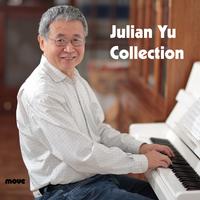
Julian Yu 10 CD Collection
Ten Move CDs of Chinese-Australian composer Julian Yu, spanning chamber, piano and clarinet works written over decades, with Move 50 as a bonus disc.
50 Chinese Folk Songs
The first of two collections on this disc, 50 Chinese Folk Songs, presents Julian Yu’s piano arrangements of well-known Chinese melodies. Fifteen further early piano pieces mix song arrangements with original writing. All 65 tracks are played by Ke Lin.
Move 50
Twenty-four Australian composers mark Move Records’ fiftieth year with short new works gathered on this commemorative disc.
Old and Yu: The Clarinet Music of Julian Yu, Vol. 2
Catchy short pieces by Julian Yu for clarinet with string quartet, and with cello and piano: playful settings that braid Chinese folksong with oddly familiar classical themes, including Dvořák and Mozart.