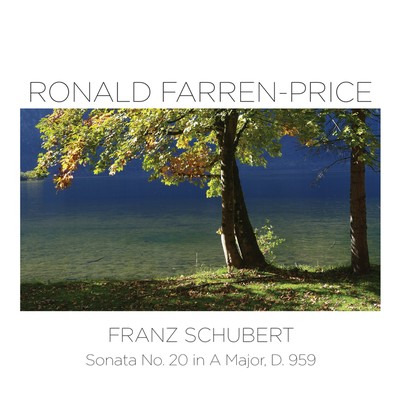
Listen & tracks
3 of 4 tracks have a preview · 1 work · 42:57
-
Sonata No. 20 in A Major, D. 959Franz Schubert 4 movements42:57
- 1 i. Allegro (A major) 16:30
- 2 ii. Andantino (F sharp minor) 7:41
- 3 iii. Scherzo. Allegro vivace (A major) 5:25
- 4 iv. Rondo. Allegretto (A major) 13:21
Schubert’s Sonata No. 20 in A major is a work of striking complexity: delicate melodies, intricate harmonies, and dramatic shifts of mood. Farren-Price’s reading shows both virtuosity and sensitivity. His nuanced playing draws out the depth of feeling Schubert wrote into the score.
The performance is intimate as well as powerful. It is a considered account of one of the late sonatas, offered for listeners who want the music heard with clarity and care.
In the artist’s words
Schubert died in November 1828 at the age of thirty-one. Two months before, in September of that year, he finished three long piano sonatas and after that he completed the now great String Quintet in C major. During his last year there must have been times when he was severely ill, for it is now believed that he had signs of tertiary syphilis. His masterworks from this time therefore represent a creative fortitude that is unmatched.
It was decades before pianists developed an appropriate stylistic approach to the Schubert sonatas so as to reveal their singing quality and haunting harmonies. Their balance of strength and delicacy is destroyed if they are played in an over-dramatic manner or given an excessively romantic interpretation. The first champion of Schubert’s music was Robert Schumann who wrote rapturously about its melodic and harmonic beauty. It had been Schubert’s intention that the sonatas be dedicated to the pianist-composer J. N. Hummel who had been taught by Mozart and who continued the Mozart tradition that Schubert was also steeped in. But Hummel died shortly after Schubert and the publisher took the liberty of dedicating the posthumous work to Schumann, a tribute to his pioneering appreciation of Schubert’s beautiful music.
The long first movement begins with a lofty rhythmic figure accompanied by rich chords. This striking opening is not developed but, rather, recurs at strategic points like a great sound marker separating the major sections of the sonata. It establishes the exalted tone of the movement and appears at the very end, transmuted with pathos by being played softly. After the grand opening a descending triplet figure is the simple pianissimo germ of an idea which spreads its way throughout the work. It colours the energetic first subject and leads into a song-like second subject of quiet beauty that is, on several repetitions, overtaken by triplets that link back to the first subject. The middle section of the movement is enlightened naivety. It takes up a little running figure that begins like inspired doodling as it alternates between C major and B major. This decorative music gradually broadens into a transition back to the bold opening rhythmic figure and a recapitulation of the first and second subjects. At the end the music dissolves into silence.
The second movement is the music of a lost soul. An earlier Schubert song, Pilgerweise, gives a suggestion of the strange desolate opening. The melodic fragment is haunted by a fixation with its opening note which is insistently returned to as the sad, aimless movement unfolds. But worse is to come. A cadenza-like section moves dramatically towards a terrifying middle section. This wild music is shattering in its violence. Through a series of no less violent transitions the work returns to the desolate and aimless first section, decorated with additional notes which heighten its poignancy.
The third movement, a scherzo and trio, is a game for the hands. For all its playfulness the music has a grim edge and its capriciousness removes it from the simple pleasures of a Viennese dance. The trio, with an innocent simplicity, plays with crossing the hands. But the inner harmonies contradict the simple scheme and cast an uncomfortable shadow over the innocence of the game.
The fourth movement is a Rondo that flows with a lyrical sweep that is both purposeful and wistful. The alternating themes are related back to the first movement by the return of triplets into the texture of the music. The first theme resembles one in an earlier Sonata in A minor written when Schubert was twenty and the song Im Frühling, written in 1826, is also entwined in the movement. While many large-scale works end with an extended fortissimo display, this piece as it approaches its end starts to falter by breaking into a series of fragments separated by silence. The model for the whole movement is Beethoven’s G major Sonata Op. 31, No. 1 which Schubert expands into the ‘heavenly length’ so admired by Schumann. The Beethoven Sonata even suggested the novel ending that stops and starts. Schubert though concludes with a quite original touch. The final bars mirror the opening chords of the first movement. The Sonata returns on itself, like James Joyce’s Finnegans Wake, to begin again.
Schubert was a composing prodigy whose talents were recognised early. One of his teachers, Michael Holzer, said of the ten-year-old Schubert: “If I wished to instruct him in anything fresh, he already knew it. Consequently I gave him no actual tuition but merely conversed with him and watched him with silent astonishment.” Another offered the simple explanation: “He has learnt everything from God, that lad.” It is an appropriate explanation for the source of this great sonata.
Reviews
… masterfully performed by Farren-Price. This is a rare opportunity to hear an incredible Australian pianist at work
Artists
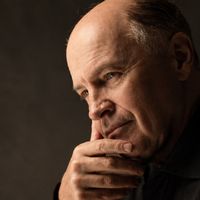
Ronald Farren-Price
piano
Ronald Farren-Price is an Australian concert pianist of rare artistry, sensitivity and virtuosity. Clarity of expression and firmness of touch are the hallmarks of his style, which brings bold nobility to each performance.
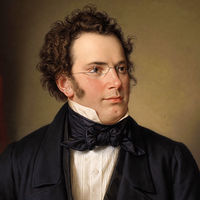
Franz Schubert
composer
Franz Schubert (1797–1828) was an Austrian composer of the late Classical and early Romantic eras. In only thirty-one years he left a vast body of work, including over six hundred Lieder, and remains among the most frequently performed composers.
Digital booklet
Digital booklet Notes, texts and credits — read online or download the PDF Download the PDFPerformers
- Ronald Farren-Price · piano
Technical credit
-
Contributor
George Tibbits
Details
- List price
- $20.00 AUD
- Total playing time
- 42 minutes 57 seconds
- Release date
- Mar 2018
- Category
- Classical
- Musical work copyright
- © 2018 Move Records
- Sound recording copyright
- ℗ 2018 Move Records
- Catalogue
- MD 3431
- EAN
- 9314574343120
More to explore
Johannes Brahms: Sonata No. 3 in F minor, Op. 5
Prepare to be swept away by the soulful and powerful performance of Sonata No. 3 in F minor, Op. 5. The mastery of the piano by Farren-Price is evident in his interpretation of this masterpiece, showcasing the intricacies of Brahms' composition.
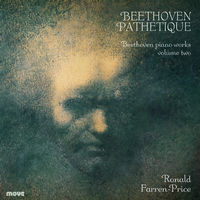
Beethoven Pathetique
On the second volume of his Beethoven piano sonatas, Ronald Farren-Price tackles the famous Pathétique Sonata, the G major Sonata (Op. 14 No. 2), two Rondos and the beautiful late-period A-flat sonata, Op. 110.
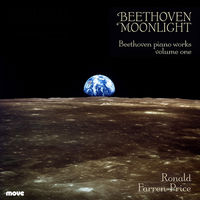
Beethoven Moonlight
You may have been fortunate enough to hear pianist Ronald Farren-Price performing Beethoven in past years. Over seven years in the making, he has completed his long-awaited recording of selected, much-loved Beethoven piano works. This first album in the two-volume set opens the survey.
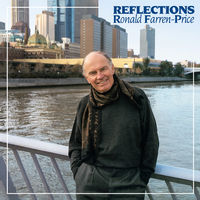
Reflections
Internationally acclaimed pianist Ronald Farren-Price offers superb performances of some of the greatest music written for the piano, in a wide-ranging recital of favourite short works.
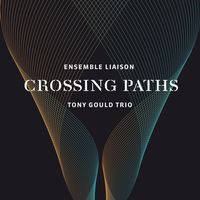
Crossing Paths
Ensemble Liaison and the Tony Gould Trio take turns across the programme: each piece is heard first in a scored reading, then in an improvised jazz response that opens the same melodic and harmonic material to fresh colour.
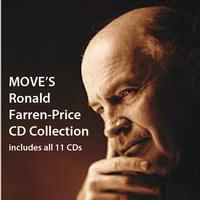
Ronald Farren-Price Complete Collection
This set gathers all eleven of Ronald Farren-Price’s Move solo discs in one collection, with each volume also available separately and carrying its own digital booklet.