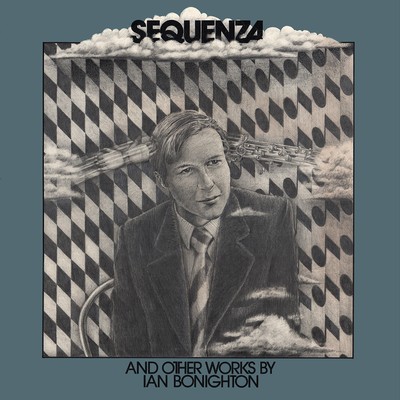
Listen & tracks
10 of 13 tracks have a preview · 9 works · 79:44
-
1 Sequenza Ian Bonighton 10:10
-
2 Music for Sleep Ian Bonighton 10:12
-
3 Derivations III Ian Bonighton 5:11
-
4 In Nomine Ian Bonighton 8:59
-
5 Toccata for Organ Ian Bonighton 3:46
-
6 Derivations I Ian Bonighton 3:05
-
String Quartet No. 2Ian Bonighton 5 movements18:37
- 7 First Movement 4:55
- 8 Second Movement 6:36
- 9 Third Movement 1:37
- 10 Fourth Movement 2:12
- 11 Fifth Movement 3:17
-
12 One Two Three Ian Bonighton 12:32
-
13 Canonic Variations Ian Bonighton 7:12
Ian Bonighton can claim an important place in Australian musical history. His training was entirely local, almost all of his scores were written for local performances, and he ventured abroad only at the end of his life. His career was uniquely Australian, and his works remain rare examples of musical talent fostered in the Australian environment.
His music deserves an audience. It has a distinctive personality. While he never strove consciously to make it ‘Australian’, it is uniquely so. Listeners who set it beside European or American works of the same era may sense a subtle but unmistakable difference of flavour, as well as differences of personality.
In the artist’s words
The tragic death of Ian Bonighton in May 1975 robbed Australian music of one of its most promising young composers. That he should have died so far from his home and family is sad indeed: but it is also indicative of the success he was beginning to discover outside his native land.
He had come to England in 1974, having been awarded a Fellowship in Composition by the Australian Council for the Arts. Working with the composer Tristram Cary, he carried out an important research programme concerned with the application of certain studio techniques to the performance of electronic music, at the same time composing a variety of new pieces for performance in England. It was to the great fortune of the University of East Anglia at Norwich that he happened to be in this country at a time when we were looking for someone to develop the Electronic Music and Recording Studio, then in its infancy but already one of the largest and best equipped in Britain.
He was appointed University Lecturer in Music in October 1974, and during the next eight months worked in close collaboration with his Icelandic colleague, Tryggvi Tryggvason, planning the development of the studio, and attracting to it composers from many parts of the world. That together they should have established the Studio as one of the leading centres for electronic music in England, and should have done so in such a short space of time, testifies to their excellent working relationship and to Bonighton’s extraordinary energy and dedication. By any standard, it was and is a remarkable achievement.
This sense of dedication, of determination to carry out any task, however important or trivial, to the best of his ability marked everything Bonighton did. Yet he was a man of exceptional humility. He rarely talked about his music, never about his past achievements. His concern always was with the problems and aspirations of others; this, together with the great breadth of his musical interests, made him an invaluable colleague and a lively and sympathetic teacher. His students were devoted to him, and in the short time he was at East Anglia he did much to influence their development.
His untimely death is a tragedy for all who knew him. Without him the University is the poorer, as is the wider musical world. This recording is a fitting tribute to the achievements of a versatile and exceptionally talented young composer.
Reviews
... this recording is not only a significant musical event. It is equally, and tragically, a memorial to a young Australian composer. The title work for eight-part choir, pipe organ and tape begins and ends with great blocks of organ sound, built from clusters of notes ... between them hang a rich tapestry of sound which develops a compelling logic of its own. Other pieces include the second string quartet, fairly conventional in construction, but very idiomatic in its sound, a piece for three percussion players which is put together with the elegant precision of the workings of a Swiss watch. The album is a must for anyone seriously interested in Australian music.
Bonighton was concerned with sound as texture rather than the traditional forms of rhythm, metre and tonality. The first pressing of the double album Sequenza is limited to 500 copies.
Although Bonighton rarely composed purely electronic music, he often linked them with more traditional means of expression. Douglas Lawrence (Toccata for Organ), the Melbourne String Quartet, the Australian Percussion Ensemble, pianist Rosslyn Farren-Price, and horn player Alex Grieve were also performers who were close to him in life.
Artists
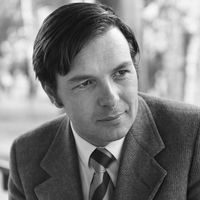
Ian Bonighton
composer
Ian Bonighton (1942-1975) was rapidly gaining recognition not only as a brilliant composer, but also as an outstanding teacher at the time Move's Reverberations was made (now available on CD). More of his works can be heard on a remastered Sequenza CD.
Digital booklet
Digital booklet Notes, texts and credits — read online or download the PDF Download the PDFPerformers
- Douglas Lawrence · organ · all except tracks 3, 6–13
- Keith Humble Choir · choir · tracks 1 and 2
- Keith Humble · conductor · tracks 1 and 2
- Australian Percussion Ensemble · ensemble · tracks 3, 4 and 12
- Alex Grieve · french horn · track 6
- Melbourne String Quartet · ensemble · tracks 7–11
- Rosslyn Farren-Price · piano · track 13
Technical credits
-
Producer
Nicholas Alexander
-
Recording Engineer
Martin Wright
-
Venue
Melba Hall, University of Melbourne (track 13)
Ormond College Chapel (tracks 7–11)
St. Patrick's Cathedral, Melbourne (tracks 1–6 and 12)
-
jacket design
Grahame Dingle
-
photography
Howard Birnstihl
Details
- List price
- $25.00 AUD
- Total playing time
- 79 minutes 44 seconds
- Release date
- 1977
- Categories
- Australian, Classical
- Musical work copyright
- © Estate Ian Bonighton
- Sound recording copyright
- ℗ 1977 Move Records
- Catalogue
- MD 3016
- EAN
- 9314574301625
More to explore
Encores
Directed by Douglas Lawrence, the Australian Chamber Choir gathers favoured concert encores in a programme that shows the ensemble at its most immediate and engaging.

Flute Perspectives, Vol. 4
Derek Jones’s fourth Flute Perspectives volume gathers contemporary Australian flute music with Jerry Wong and Joshua Hyde. Sonatas, solos and electronics chart lyric landscape, multiphonic colour and modernist drive.
Gold
The Australian Chamber Choir, directed by Douglas Lawrence, performs works by eight Australian composers. From Gordon Kerry’s Shakespeare setting to Malcolm Williamson’s English Eccentrics, the programme turns individual voices into pure gold.
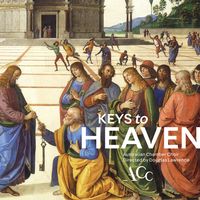
Keys to Heaven
The Australian Chamber Choir opens with the first recording of Agata della Pietà’s cantata Ecce nunc, written in eighteenth-century Venice by an orphan of the Ospedale della Pietà and reconstructed by Elizabeth Anderson. Sacred works by Palestrina and Allegri complete the programme.
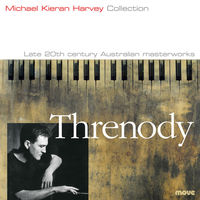
Threnody
Michael Kieran Harvey’s landmark 1995 Astra recital of late twentieth-century Australian piano music returns in a 2024 Move re-master. Premiere recordings by Harvey, Vine, Campbell, McCaughey, Byrne, Humble and Anderson form one continuous programme.
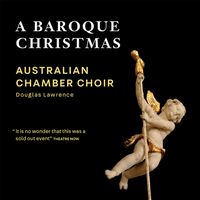
A Baroque Christmas
The music on this CD is a historical Christmas “pick of the pops”, from the late 1400s to the end of the Baroque period. Directed by Douglas Lawrence, the Australian Chamber Choir offers a programme recorded live in concert during their 2019 European tour. The 17 tracks are drawn from lesser-known seasonal works, championing a sublime repertoire that is all too often neglected.