Listen & tracks
1 of 22 tracks have a preview · 22 works · 71:58
-
1 Sì come al canto (3 part version) Jacopo da Bologna 2:55
-
2 Sì come al canto (2 part version) Jacopo da Bologna 3:03
-
3 Fenice fu' Jacopo da Bologna 2:20
-
4 In su bei fiori Jacopo da Bologna 2:26
-
5 Giunge 'l bel tempo de la primavera Jacopo da Bologna 3:28
-
6 Aquila altera — Uccel di dio — Creatura gentile Jacopo da Bologna 2:40
-
7 O in Italia felice Liguria Jacopo da Bologna 2:27
-
8 Osselletto silvagio (3 part caccia) Jacopo da Bologna 2:56
-
9 Osselletto silvagio (2 part madrigal) Jacopo da Bologna 4:07
-
10 Lux purpurata — Diligite iustitiam — Tenor Jacopo da Bologna 2:31
-
11 O cieco mondo Jacopo da Bologna 3:26
-
12 Sotto l'imperio del possente prince Jacopo da Bologna 3:37
-
13 Più no mi curo Giovanni da Firenze 3:55
-
14 O perlaro gentil Giovanni da Firenze 3:05
-
15 Per larghi prati Giovanni da Firenze 2:57
-
16 Nascoso el viso (Rossi 215) Giovanni da Firenze 3:38
-
17 Nascoso el viso (Panciatichi 26) Giovanni da Firenze 3:00
-
18 Agnel son bianco Giovanni da Firenze 3:03
-
19 O tu cara scienza Giovanni da Firenze 5:51
-
20 Fra mille corvi Giovanni da Firenze 2:26
-
21 La bella stella Giovanni da Firenze 5:36
-
22 De' come dolcemente Giovanni da Firenze 2:31
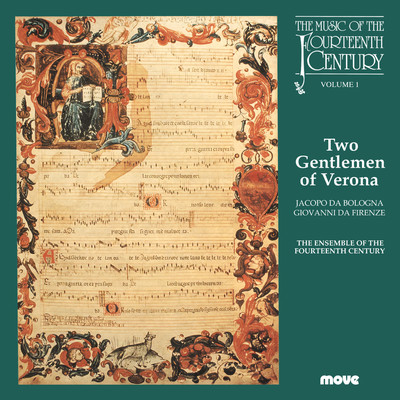
The Music of the 14th Century, Vol. 1.
Jacopo da Bologna and Giovanni da Firenze stand as the most prolific voices of the earliest documented generation of Italian polyphonic composition. Written under the patronage of the della Scala family in Verona and the Visconti in Milan, their works display the sweetness and intricacy of melody that contemporaries already prized.
Directed by John Griffiths and John Stinson, the Ensemble of the Fourteenth Century offers carefully researched readings drawn from the principal manuscript sources. Companion volumes in the series are Every Delight and Fair Pleasure, I am Music, and A Florentine Annunciation.
Reviews
The performances have a fine flow and an impressive clarity ... it has opened my ears ...
a satisfying mixture of scholarly research and musical inspiration ... is of particularly good value and worth a listen by the general collector.
Artists

Ensemble of the Fourteenth Century
ensemble
The Ensemble of the Fourteenth Century is a collective of specialist singers and instrumentalists brought together for the Fourteenth Century Recording Project. The ensemble was initially formed around the leading Australian mediaeval ensemble La Romanesca, which was expanded to provide the varied instrumental and vocal combinations required by the repertoire.
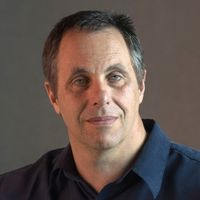
John Griffiths
director, lute
John Griffiths is a Melbourne-born vihuelist, lutenist and musicologist whose research and performance have made him a leading authority on the sixteenth-century Spanish vihuela and its music.

John Stinson
director
John Stinson directs the Ensemble of the Fourteenth Century through the secular and sacred polyphony of trecento Italy. His recordings restore madrigals, cacce and ballatas by Jacopo da Bologna, Landini and their circle with clarity, flow and scholarly bite.
Jacopo da Bologna
composer
Giovanni da Firenze
composer
Digital booklet
Digital booklet Notes, texts and credits — read online or download the PDF Download the PDFPerformers
- Ensemble of the Fourteenth Century · ensemble
- John Griffiths · director, lute
- John Stinson · director
Technical credits
-
Contributor
Giovanni Carsaniga
-
Producer
John Griffiths
Martin Wright
Vaughan McAlley
-
Recording Engineer
Martin Wright
-
Venue
Trinity College Chapel
-
Thanks to
Australian Research Council
La Trobe University
University of Melbourne
Details
- List price
- $25.00 AUD
- Total playing time
- 71 minutes 58 seconds
- Release date
- 1987
- Categories
- Early music, Vocal
- Genres
- Early Music, Vocal & Opera
- Musical work copyright
- © 1987 The University of Melbourne, La Trobe University
- Sound recording copyright
- ℗ 1987 Move Records
- Catalogue
- MD 3091
- EAN
- 9314574309126
More to explore
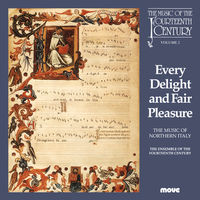
Every Delight and Fair Pleasure - The Music of the 14th Century Vol. 2
Northern Italian music from the second decade of the 14th century to the early 15th. Anonymous Rossi manuscript songs sit beside madrigals and ballatas by Maestro Piero and Bartolino da Padova.
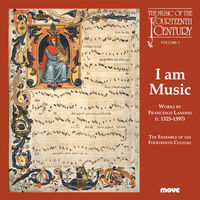
I am Music - The Music of the 14th Century Vol. 3
The Music of the Fourteenth Century series presents some of the earliest and most significant polyphonic settings of late medieval lyric poetry. Songs by Francesco Landini, performed by the Ensemble of the Fourteenth Century.
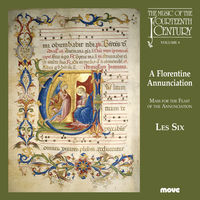
A Florentine Annunciation - The Music of the 14th Century Vol. 4
The Music of the Fourteenth Century series presents some of the earliest and most significant polyphonic settings of late-medieval lyric poetry. This volume offers music for the Feast of the Annunciation, performed by Les Six.
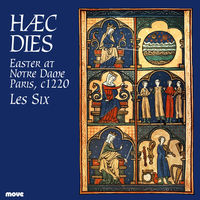
Hæc Dies
Easter at Notre Dame, Paris, c.1220. Music for Easter Sunday Mass as it may have been heard at Notre Dame early in the thirteenth century: chant propers, a complete ordinary cycle in two-part Leoninus-style settings, and three-part organum in the style of Perotin.

Sidekick
Sidekick is the debut CD from guitar duo Ziggy and Miles. It pairs new works written for the brothers with their own arrangement of Debussy’s Clair de Lune and repertoire from Spain, Latin America and Australia that has shaped their musical identity.
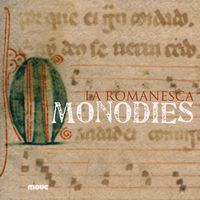
Monodies
Music from twelfth- and thirteenth-century Spain and southern France. The programme centres on Martin Codax’s sea-haunted Cantigas de amigo, with songs by the troubadour Marcabru and anonymous fourteenth-century istanpittas.