
Listen & tracks
2 of 19 tracks have a preview · 10 works · 63:59
-
Five BagatellesWilliam Walton 5 movements14:07
- 1 Allegro 3:54
- 2 Lento 3:12
- 3 Alla Cubana 2:25
- 4 Sempre espressivo 2:09
- 5 Con slancio 2:27
-
6 Jongo Paulo Bellinati 5:08
-
7 Preludio in C minor Agustín Barrios Mangoré 2:41
-
8 Una limosna por el amor de Dios [An Offering for the Love of God] Agustín Barrios Mangoré 3:10
-
9 Julia Florida Agustín Barrios Mangoré 5:04
-
10 Danza Paraguaya [Paraguayan Dance] Agustín Barrios Mangoré 1:59
-
11 Un sueño en la floresta [Dream in the Forest] Agustín Barrios Mangoré 7:19
-
La catedral [Cathedral]Agustín Barrios Mangoré 3 movements7:52
- 12 Lento 2:35
- 13 Andante religioso 2:10
- 14 Allegro solemne 3:07
-
15 Into the Dreaming Peter Sculthorpe 5:12
-
From KakaduPeter Sculthorpe 4 movements11:27
- 16 Grave 3:17
- 17 Comodo 3:01
- 18 Misterioso 1:33
- 19 Cantando 3:36
Nothing captures this Shakespearean imagery more vividly than the Five Bagatelles by English composer William Walton (1902–1983). As the title suggests, these pieces are essentially light-hearted in character; despite their fiery virtuosity and stormy passions they are little more than trifles.
Central to this disc are the works of the Paraguayan guitarist and composer Agustín Barrios (1885–1944). A hopeless romantic, Barrios deliberately cultivated a fantasy persona, namely that he was a Guaraní Indian chief taught by Catholic mission fathers. He commenced marketing himself as the “Paganini of the guitar from the jungles of Paraguay”. The mystical and magical side of this persona is captured in many of the composer’s poems, but most famously in Profesión de fe (“Profession of Faith”), which portrays the guitar as “a mysterious box” given the composer by Tupá, the great spirit, while “in the middle of the greening forest,” along with “six silver moonbeams” (representing the strings of the guitar), “with which to discover its secrets”.
The works by Sculthorpe on this disc portray a very different sort of dreaming: one related to the concept of the dreamtime, the mystical time of creation in the beliefs of the Australian Aboriginal. Into the Dreaming began its life as a cello solo and was later expanded into a longer guitar solo at the instigation of John Williams. Also from Peter Sculthorpe comes the work From Kakadu. The first and third movements are based on the “Kakadu melody”, a lament from the Elcho Islands. The setting of the “Kakadu melody” in the first movement is taken from Sculthorpe’s first guitar concerto, The Visions of Captain Quiros (a work now withdrawn). The fourth movement of From Kakadu employs another Torres Strait melody previously used in Songs of Sea and Sky (1991) for clarinet and piano. This melody is combined with motives from the second movement (which are derived from the Elcho Island Lament), to create a complex contrapuntal web expressing a sense of rapturous contentment. Its long singing line is spun out in the final coda, as if transcending mundane reality and finally entering the timeless realm of the dreaming.
In the artist’s words
The terrain of Kakadu National Park, in the north of Australia, stretches from rugged mountain plateaus to coastal tidal plains. From Kakadu is the sixth work of mine that takes this terrain as its point of departure. Several of the works employ similar melodic material, and much of this work is based upon the main theme of my orchestral piece Kakadu (1988). From Kakadu is in four sections: Grave, Comodo, Misterioso, Cantando. The first and third sections are based upon the Kakadu melody; the fourth section grows from it into a long, singing line. The work is an intimate one, being concerned with the deep contentment that I feel whenever I return to Kakadu. This feeling is ever-present in the dance-like second section, and in the singing line, and its counterpoint, of the final Cantando.
Reviews
This Australian player has bravely opted to start his current recital with the Walton Bagatelles. They are still, in spite of their numerous performances, a set of pieces that can really show up a player’s shortcomings, and are certainly no easy ride for any performer. I am pleased to say that Paget does a great job of making them sound musical and light in stature as befits a true bagatelle even if we, the audience, know that really they are anything but mere trifles. Bellinati’s Jongo is also fast becoming a piece that every good performer simply has to play and/or record; very fine it is too, especially when Paget brings out its playful dance characteristics so successfully…The two Sculthorpe pieces are atmospheric, beautifully captured and are probably the highlights for me of the whole CD. Throughout, the CD is well recorded and played and Paget’s performances are up there with some of the best. As a reviewer I have seen all of the multiple times before but realise that you, the reader may not be in the same position; suffice to say this CD has some nice performances that would grace any hi-fi system.
There can be no doubting Paget’s technical mastery of his chosen instrument and his interpretative accuracy as demonstrated in this splendidly recorded recital
Artists

Jonathan Paget
guitar
"a fine musician with brilliant technique" [Soundboard] "near-peerless command of the instrument which, in his hands, seemed not so much an inanimate construction of wood, varnish and glue than an extension of his musical being" [The West Australian]

Paulo Bellinati
composer
Paulo Bellinati's guitar writing draws on Brazilian dance and song. His Jongo has become a recital staple, full of playful rhythmic drive, while pieces such as Um Amor de Valsa and Baião de Gude show the same ear for colour and groove.

Peter Sculthorpe
composer
Peter Sculthorpe (1929–2014) was a Tasmanian-born composer whose orchestral and chamber music drew the Australian landscape, neighbouring Asian traditions and Indigenous materials into a clear, personal language. He wrote extensively for strings, piano and voice.
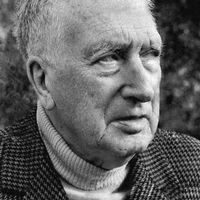
William Walton
composer
William Walton wrote across film, opera and the concert hall. His catalogue includes Belshazzar's Feast, the Viola Concerto, coronation marches such as Orb and Sceptre, and the light, demanding Five Bagatelles for guitar.

Agustín Barrios Mangoré
composer
Agustín Barrios Mangoré (1885–1944) was a Paraguayan virtuoso classical guitarist and composer, regarded as one of the greatest performers and most prolific writers for the instrument.
Digital booklet
Digital booklet Notes, texts and credits — read online or download the PDF Download the PDFPerformers
- Jonathan Paget · guitar
Technical credits
-
Recording Engineer
Anton Machleder
-
Mastering Engineer
Lee Buddle
-
Venue
Colgate-Rochester Divinity School Chapel
-
Credit
Garry Duncan
Graham Hall
Greg Smallman
Martin Wright
Details
- List price
- $25.00 AUD
- Total playing time
- 63 minutes 59 seconds
- Release date
- 2008
- Categories
- Australian, Classical
- Musical work copyright
- © 2008 Jonathan Paget
- Sound recording copyright
- ℗ 2008 Move Records
- Catalogue
- MD 3322
- EAN
- 9314574332223
More to explore
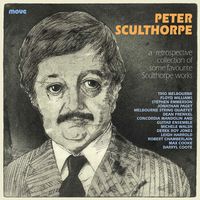
Peter Sculthorpe
A retrospective compilation of favourite chamber works by the late Peter Sculthorpe, drawn from Move’s own catalogue. Torres Strait song, Kakadu landscapes and intimate string writing are heard in performances by leading Australian musicians.
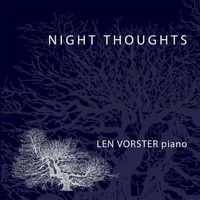
Night Thoughts
During the long still nights of Melbourne’s Covid lockdowns, pianist Len Vorster listened widely and thought hard about what he heard. Those evening ruminations became this programme of fifteen nocturnes and night pieces, from Schumann’s circle to Copland.

Sidekick
Sidekick is the debut CD from guitar duo Ziggy and Miles. It pairs new works written for the brothers with their own arrangement of Debussy’s Clair de Lune and repertoire from Spain, Latin America and Australia that has shaped their musical identity.
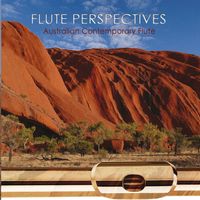
Flute Perspectives, Vol. 1
Flautist Derek Jones and pianist Leigh Harrold present this anthology of contemporary Australian flute music, from Sculthorpe’s Torres Strait cycle to solo and duo works by leading local composers.
Ringing the Strings
Melbourne’s Concordia Mandolin and Guitar Orchestra present a programme of original works and arrangements for plucked strings, including music by Sculthorpe and Fauré alongside pieces by the ensemble’s own Michelle Nelson.

Brolga Dances
The Melbourne Mandolin Orchestra presents contemporary Australian works written or arranged for mandolin and guitar, from landscape pieces and dances to chamber textures across the ensemble’s distinctive plucked sound.