Bob Barnard
Bob Barnard's playing is notable for his big, rich sound and the consummate ease of his flowing solo lines. Though he made his name in forceful traditional jazz, that is by no means the full reach of his talent.
Born into a musical family, Bob Barnard began playing trumpet partly because the family band led by his mother, Kath Barnard, needed a trumpeter, and partly because he had been deeply impressed by a record of Muggsy Spanier. He gained experience in dance bands while listening eagerly to records—above all those of his major influence, Louis Armstrong—and to popular Australian jazz bands of the 1940s, including Graeme Bell's. Through the 1940s and 1950s he kept a day job in a bank yet played extensively, touring with bands that included the one led by his brother, Len Barnard.
In 1957 he played in Sydney with a small group led by guitarist Ray Price. Back in Melbourne he continued as a semi-professional, making occasional records such as The Naked Dance with a band led by his brother. That same year Bell offered him work in Sydney; the original gig fell through, but Barnard later joined Bell's band. Tours of Australia followed, and a visit to New Zealand and New Guinea with pop singer Frank Ifield. When Armstrong came to Australia in 1963, Bell's band met him at the airport and Barnard played briefly with his idol.
In 1971 he formed a band for an EMI date that yielded 16 Jazz Greats; three years later he formed his first standing band. They worked in and around Sydney and in 1976 appeared at the Bix Beiderbecke Festival in Davenport, Iowa, to great success. After a decade the band's popularity eased, and the death of trombonist John Costelloe led Barnard to cut down to a quartet.
He toured widely through the 1980s and 1990s—in the USA and UK, south-east Asia and Europe—working with leading jazz musicians including Ruby Braff, Peanuts Hucko, Bob Wilber, Kenny Davern, Dick Cary and Milt Hinton, and recording with the last two. With Len he also made two fine Sackville albums issued under Ralph Sutton's name, Partners in Crime and Easy Street. His own recording groups ranged from quartets to nine- and ten-piece bands; he also recorded with strings. In the mid-1990s, with partial funding from the Australia Council for the Arts, he worked on an album celebrating Australian composers. Seeing a decline of interest in traditional jazz at home, he planned by the end of the 1990s to spend more time in Europe and the USA.
His fame rested on forceful traditional jazz, yet the heart of his gift lies in lyrical mainstream ballad playing that emulates, without copying, the players he most admired—Bobby Hackett, Braff, and Armstrong. He also wrote songs of his own, among them Black Stump Stomp, Smackarooney and the attractive ballad Rainbow Hill, included on a 1995 album made in New York.
Bob Barnard appears on
Jazz Music Series, Vol. 5: Ripper
The fifth and final volume in John Sangster’s jazz series of suites, written for a lively little orchestra that gathers some of Australia’s finest jazz musicians around his vibraphone writing.
Jazz Music Series, Vol. 4: Take That
Volume four of John Sangster’s Jazz Music Series finds his “lively little orchestra” of leading Australian jazz players in a ten-movement suite of wit, swing and colour.
Jazz Music Series, Vol. 3: Steady Lads
Third in John Sangster’s series of suites for a lively little orchestra of some of Australia’s finest jazz musicians: ten pieces of small big-band writing with Sangster on vibraphone.
Jazz Music Series, Vol. 2: Requiem (for a loved one)
Volume 2 of five suites by John Sangster, played by his fine small orchestra of leading Australian jazz musicians. A 1980 requiem for Janice Patricia Byrnes, nicknamed Bo Diddley.
Jazz Music Series, Vol. 1: Don't Mean a Thing if It Ain't Got That Doo-wup
As John Sangster put it, "Here is the first in a series of Suites written for this lively little orchestra, a gathering that includes some of Australia's finest jazz musicians."
Uttered Nonsense (The Owl and the Pussycat)
Uttered Nonsense (The Owl and the Pussycat) sets eight Edward Lear poems, spoken with grave poise by Ivan Smith, among fourteen instrumental jazz pieces drawn from the Nonsense Books. Sangster’s large Australian ensemble answers the verse with playful colour.
The Last Will and Testament of John Sangster
Tony Gould, Len Barnard, Graeme Lyall and friends honour one of Australia's unsung jazz heroes. These final Sangster scores, played by leading colleagues, form a warm and fitting tribute.
The Lord of the Rings, Vol. 3
The third volume of John Sangster's classic jazz epic after J.R.R. Tolkien's The Lord of the Rings. First issued by EMI as a double LP more than twenty-five years earlier, this ambitious Australian trilogy reaches CD for the first time here.
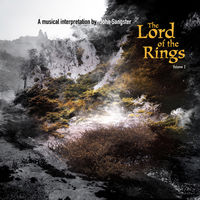
The Lord of the Rings, Vol. 2
The second volume of John Sangster's classic jazz epic on The Lord of the Rings. First issued by EMI as a double LP more than twenty-five years earlier, this music reaches CD for the first time in this Move reissue.
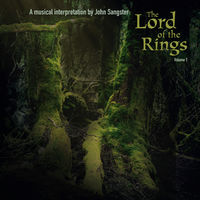
The Lord of the Rings, Vol. 1
Not Howard Shore's film score, but Australian jazz and film composer John Sangster's ambitious 1970s musical portrait of Tolkien's characters and events, restored here on a double CD more than twenty-five years after the original EMI LPs.