Richard Wagner
Richard Wagner forged music drama in which continuous song, orchestra and stage action move as one. Leitmotifs, dense chromatic harmony and blazing brass drive the Ring cycle, Tristan and the mature stage works that still shape how opera sounds.
He wrote his own libretti and built scores around long-breathed narrative rather than set-piece arias. Themes associated with characters, objects and ideas return transformed across hours of drama; the orchestra carries as much story as the voices. The Ring of the Nibelung stretches that method across four operas of myth, gold and power. Tristan und Isolde pushes harmony toward the edge of tonality. Die Meistersinger and Parsifal reopen room for chorus and traditional forms without losing the through-composed line. Even pared to horn, tuba and piano, or heard as bridal music from Lohengrin and the Wesendonck Lieder, the writing keeps its melodic charge and structural clarity. The music is built for immersion: large forces, long arcs, and a sound world that still pulls listeners straight into the drama.
Richard Wagner is featured on the following titles
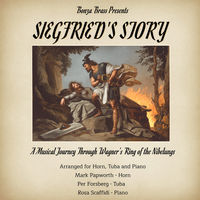
Siegfried's Story
"Brassy revamp for Wagner" (The Age, 29 April 2020). Mark Papworth’s arrangement of highlights from Wagner’s Ring of the Nibelung for horn, tuba and piano traces the cycle as chamber drama.
Compositions by Richard Wagner also appear on
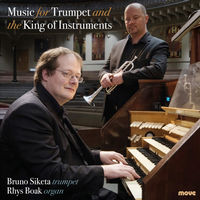
Music for Trumpet and the King of Instruments
In the world of classical music, one of the most special and enduring combinations of instruments is that of the trumpet and the pipe organ. Dating back over a millennium, the pairing has produced a tradition of heroic and majestic music-making.
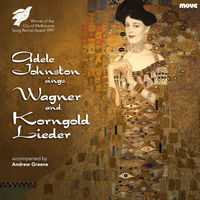
Adele Johnston sings Wagner and Korngold Lieder
Adele Johnston, 1997 winner of the City of Melbourne Song Recital Award, sings rarely heard Wagner and Korngold lieder with pianist Andrew Greene, including Australian and world premiere recordings.
Songwriter
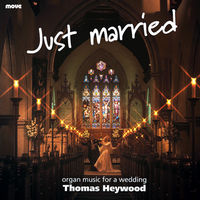
Just Married: Organ Music for a Wedding
A compilation of history's most celebrated organ music, long popular at weddings. The insert notes usefully group the tracks as processionals, recessionals and music for the signing of the register.