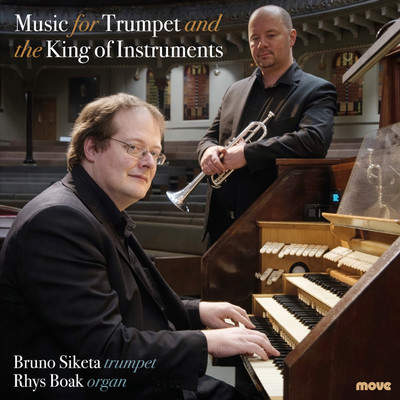
Listen & tracks
3 of 22 tracks have a preview · 13 works · 73:56
-
1 Adagio in G minor Remo Giazotto 7:26
-
Two Heroic MarchesGeorg Philipp Telemann 2 movements6:08
- 2 La Générosité 2:19
- 3 La Grâce 3:49
-
4 Toccata and Fugue in D minor, BWV 565 Johann Sebastian Bach 10:24
-
5 A Prayer of St. Gregory Alan Hovhaness 4:08
-
6 Ave Maria Astor Piazzolla 4:15
-
7 Pilgrim's Chorus (from Tannhäuser) Richard Wagner 6:14
-
8 Romance (from 'The Gadfly') Dmitri Shostakovich 3:05
-
9 Vocalise, Op. 34 No. 14 Sergei Rachmaninoff 5:03
-
10 Ave Maria da Caccini Vladimir Vavilov 4:17
-
11 Fugue in G minor, BWV 578 Johann Sebastian Bach 4:00
-
12 Variations on the aria 'Casta Diva' Jean-Baptiste Arban 7:13
-
13 March on a theme by Handel Alexandre Guilmant 6:48
-
14 Csárdás Vittorio Monti 4:55
What surprises many is that the combination is also capable of great subtlety and lyricism, as several of these pieces show. Part of the recording places trumpet and organ in an unusual acoustic: a converted former malthouse in Collingwood, inner Melbourne.
The programme is rich in new arrangements written for this duo as well as for these two players. Where a larger, more comprehensive instrument was needed, the organ at St Michael’s, Collins Street, Melbourne, was chosen for its grand nineteenth-century sound. Most of the arrangements were first heard there, and the church holds a special place for both musicians.
Reviews
Even those who have previously abjured this ancient instrumental combination will find abundant delights here. Bruno Siketa studied trumpet with Geoffrey Payne: no surprise since he shares Payne's opulent, bronzed timbre (with great delicacy when needed). Together Siketa and Boak make the most hackneyed items seem new: including the non-Albinoni Adagio, the non-Caccini Ave Maria, and the possibly non-Bach Toccata and Fugue in D minor. Thanks to Boak's aptitude as arranger, Jean-Baptiste Arban's Casta Diva variations, the Romance from Shostakovich's Gadfly, Rachmaninov's Vocalise, and Vittorio Monti's Csardas (a pre-1914 smash-hit) sound as if their composers had wanted organ performance all along. So does Astor Piazzolla's haunting, understated Ave Maria, which will gratify even those of us allergic to this composer's tango obsession. Sensibly, Move intersperses duets with organ solos. The Pilgrim's Chorus version heard here is one of several Wagner transcriptions published by Edwardian recitalist Edwin H. Lemare. Lesser musicians would find it simply unplayable, but Boak sails through it with every sign of total relaxation. He demonstrates equal assurance with the CD's origin organ works, including Bach's Little Organ Fugue and Alexandre Guilmant's March on a Theme of Handel. All tracks are commendably engineered (six were recorded at a private studio in Melbourne's suburbia, the remainder at a downtown Melbourne church). Captivating and handsomely designed, this release is a winner. ★★★★★
In this fascinating collection, many in transcriptions for trumpet and organ I’ve not encountered before, ace trumpeter Bruno Siketa and Rhys Boak at the organ rise to the occasion time and again.
Many of the tracks are of pieces long established in the concert repertoire but only rarely heard in these versions, giving the collection significant novelty value as well as high quality readings.
Bach, Telemann and Shostakovich rub shoulders with Piazzolla, Bellini and Monti, odd bedfellows to be sure – but how beautifully these arrangements are offered to the listener.
Jean-Baptiste Arban’s Variations on Casta Diva from Bellini’s Norma (arranged by Boak) are made memorable by the tonal beauty of Siketa’s trumpet line; it’s never edgy but invariably mellow. The same could be said of the solo line in the Romance from Shostakovich’s The Gadfly.
Rather improbably, Astor Piazzolla is represented not by a tango but a setting of the Ave Maria in an arrangement by Boak whose musicianship at the console runs like a golden thread through this compilation...Boak’s performance of Bach’s “little organ fugue” in G minor borders on perfection – it’s a musical gem.
Artists
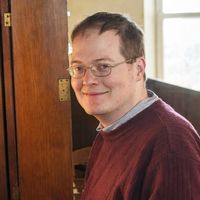
Rhys Boak
organ
Rhys Boak is a Melbourne organist and accompanist, active as a recitalist on historic instruments and with Australian choirs. He is organist and manager of music at St Michael's Church, Melbourne.
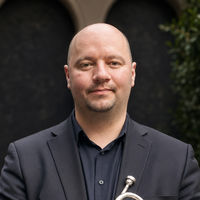
Bruno Siketa
trumpet
Bruno Siketa began playing the trumpet in 1988 while attending Geelong College on a music scholarship. He obtained Bachelor of Music performance at the Victorian College of the Arts, studying with Robert Sims, Anthony Pope and Geoffrey Payne. During his studies he performed in masterclasses with Hakan Hardenberger, David Staff, and Geoffrey Payne. In 2002 he was appointed Sub-principal trumpet in the Auckland Philharmonia and performed there for two years.
Johann Sebastian Bach
composer
Johann Sebastian Bach (1685–1750) was a German composer and organist of the late Baroque. His sacred and secular music for choir, orchestra, organ and solo instruments remains among the foundations of the Western concert and church repertory.
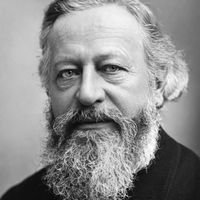
Alexandre Guilmant
composer
Alexandre Guilmant wrote almost entirely for the organ: eight sonatas in the French Romantic symphonic manner, large practical collections for church use, and ceremonial pieces that still surface at weddings and recitals.
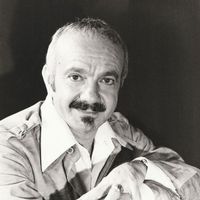
Astor Piazzolla
composer
Astor Piazzolla turned the tango into something sharper, more restless and chamber-like. His nuevo tango draws jazz harmony and classical counterpoint into the dance without blunting its edge.
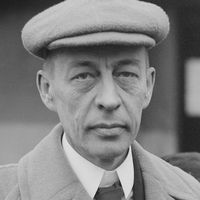
Sergei Rachmaninoff
composer
Sergei Vasilievich Rachmaninoff (1873–1943) was a Russian composer, pianist and conductor, widely considered one of the finest pianists of his day and, as a composer, one of the last great representatives of Romanticism in Russian classical music.
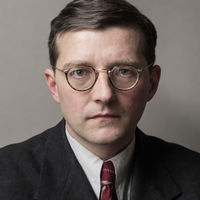
Dmitri Shostakovich
composer
Dmitri Dmitriyevich Shostakovich (25 September 1906 – 9 August 1975) was a Soviet Russian composer and one of the most celebrated of the twentieth century, whose symphonies, chamber works and piano music remain central to the repertoire.
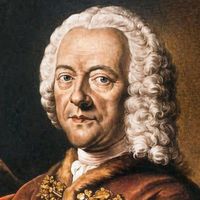
Georg Philipp Telemann
composer
Georg Philipp Telemann (1681–1767) was a German Baroque composer and multi-instrumentalist. Almost completely self-taught, he became a composer against his family's wishes and ranked among the leading German musicians of his age.
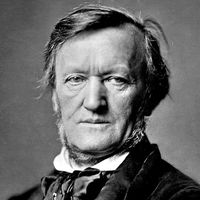
Richard Wagner
composer
Richard Wagner forged music drama in which continuous song, orchestra and stage action move as one. Leitmotifs, dense chromatic harmony and blazing brass drive the Ring cycle, Tristan and the mature stage works that still shape how opera sounds.

Jean-Baptiste Arban
composer
Jean-Baptiste Arban (1825–1889) was a French cornetist, conductor, composer and pedagogue who proved the valved cornet could stand as a true solo instrument. He is remembered for his lasting conservatory method and brilliant showpiece variations.
Remo Giazotto
composer
Alan Hovhaness
composer
Alan Hovhaness (1911–2000) was an American composer of Armenian and Scottish descent. One of the most prolific of the twentieth century, he left dozens of numbered symphonies and hundreds of works in a hushed, mystical and often exotic vein.
Vittorio Monti
composer
Vittorio Monti’s Csárdás, written around 1904, is the piece that carries his name: a Hungarian dance of slow lament and whirling fire that has become a virtuoso showpiece far beyond its original scoring.
Vladimir Vavilov
composer
Vladimir Vavilov's melodies travel widely under borrowed Renaissance and Baroque names. The lyrical Ave Maria long credited to Caccini is his, a serene line that sits naturally in song and in arrangements for trumpet and organ.
Performers
- Rhys Boak · organ
- Bruno Siketa · trumpet · tracks 1–3, 5, 6, 8, 9 and 12
Details
- List price
- $25.00 AUD
- Total playing time
- 73 minutes 56 seconds
- Release date
- 10 Sep 2014
- Category
- Classical
- Genre
- Organ
- Musical work copyright
- © 2014 Move Records
- Sound recording copyright
- ℗ 2014 Move Records
- Catalogue
- MD 3379
- EAN
- 9314574337921
More to explore
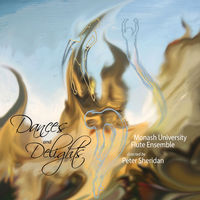
Dances and Delights
Premiere recordings of Australian and American works for modern flute ensemble fill this album with spirit and serenity, from waltzes and two-steps to cherished song arrangements.
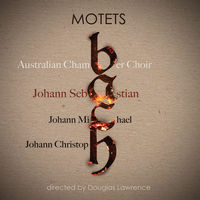
Bach Motets
The Australian Chamber Choir, directed by Douglas Lawrence, performs motets by J.S. Bach with works by Johann Michael Bach and Johann Christoph Bach.

North of the Yarra: Organs of Melbourne
Gordon Atkinson plays seven of Melbourne's finest organs, from the oldest surviving city instrument to the giant Town Hall organ, including St Patrick's Cathedral, The Scots' Church, St Paul's Cathedral and St Mary Star of the Sea, West Melbourne.
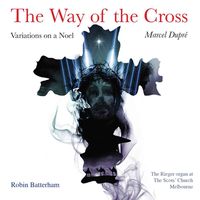
The Way of the Cross
Dupré's depictions of the fourteen Stations of the Cross, with his Variations sur un Noël, are played by Dr Robin Batterham on the 4/68 Rieger organ of The Scots' Church, Melbourne.
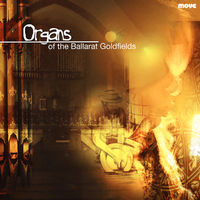
Organs of the Ballarat Goldfields
Fifteen historic organs from the Ballarat region are heard on this disc, released to mark the 2005 Organs of the Ballarat Goldfields festival. A fully illustrated 16-page booklet surveys the builders, churches, instruments, music and performers.
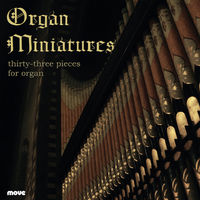
Organ Miniatures
A collection of 33 short organ works on the 1882 T.C. Lewis organ at St George’s Uniting Church, East St Kilda. The programme samples music written for small pipe organs and harmoniums, from Baroque chorales to twentieth-century miniatures.