Listen & tracks
1 of 20 tracks have a preview · 20 works · 74:43
-
1 Bells of St. John's Church, Toorak :50
-
2 Fireworks Music George Frideric Handel Overture and "The Rejoicing" 3:23
-
3 Sonata No. 10 in F, KV 244 Wolfgang Amadeus Mozart 3:47
-
4 A Midsummer Night's Dream Felix Mendelssohn Wedding March 5:41
-
5 Gavotte à la Cour, Op. 84 Edwin Henry Lemare 2:56
-
6 Wedding March in E flat William Thomas Best 4:13
-
7 Méditation (Ave Maria) on J.S. Bach's First Prelude Charles Gounod 6:09
-
8 Prelude to Third Act and Bridal Music from Lohengrin Richard Wagner 3:48
-
9 "Bist du bei mir", BWV 508 Johann Sebastian Bach 3:23
-
10 Wedding March, Op. 77: No. 2 Alexandre Guilmant 3:55
-
11 Salut d'Amour, Op. 12 Sir Edward Elgar 3:34
-
12 La fille aux cheveux de lin Claude Debussy The Girl with the Flaxen Hair 3:43
-
13 Nuptial Postlude in F William Faulkes 4:06
-
14 Canto Amoroso Giuseppe Sammartini 2:58
-
15 Orchestral Suite No. 3 in D, BWV 1068 Johann Sebastian Bach Air 3:36
-
16 'The Birds' of Aristophanes Charles Hubert Hastings Parry Bridal March 5:50
-
17 Trumpet Voluntary in D Charles John Stanley 2:23
-
18 Ave Maria, Op. 52: No. 6, D.839 Franz Schubert 4:48
-
19 Messiah George Frideric Handel "Hallelujah" Chorus 4:15
-
20 Bells of St. John's Church, Toorak 1:25
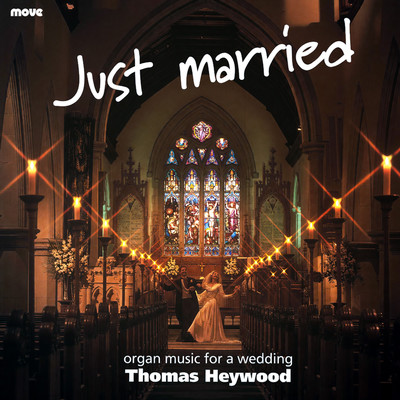
Thomas Heywood plays the restored Fincham Grand Organ at St. Mary's Star-of-the-Sea, West Melbourne, in a programme of processionals, recessionals and quieter music for the signing of the register.
The selection ranges from Handel's Fireworks Music and the Hallelujah Chorus from Messiah to Mendelssohn's Wedding March and Wagner's Bridal Music from Lohengrin. Quieter favourites include Gounod's Méditation on Bach, Elgar's Salut d'Amour and Debussy's La fille aux cheveux de lin.
Reviews
Heywood's technique is immaculate, his projection of the music positively three-dimensional, and his obvious enjoyment of the task radiates through the notes, catching up the listener and carrying us along the way.
Oh that every church had as good an organ as St. Mary's, and that every parish organist had a technique like Heywood's!
delightful listening (even if you're not contemplating matrimony)
Artists
Thomas Heywood
organ
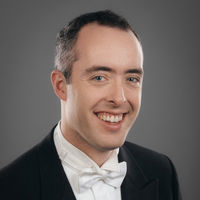
Thomas Heywood is one of Australia’s most sought-after concert organists, with an enviable reputation as a leading interpreter of the large-scale romantic and transcription repertoire on grand historic instruments.
Johann Sebastian Bach
composer
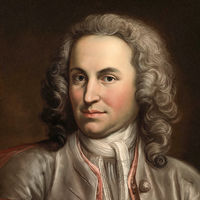
Johann Sebastian Bach (1685–1750) was a German composer and organist of the late Baroque. His sacred and secular music for choir, orchestra, organ and solo instruments remains among the foundations of the Western concert and church repertory.
William Thomas Best
composer
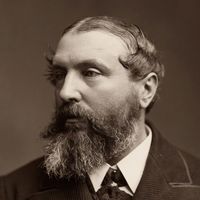
William Thomas Best's organ scores favour the grand recital manner: a Sonata in D minor, Concert Fantasia on a Welsh March, variations on national airs, wedding marches and transcriptions that turn the console into a one-player orchestra.
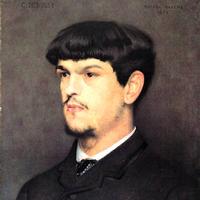
Claude Debussy
composer
Claude Debussy (1862–1918) was a French composer whose harmony, colour and flexible sense of key reshaped European music at the turn of the twentieth century. Piano, orchestral and chamber works from his maturity remain central to the repertoire.
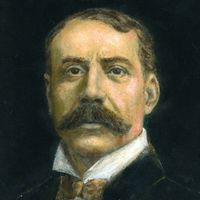
Sir Edward Elgar
composer
Edward Elgar’s music carries English romantic warmth into the concert hall: long-breathed melodies, rich harmony and tunes that lodge in the ear, from the intimate charm of Salut d’Amour to organ writing of near-symphonic scale.
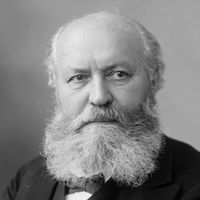
Charles Gounod
composer
Charles-François Gounod was a French composer, conductor and organist of the Romantic era. His operas include the enduringly popular Faust, and his sacred and salon pieces remain staples of the repertoire.
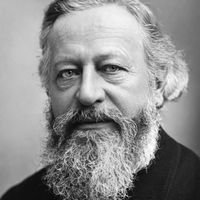
Alexandre Guilmant
composer
Alexandre Guilmant wrote almost entirely for the organ: eight sonatas in the French Romantic symphonic manner, large practical collections for church use, and ceremonial pieces that still surface at weddings and recitals.
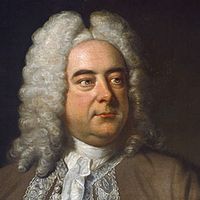
George Frideric Handel
composer
George Frideric Handel (1685–1759) was a German-born Baroque composer who settled in London and became a naturalised British subject. He is celebrated for his operas, English oratorios, organ concertos and orchestral works.
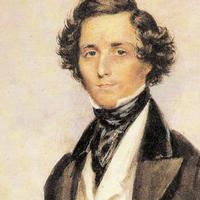
Felix Mendelssohn
composer
Jakob Ludwig Felix Mendelssohn Bartholdy (1809–1847) was a German composer, pianist, organist and conductor of the early Romantic period. His works include symphonies, concertos, oratorios, piano music and chamber music.
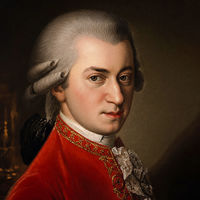
Wolfgang Amadeus Mozart
composer
Wolfgang Amadeus Mozart was a prolific and influential composer of the Classical era. He wrote over 600 works, many of them pinnacles of symphonic, concertante, chamber, piano, operatic and choral music, and remains among the most enduringly popular of classical composers.
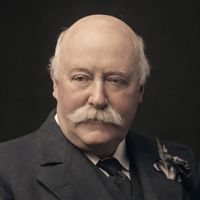
Charles Hubert Hastings Parry
composer
Hubert Parry's music still fills cathedrals and coronations. Best known for the choral song Jerusalem, the coronation anthem I was glad and the hymn tune Repton, his writing joins ceremonial splendour to a humane, singable warmth.
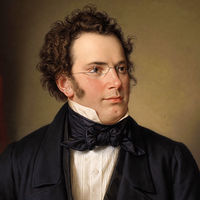
Franz Schubert
composer
Franz Schubert (1797–1828) was an Austrian composer of the late Classical and early Romantic eras. In only thirty-one years he left a vast body of work, including over six hundred Lieder, and remains among the most frequently performed composers.
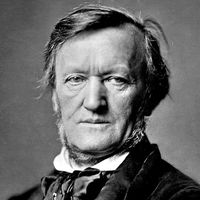
Richard Wagner
composer
Richard Wagner forged music drama in which continuous song, orchestra and stage action move as one. Leitmotifs, dense chromatic harmony and blazing brass drive the Ring cycle, Tristan and the mature stage works that still shape how opera sounds.

William Faulkes
composer
William Faulkes (1863–1933) was an English organist and composer, best known for more than five hundred published organ works for church, wedding and concert use.
Edwin Henry Lemare
composer
Edwin Lemare wrote and transcribed for the late-Romantic concert organ: display pieces and orchestral arrangements built to show the colour, weight and theatre of the great town-hall instruments. His Toccata di Concerto and Concertstück still light up grand-organ programmes.
Giuseppe Sammartini
composer
Charles John Stanley
composer
Charles John Stanley (1712–1786) was an English composer and organist. Almost blind from early childhood, he became one of the leading London organists of his day and left a lasting body of organ voluntaries.
Digital booklet
Digital booklet Notes, texts and credits — read online or download the PDF Download the PDFPerformers
- Thomas Heywood · organ
- Sally Byron · bellringer · tracks 1 and 20
Technical credits
-
Producer
Martin Wright
-
Recording Engineer
Martin Wright
Vaughan McAlley
-
Editing Engineer
Martin Wright
Vaughan McAlley
-
Mastering Engineer
Martin Wright
-
Venue
St. Mary's Star-of-the-Sea Church, West Melbourne
Details
- List price
- $25.00 AUD
- Total playing time
- 74 minutes 43 seconds
- Release date
- 1994
- Categories
- Baroque, Classical, Organ
- Genres
- Organ, Baroque, Romantic & Impressionist
- Musical work copyright
- © 1994 Move Records
- Sound recording copyright
- ℗ 1994 Move Records
- Catalogue
- MD 3149
- EAN
- 9314574314922
More to explore
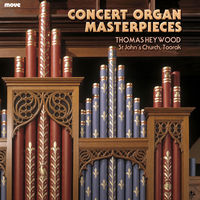
Concert Organ Masterpieces
Masterpieces from the concert organ repertoire, played by Thomas Heywood on the restored Hill organ at St John’s Church, Toorak. The programme draws on his 1997 Grand Organ Concerts at the church.
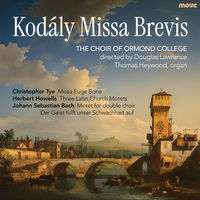
Kodály Missa Brevis
Recorded on their 1997 European tour in Northern Italy and Germany, the Choir of Ormond College sings Kodály’s Missa Brevis, with works by Tye, Howells and Bach.
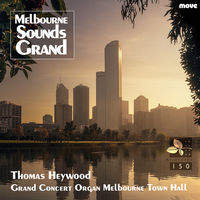
Melbourne Sounds Grand
Thomas Heywood’s first commercial recording presents the Melbourne Town Hall Grand Concert Organ in a grand-concert programme of virtuoso showpieces and transcriptions, chosen to display its orchestral colour, dynamics and power.
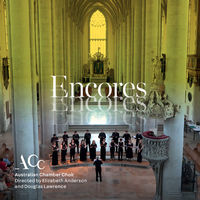
Encores
Directed by Douglas Lawrence, the Australian Chamber Choir gathers favoured concert encores in a programme that shows the ensemble at its most immediate and engaging.
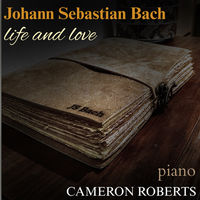
Life and Love
Cameron Roberts plays Johann Sebastian Bach at the piano, joining original keyboard works with his own arrangements and those of Busoni and Lipatti.
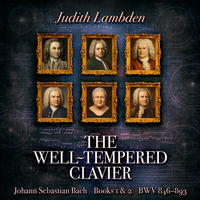
The Well-Tempered Clavier: Books 1 and 2
Distinguished Australian pianist and harpsichordist Judith Lambden presents J.S. Bach’s complete Well-Tempered Clavier, Books I and II (BWV 846–893), recorded across nine years as a five-CD set.