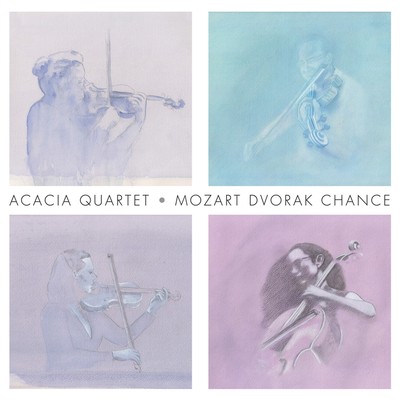
Listen & tracks
3 works · 72:56
-
String Quartet No. 15 in D minor, K. 421Wolfgang Amadeus Mozart 4 movements28:17
- 1 i. Allegro moderato 8:40
- 2 ii. Andante 6:14
- 3 iii. Menuetto (Allegretto) – Trio 3:45
- 4 iv. Allegretto ma non troppo 9:38
-
String Quartet No. 2: “Sundried”Alice Chance 4 movements15:59
- 5 i. Exposure 4:16
- 6 ii. Dribble Castle 3:27
- 7 iii. Tomatoes 2:49
- 8 iv. Aloe Vera 5:27
-
Quartet in F major, Op. 96: “American”Antonín Dvořák 4 movements28:40
- 9 i. Allegro ma non troppo 10:10
- 10 ii. Lento 8:10
- 11 iii. Molto vivace 4:27
- 12 iv. Finale: Vivace ma non troppo 5:53
The programme pairs a Haydn-set Mozart quartet and Dvořák’s beloved Op. 96 with a recent Australian commission. Chance’s four movements — Exposure, Dribble Castle, Tomatoes, Aloe Vera — turn heat, play, and relief into vivid string writing, framed by classical restraint and late-Romantic warmth.
Acacia Quartet had been performing and recording together for more than a decade when this disc appeared, and the playing shows that hard-won unity of tone and phrasing. The release reached number 6 on the ARIA Classical Charts in July 2022.
In the artist’s words
As a person with synaesthesia, I conceptualise music in vivid colours and textures. The idea of music gradually drying, burning, fermenting and wrinkling in the sun is hugely intriguing. For an audience member, listening to my work is the sonic equivalent of watching a time-lapse of a sun-drying tomato, and getting to taste its increasingly intense deliciousness all the while.
The first movement Exposure is the time-lapse movement. Stillness and transparency are portrayed by diaphanous light sounds with glinting harmonics, intervals of fourths and fifths, occasionally disorienting additive metres, increased dissonance that always finds breathing space and reprieve.
The second movement, Dribble Castle, is playful. It mirrors the process of building a sand-castle by “dribbling” wet sand into a pile, resulting in a bulbous, elegant castle. Playful, snappy pizzicati add to the funky music soundscape.
The third movement is Tomatoes. If eating tomatoes had a soundtrack, it would be this movement. Imagine shaking a plant and hundreds of cherry tomatoes falling off. Bursting, fast passages of scuttling semiquavers are interspersed with spiky and sweet motifs.
The fourth movement, Aloe Vera, is the cool salve, a soothing, mentholic antidote to the heat of the sun – the antithesis of the first movement. The music is homophonic with a simple ballad-like mantra of repeating and slowly developing phrases creating feelings of alleviation and relief.
Reviews
The Acacia Quartet play (the Mozart String Quartet No 15, K421) with verve, and there’s some lovely subtleties of colour in the aching Andante. The concluding movement has an almost conversational quality to its short, sharp phrases, rounding the quartet off nicely. The Dvořák String Quartet No 12, 'American', is given a top-notch performance, with the last two movements really taking flight.
... a charming trio of diverse string quartets, expertly played and interpreted. (In the Mozart) the ensemble engages with classical restraint and understated passion. Acacia Quartet showcases Chance’s writing and the possibilities of the stringed instruments. It is a piece which interestingly, attempts to express tactile and taste sensations in sound, with innovative acoustic effects. Dvořák’s 'American' gathers the melodic patterns, harmonies and rhythms expressing the quintessential feel of the New World. Established eleven years ago, Acacia Quartet recently bade farewell to founding second violinist Myee Clohessy. Acacia Quartet: Mozart Dvorak Chance marks the experience and synergy of this lengthy performing partnership, demonstrating a unity of purpose, well balanced tone, an understanding of the thematic material and the ability to express it.
Chance’s String Quartet No. 2, nicknamed 'Sundried', is an impressionistic work comprising 4 movements. The first movement, Exposure, reflects time-lapse photography involving stillness and transparency while the second movement, Dribble Castle, portrays the playful process of building a sand castle. The fast third movement, Tomatoes, reflects the shaking of a tomato plant that results in hundreds of cherry tomatoes falling off. The final movement, Aloe Vera, is the cool antidote to the rather dissonant first movement.
There are many fine string quartets on the Australian musical landscape. The Acacia Quartet has earned its place amongst the best. ... an excellent recoding.
Artists
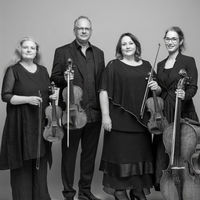
Acacia Quartet
ensemble
Founded in 2010, Acacia Quartet is an Australian string quartet known for versatile, inventive programmes and a strong commitment to new music. Its recordings have drawn national notice, including an APRA-AMCOS Art Music Award nomination.

Alice Chance
composer
Alice Chance is an Australian composer, conductor, arranger and lyricist. Her works are heard in concert halls from the Sydney Opera House and City Recital Hall Angel Place to the Kennedy Centre, and in cathedrals in Sydney, California and New York.
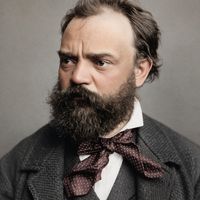
Antonín Dvořák
composer
Antonín Dvořák (1841–1904) was a Czech composer whose music fused the folk rhythms and melodies of Bohemia and Moravia with the Romantic symphonic tradition, earning lasting international renown.

Wolfgang Amadeus Mozart
composer
Wolfgang Amadeus Mozart was a prolific and influential composer of the Classical era. He wrote over 600 works, many of them pinnacles of symphonic, concertante, chamber, piano, operatic and choral music, and remains among the most enduringly popular of classical composers.
Digital booklet
Digital booklet Notes, texts and credits — read online or download the PDF Download the PDFPerformers
- Acacia Quartet · ensemble
- Lisa Stewart · violin
- Myee Clohessy · violin
- Stefan Duwe · viola
- Anna Martin-Scrase · cello
Technical credits
-
Producer
Jayson McBride
-
Recording Engineer
Jayson McBride
-
Venue
Orange Regional Conservatorium
Details
- List price
- $25.00 AUD
- Total playing time
- 72 minutes 56 seconds
- Release date
- 1 Apr 2022
- Category
- Classical
- Musical work copyright
- © 2022 Acacia Quartet
- Sound recording copyright
- ℗ 2022 Move Records
- Catalogue
- MCD 626
- EAN
- 9314574062625
More to explore
Muse
Australian recorder virtuoso Alicia Crossley joins the Acacia Quartet for the premiere recording of six Australian works for lower-voiced recorders and string quartet, drawing on poetry, mythology, historic song and storybook characters.
Encores
Directed by Douglas Lawrence, the Australian Chamber Choir gathers favoured concert encores in a programme that shows the ensemble at its most immediate and engaging.

Enfantines I
Katherine Day’s first solo album gathers piano works by Joachim, Krenek, Granados and Mozart chosen for young players. Her finely sculpted readings treat often-overlooked teaching repertoire with the care usually reserved for the concert canon.
Australian Monody
The Marais Project is joined by countertenor Russell Harcourt for a collection of largely Australian songs and instrumental works, spanning light and darkness, love and loss.

Bass Instincts
The bass recorder has grown from consort roots into a virtuosic solo voice: deep, earthy, mellow and haunting. Alicia Crossley, one of Australia’s leading recorder players, presents a programme of new Australian works written for the instrument.
Rhythms of Change
In 2020 Claire Edwardes, often called the wonder woman of percussion, launched Rhythms of Change, a commissioning project for solo percussion that confronts the under-representation of women in classical programming and builds a lasting new repertoire.