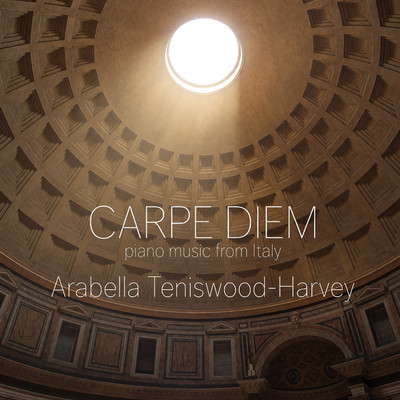
Listen & tracks
3 of 15 tracks have a preview · 7 works · 69:33
-
1 Années de Pèlerinage, Vol. III Franz Liszt Les jeux d’eaux à la Villa d’Este 8:06
-
Roman Sketches, Op. 7Charles Tomlinson Griffes 4 movements20:11
- 2 The White Peacock 4:52
- 3 Nightfall 7:54
- 4 The Fountain of the Acqua Paola 3:26
- 5 Clouds 3:59
-
Tre Preludi per pianoforte sopra melodie gregorianeOttorino Respighi 3 movements16:35
- 6 No. 1 (Molto lento) 5:09
- 7 No. 2 (Tempestoso) 6:20
- 8 No. 3 (Lento) 5:06
-
Onde: 2 Studi per pianoforteMario Castelnuovo-Tedesco 2 movements5:21
- 9 No. 1 Onde corte 2:21
- 10 No. 2 Onde lunghe 3:00
-
Rome, l'unique objet…Pierre Petit 3 movements10:14
- 11 Pincio 3:06
- 12 Néréïdes 4:38
- 13 San Carlo 2:30
-
14 Rome, l’unique objet… Pierre Petit Galoppatoio 2:49
-
15 Carpe Diem (2015) Michael Kieran Harvey Con moto – Meno mosso, con rubato – A tempo 6:17
Harvey’s piece sits beside Italian-inspired piano music by composers of earlier generations: Ottorino Respighi (1879–1936) and Mario Castelnuovo-Tedesco (1895–1968), Franz Liszt (1811–1886), Charles Griffes (1885–1920) and Pierre Petit (1922–2000).
Fountains, gardens, churches and the city itself supply the imagery, from Liszt’s Villa d’Este waters and Griffes’s Roman sketches to Respighi’s Gregorian preludes and Petit’s Prix de Rome suite. The programme closes on Harvey’s birthday gift for the pianist, a rumination on the pines of the Villa Borghese.
Reviews
I suggest dimming the lights and turning the volume levels to very low, almost inaudible - and listening to the piano as if it came from a great distance away, across a vast gulf of Space, Time and Being. Then one will hear a beautifully sculpted performance by the Australian (Tasmanian resident) Arabella Teniswood-Harvey (ATH hereafter), that captures the harmonic movement of Liszt's impressionism, along with his 'fioritura'. Just as with all mystical experience, one must make an effort to reach this fragile meaning, but if one does, it will burst forth in a glowing resplendence. [In the Ottorino Respighi pieces] ATH renders the density without loss of clarity and her sense of harmony is excellent. The balance and voicing of chords is ideal. In the second 'Prelude', I marvel at the bass note octaves: How does she get that sound? It's not a hammer blow, it's not a staccato, it's not an organ bass line, it is a semi-staccato that has sonority. I'm impressed. The eponymous work by Michael Kieran Harvey (composed in 2015) begins with a virtuoso surge of clarity and sunshine, and then clouds appear to draw the mind back to solitary and inner matters. While the mystical, the beautiful, the resplendent are all features of Italy, ATH performs this demanding composition with superb command, having powerful control of chords and octaves, and in the sombre moments, a profound and subdued wisdom of sound. Indeed: 'seize the day', and luxuriate in the Beauty of Italy.
Teniswood-Harvey handles this sometimes arcane material with admirable command. The Liszt work is a restrained reading compared to those recorded by more flamboyant, effect-craving pianists, and its pages are negotiated without interpolated histrionics or nerve-tightening fluster. Real rarities, the Griffes pieces enjoy excellent treatment, their author’s uneven key signatures and mutating metres enunciated with an underlying stability that gives the composer great service, especially in his The Fountain of the Acqua Paola and White Peacock sketches more than in the not-as-original Clouds and Nightfall movements. Both here and in Respighi’s preludes, Teniswood-Harvey makes her most eloquent cases. If the Gregorian is undetectable, the virtuosity needed to handle demands on sheer stamina in the middle one and sustaining the elongated tension in the last is impressive. Further, the pianist keeps the preludes’ textural complex lucid, particularly in the three-stave spread of the concluding Lento. By comparison, the Petit pieces strike me as amiable atmospheric rambles, the San Carlo section making a striking initial impression for its unexpectedly determined statement while the Galoppatoio bridle path, despite its suggestive title, could be depicting anywhere. Michael Kieran Harvey’s work Carpe Diem, an injunction to action before it’s too late, was written as a birthday present for its current interpreter. Aggressive, restless, packed with notes, it grabs attention straight away – like its composer in action – and doesn’t let up, even when the dynamic level sinks. Inspired by the pines in the Villa Borghese gardens, Respighi’s opening movement depicts children playing – actually, rorting around the place with no concern for the plant life – and Harvey mirrors the original’s frenetic action, although the emotional effect is more serious. At the same time, it offers a final reaction to Rome that brings the disc to a close with a driving contemporary edge. It’s all well worth hearing, both for the high quality performances and for the opportunity to hear some illuminating rarities.
Stylish, intellectual and artistic, this production is quintessentially Italian in its elegance, combining music, expertly written text and photography. Australian pianist Arabella Teniswood-Harvey has devised an attractive program, skilfully selected from Italy-inspired pieces that range from Liszt in the 19th century to Michael Kieran Harvey in the 21st. Her performances are superb and, before the listener hears any music, s/he will be struck by the quality of the accompanying booklet – Teniswood-Harvey has a special interest in the relationships between music and visual art, enhancing her insightful program notes by a number of her own photographic images. Michael Kieran Harvey wrote Carpe Diem – Italian Gothic ‘Bas-Relief’ as a birthday gift for his wife Arabella Teniswood-Harvey, knowing that she was well able to perform this virtuoso work. The composition resulted from their trip to Italy in 2015 and their subsequent discussions about how the distinctive pines in the Villa Borghese might be depicted in piano music. The result is Carpe Diem (‘seize the day’), a “rumination” on Respighi’s The Pines of Rome.
Artists

Arabella Teniswood-Harvey
piano
Arabella Teniswood-Harvey is a Tasmanian-born pianist who studied in Melbourne and, in 1999, was awarded a full scholarship to the Australian National Academy of Music’s inaugural Advanced Performance Program.

Michael Kieran Harvey
composer
Australian pianist and composer Dr Michael Kieran Harvey FAHA is among the foremost interpreters of contemporary piano music of his generation. A champion of Australian music, he regularly commissions new work and has performed with the country’s leading contemporary ensembles and orchestras.
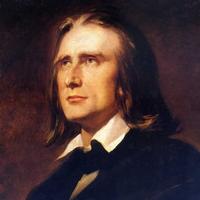
Franz Liszt
composer
Franz Liszt (1811–1886) was a Hungarian composer, virtuoso pianist, conductor and teacher of the Romantic era. His vast output reshaped piano technique, invented the symphonic poem and pushed harmony toward the twentieth century.

Mario Castelnuovo-Tedesco
composer
Mario Castelnuovo-Tedesco composed almost one hundred works for the guitar and a wide range of chamber and concert music. His writing is often graceful and classically shaped, with a clear singing line and a taste for literary and Italian colour.
Charles Tomlinson Griffes
composer
Charles Tomlinson Griffes wrote piano, chamber and vocal music that moved from German Romanticism toward a distinctive American Impressionism, rich in colour, exotic atmosphere and synthetic scales.
Pierre Petit
composer
Pierre Petit (1922–2000) was a French composer of operas, ballets, concertos, chamber music and songs. Move recordings include his piano suite Rome, l’unique objet … and the Toccata.
Ottorino Respighi
composer
Ottorino Respighi's music moves between the orchestral blaze of his Roman tone poems and a quieter strain of art song and piano writing steeped in older Italian melody. Scene, colour and chant sit close to the surface of the score.
Digital booklet
Digital booklet Notes, texts and credits — read online or download the PDF Download the PDFPerformers
- Arabella Teniswood-Harvey · piano
Technical credits
-
Producer
Michael Kieran Harvey
-
Recording Engineer
Blake Stickland
-
Editing Engineer
Blake Stickland
-
Mastering Engineer
Martin Wright
-
Venue
Move Records Studio
-
Credit
Arabella Teniswood-Harvey
Details
- List price
- $25.00 AUD
- Total playing time
- 69 minutes 33 seconds
- Release date
- 1 Jul 2016
- Categories
- Classical, Keyboard
- Musical work copyright
- © 2016 Move Records
- Sound recording copyright
- ℗ 2016 Move Records
- Catalogue
- MD 3410
- EAN
- 9314574341027
More to explore
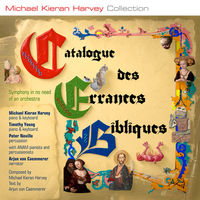
Catalogue des Errances Bibliques
Michael Kieran Harvey’s epic Catalogue des Errances Bibliques deploys eight keyboardists and four percussionists with spoken narration by Arjun von Caemmerer: twenty-five musical pieces alternating with twenty-five short narratives.
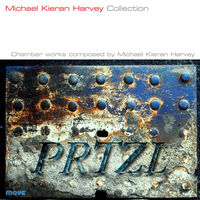
PRTZL
This release of original compositions by Harvey centres on the monumental Piano Sonata No. 4, a homage to the anti-fascist Antonio Gramsci. That theme runs through solo and ensemble works whose moods range from nostalgically whimsical to furiously satirical.
Patañjali
This CD and performance DVD celebrates Patañjali’s Yoga-Sūtra in music and āsana (2015). Michael Kieran Harvey composed the score and plays keyboards, with Arabella Teniswood-Harvey (piano) and Eugene Ughetti (percussion).
Kenneth Leighton: Music for Violin and Piano
Winner of Gramophone critic Peter Dickinson’s personal best for 2014, this recording presents the premiere of neglected masterpieces for violin and piano, opening a distinctive duo sound world.
Lennox Berkeley: Music for Violin and Piano and Solo Violin
Sir Lennox Berkeley was one of the most accomplished British composers of the twentieth century. His prolific output spanned opera, theatre and film scores, symphony, chamber and piano music, and a large body of choral work.
The Ring of Bone
While the past decade has seen recordings of Elisabeth Lutyens’ chamber and choral works released to critical acclaim, her piano music has remained obscure. Pianist Arabella Teniswood-Harvey has carefully researched and here presents that neglected repertoire.