Listen & tracks
2 of 18 tracks have a preview · 14 works · 57:24
-
1 Stratos Dean Frenkel 4:55
-
2 Weeping Camel Sylvius Leopold Weiss 1:53
-
3 Maast Linda Laasi 5:36
-
4 Call of the Birds Dean Frenkel 7:43
-
5 Geological Time Dean Frenkel 7:27
-
6 Wagogo Plains Peter Sculthorpe 2:26
-
7 Eleven XI Linda Laasi 4:01
-
8 Alchemy Dean Frenkel 3:21
-
9 Wild Western Ocean Peter Sculthorpe 1:57
-
10 Mia Mia Dean Frenkel 3:11
-
11 Deer River Sylvius Leopold Weiss 1:48
-
12 11.59 PM Peter Sculthorpe 7:04
-
13 Land of Waves Dean Frenkel 4:33
-
14 Astralis Waltz Peter Sculthorpe 1:29
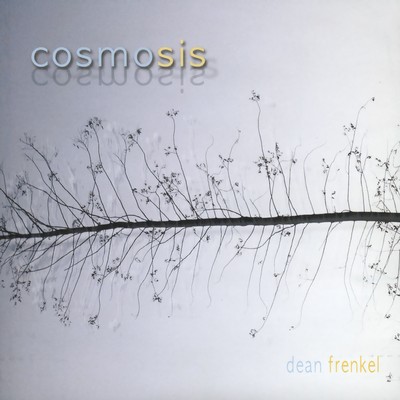
Cosmosis is a hybrid of ‘osmosis’ and ‘cosmos’. It refers to the process of connecting to the environment.
‘Osmosis’ describes the alchemy of two entities influencing change on each other. ‘Cosmos’ refers to the earth and the many layers of space above it.
This is not para-natural, it is a natural process. Many aspects are reflected in the pieces, from Call of the Birds to Geological Time, and the higher layer of vertical space in Stratos.
Space is a significant factor with harmonics, both the recording space and the listening space. The resonance of a listening space can be brought out with the volume set at right levels.
The common thread is throat singing, which atmospherically blends with the sound.
Dean Frenkel’s main style is known as ‘harmonic’ or ‘overtone’ singing. It is part of a large collection of throat singing techniques, practised by in excess of 20 cultures. These include Mongolia, Siberia (Eskimos), Canada (Inuits), Tuvans, Tibetans, Japan (Tendai Buddhist sect), Norway (Saamis), Nagaland, Africa (Xhosa, Wagogo and Biaka tribes), Taiwan (three tribes) and Papua New Guinea (Huli tribe).
Throat singing is at least 14,000 years old. The traditions of acoustic practice are also very old. The technology of recorded throat music is less than 1% of the time it has been practised.
A special feature of this album is the appearance of Betty Trevers, performer of the calling of the birds ritual. She can be heard singing for the opening one and a half minutes of the track, then again at the end. Linda Laasi plays the thumb piano, with a collection of native Australian birds taken from the recordings of Andrew Skeoch and Sarah Kostich, from the Listening Earth label. Andrew also has the distinction of being the pivotal pioneer of throat singing in Southern Australia.
At the age of 82, Betty must be the oldest person to make her debut as a recording artist. She began as one of Dean Frenkel’s pupils at the age of 80, and is one of just a handful of Australians who can sing harmonic scales.
Another feature is the Bendigo Youth Choir, possibly the world’s only children’s choir who can all sing harmonics. Their visionary Director, Valerie Broad AO has been brilliant.
Vocal duo Fortyfour Sunsets features Linda Laasi and Mia Shaw, who contributed their considerable vocal skills for the soundtrack to the film Jindabyne, coordinated by Australian music legend Paul Kelly. They appeared under the name ‘Soteria Bell’.
There are also excellent contributions from Ariel Valent, vibraphone player from Invention in Time, who played on Land of Waves with the Bendigo Youth Choir, and Alchemy.
Last, but could well be first, is the invaluable contribution by Australia’s foremost composer, Peter Sculthorpe, who enthusiastically supported the initiative of combining throat singing with his compositions.
Reviews
There is something wondrous and intoxicating about listening to the ancient art of throat singing which can create more than one note at a time from one voice … an incredible sonic journey that is instantly captivating
Isn’t it amazing what people can do with their voices … amazing sounds … a euphoric soundscape.
get outta here!
a very special talent
it is Frenkel’s haunting, otherworldly vocals that will lull you into a state of meditation, sleep or blissful calm. At last, something of merit in the New Age section.
Artists
Dean Frenkel
vocals, didgeridoo
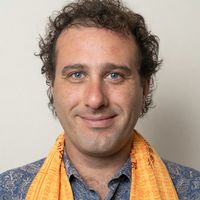
Dean Frenkel combines ancient Tibetan throat-singing technique with modern composition, creating a distinctive hybrid form. He used that technique to set a world record for the longest continuous vocal note.
Peter Sculthorpe
composer
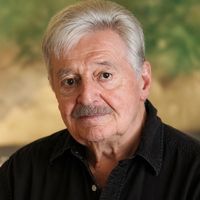
Peter Sculthorpe (1929–2014) was a Tasmanian-born composer whose orchestral and chamber music drew the Australian landscape, neighbouring Asian traditions and Indigenous materials into a clear, personal language. He wrote extensively for strings, piano and voice.

Linda Laasi
composer
Linda Laasi sings vocal harmonics into ambient dreamscapes, pure human voice treated as instrument. Overtone colour rises like night-lights over ocean and land, crystal bowls and throat-driven tones woven into calm, spacious sound.
Mia Shaw
composer
Mia Shaw is a violinist and composer who sings and plays with the vocal duo Fortyfour Sunsets.
Ariel Valent
composer
Ariel Valent’s vibraphone colours ambient soundscapes and baroque-jazz crossovers alike, whether co-writing Invention in Time pieces that drift like tide and light or locking into a rhythm section under Elizabeth Anderson’s harpsichord.
Sylvius Leopold Weiss
composer
Sylvius Leopold Weiss left the largest known body of music for the lute: late Baroque sonatas, fantasias and concertos of intricate counterpoint and singing line, still claimed by classical guitar and mandolin as well as the period instrument.
Digital booklet
Digital booklet Notes, texts and credits — read online or download the PDF Download the PDFPerformers
- Dean Frenkel · vocals, didgeridoo
- Linda Laasi · vocals, thumb piano · tracks 4 and 7
- Bendigo Youth Choir · choir · tracks 1, 5 and 13
- Melbourne Mandolin Orchestra · ensemble · tracks 2 and 11
- Anita Quayle · cello · tracks 3 and 7
- Mia Shaw · violin · track 3
- Betty Trevers · harmonic singing · track 4
- Max Cooke · piano · track 6
- Darryl Coote · piano · track 6
- Ariel Valent · vibraphone · tracks 8 and 13
- Peter Sculthorpe · piano · tracks 9 and 14
- Robert Chamberlain · piano · track 12
- Fortyfour Sunsets · ensemble · tracks 3, 7 and 10
Technical credits
-
Contributor
Valerie Broad
-
Producer
Simon Bailey
-
Editing Engineer
Vaughan McAlley
-
Mastering Engineer
Martin Wright
-
Venue
Capital Theatre, Bendigo
Move Records Studio
Details
- List price
- $25.00 AUD
- Total playing time
- 57 minutes 24 seconds
- Release date
- 2006
- Categories
- Australian, Vocal
- Musical work copyright
- © 2006 Move Records
- Sound recording copyright
- ℗ 2006 Move Records
- Catalogue
- MD 3305
- EAN
- 9314574330526
More to explore
Peter Sculthorpe
A retrospective compilation of favourite chamber works by the late Peter Sculthorpe, drawn from Move’s own catalogue. Torres Strait song, Kakadu landscapes and intimate string writing are heard in performances by leading Australian musicians.
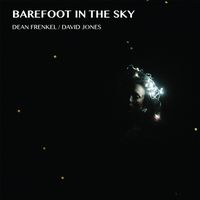
Barefoot in the Sky
Barefoot in the Sky fuses ancient and contemporary practice: rhythmic and melodic, organic and electronic, choral and tribal. It moves through enough moods for several albums, in a vein the artists call ambient space-world jazz.
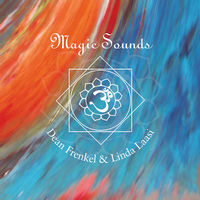
Magic Sounds
Magic Sounds moves through meditation, ambient, chill-out, fine world, soundtrack, spiritual (non-religious) and contemporary choral territory, built from authentic human voices rather than synthesizers.
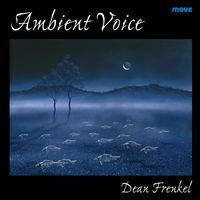
Ambient Voice
Ambient Voice places Dean Frenkel’s haunting harmonic vocals over and within works by outstanding Australian composers, among them Mark Clement Pollard, George Dreyfus, Andrew MacGregor and Invention in Time.
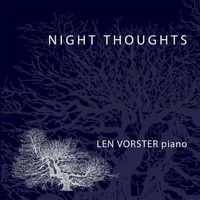
Night Thoughts
During the long still nights of Melbourne’s Covid lockdowns, pianist Len Vorster listened widely and thought hard about what he heard. Those evening ruminations became this programme of fifteen nocturnes and night pieces, from Schumann’s circle to Copland.
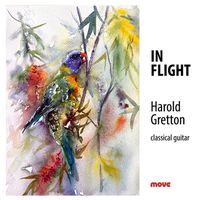
In Flight
Classical guitarist Harold Gretton offers a varied programme spanning some three centuries of solo guitar music, from Sylvius Leopold Weiß in the eighteenth century to his own Australian bird-inspired pieces of the twenty-first.