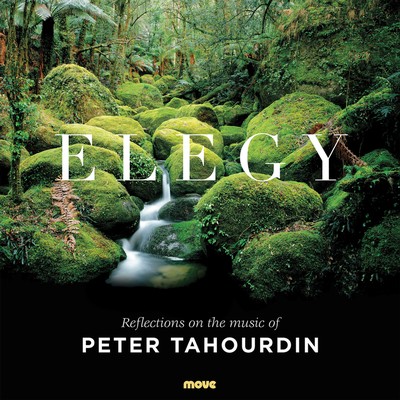
Listen & tracks
8 works · 69:09
-
1 Capriccio (1963) Peter Tahourdin 3:37
-
2 Sonata for Clarinet and Piano (1962) Peter Tahourdin iii. Andante sostenuto 7:16
-
Music for Solo Violoncello (2004)Peter Tahourdin 3 movements6:27
- 3 First Movement 2:12
- 4 Second Movement 1:54
- 5 Third Movement 2:21
-
6 San Diego Canons (1983) Peter Tahourdin 5:51
-
Elegy (2005)Peter Tahourdin 3 movements16:17
- 7 First Movement 6:09
- 8 Second Movement 4:30
- 9 Third Movement 5:38
-
10 Music for Solo Flutes (2008) Peter Tahourdin 6:15
-
11 Trio for Clarinet, Piano and Violoncello (2003) Peter Tahourdin 9:03
-
Three Mobiles (1974)Peter Tahourdin 3 movements14:23
- 12 Part 1 6:17
- 13 Part 2 4:34
- 14 Part 3 3:32
Peter Tahourdin’s compositional output covers a wide variety of genres, from orchestral music (including five symphonies) to chamber music and music for the theatre (mixed media, ballet and opera), as well as choral, electronic and educational works.
The pieces gathered here span nearly half a century of his chamber and electro-acoustic writing. Solo cello and flute sit beside clarinet with piano, a string-orchestra elegy, and two tape pieces. The programme takes its title from Elegy (2005), dedicated to Giles.
A companion disc, Exposé, gathers chamber works from 1971 to 1995.
In the artist’s words
In an article entitled A Bramdean Childhood, Peter Tahourdin gives a charming account of growing up in England — an account that embodies his familiar style: concise, clear, rich, broad ranging yet understated, and, above all, inviting further exploration and thought.
Peter Tahourdin was born in Bramdean, England, on the 27th of August 1928. He began music studies in 1949 at Trinity College London where Richard Arnell helped him develop into a fine composer and teacher. These skills brought him to Adelaide, Australia in 1964 with his wife, Barbara, and daughters Julia and Sarah. After two years in Toronto doing his Masters degree from 1966, he returned to Adelaide where his involvement in electronic music and his effectiveness as a teacher were to blossom.
In 1973 Peter took a position at the University of Melbourne (where I met him when I joined the composition department two years later). This city was to become his base for the rest of his life, composing, and teaching, pursuing his understated yet vibrant curiosity in chamber music, the orchestra, Indian music and music theatre. But it was his teaching and composing in electronic music that dominated this period. He developed one of the pioneering electronic studios in the world and he began a long friendship with Tristram Cary — another English composer who became an Australian one — and their lifelong exploration and enthusiasm quietly enriched our music and spawned a new generation of composers interested in the electronic field.
The sparkling eyes and a broad smile were never far away as he interacted patiently and lovingly with the people in his life — Barbara, his daughters, his second wife, Jane, close and casual friends and colleagues, and the numerous students he engaged with over a long and successful period at the Faculty of Music. To those who were drawn into his circle, the converted church in inner Melbourne in which Peter lived for many years was a wondrously quirky surprise — a reminder that, as well as an elegant, calm and considerate father, husband, teacher, colleague and friend, he was also a challenging thinker and risk-taker, a person not daunted by the unusual, the new, the unexpected or the unconventional.
His quiet and diffident manner contrasted with the passion in his music. His reluctance to push himself forward or attract attention to himself obscured his desire to have his music heard. While he encouraged, and often genuinely enjoyed, the ambition — even brashness — of his Australian composer friends and students, his own style remained calm, sensitive and considerate.
Perhaps he always carried with him some of the small English village in which he was born. But he loved the Aussie sun and our lack of formality, and became one of this country’s creative sons. In his Bramdean article, Peter says “I have no regrets about my move to Australia and I have lived a rewarding and productive life there, working as a composer and as a lecturer at both the universities of Adelaide and Melbourne. Now that I have retired from my university life, I still remain active as a composer and still enjoy life in Australia.”
Peter died peacefully at home in Melbourne on the 28th of July 2009, leaving a strong musical and personal legacy.
Elegy was launched on 11 March 2017. Julia Tahourdin, Peter’s eldest daughter, opened the proceedings. Firstly, she thanked everyone for coming to this launch. Although not a deeply religious man, Julia said that she was sure that Peter is with us here in spirit – he would certainly appreciate the way we are celebrating his music this Saturday afternoon.
Elegy is the title track of this CD. Julia’s dog, Giles, died in March 2005. He was her soul mate and she held a celebration of his life on Good Friday that year at Yarra Bend Park in Fairfield. Peter asked if he could say a few words. He said that he had just finished a composition called Elegy, which he had decided to dedicate to Giles. In his programme notes to that piece he wrote, “Giles was a dog – large and lovable – a loyal and faithful companion to my eldest daughter; he died of old age and a consequent decrepitude only days before the completion of this work. Perhaps the dedication to him then is fitting. In his youth Giles had an engaging vitality and playfulness, but he was always a gentle creature. Maybe we humans have something to learn from an animal like Giles?”
The sixth piece, Music for Solo Flutes, was the last public performance of one of his works that Peter and Julia attended. The concert was organised by the Melbourne Composers League and held in April 2009 at a lovely church in Brighton.
You may wonder why William Shakespeare’s Sonnet 11 appears on the back cover of the CD? Peter died in his own home in late July 2009, he was looking forward to going on a cruise the following week. His health seemed to rapidly deteriorate when his long-term friend, Tim, from Bramdean died in May that year. Peter had planned to set some of Shakespeare’s sonnets to music in Tim’s memory when he returned from the cruise.
Barry Conyngham, Dean of the Faculty of the Victorian College of the Arts and the Melbourne Conservatorium of Music launched the CD. Barry was an esteemed colleague of my father’s. As well as both having a love of teaching and composition, they also shared the same birthday.
Artists
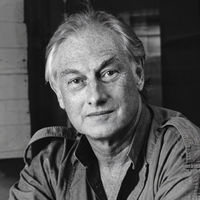
Peter Tahourdin
electronics
Peter Tahourdin (1928–2009) was an English-born Australian composer whose work ranged from five symphonies and chamber music to opera, ballet, choral and educational scores. A pioneer of electronic music in Australia, he established the country’s first practical university course in the field.
Digital booklet
Digital booklet Notes, texts and credits — read online or download the PDF Download the PDFPerformers
- Peter Tahourdin · electronics · tracks 6, 12–14
- Danaë Killian · piano · tracks 1, 2 and 11
- Robert Schubert · clarinet · tracks 2 and 11
- Rachel Atkinson · cello · tracks 3–5 and 11
- Southern Cross Philharmonia · ensemble · tracks 7–9
- Johanna Selleck · flute · track 10
- Gerald Gentry · conductor · tracks 7–9
Technical credits
-
Producer
Julia Tahourdin
Sarah Tahourdin
-
Recording Engineer
Martin Wright
Vaughan McAlley
-
Mastering Engineer
Martin Wright
-
Cover design
Sean McCaul
-
Cover photography
Michael Van Ewijk
Details
- List price
- $25.00 AUD
- Total playing time
- 69 minutes 9 seconds
- Release date
- 11 Mar 2017
- Category
- Classical
- Musical work copyright
- © 2017 Move Records
- Sound recording copyright
- ℗ 2017 Move Records
- Catalogue
- MD 3414
- EAN
- 9314574341423
More to explore
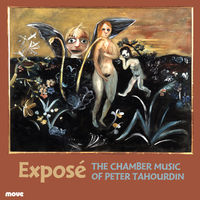
Exposé
This album spans nearly a quarter of a century of Peter Tahourdin’s chamber music, from 1971 to 1995. The works chart his compositional metamorphosis and draw on a wide range of influences and themes, from the structural procedures of Indian raga to texts from the Carmina Burana.
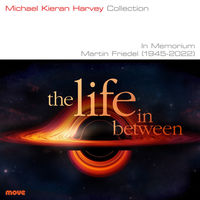
The life in between
Michael Kieran Harvey anchors this solo piano programme with Martin Friedel’s final work, …the life in between…, then sets it among virtuoso scores by Pertout, Crossman, Spiers, Selleck and McAlley.
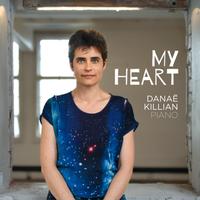
My Heart
Naarm/Melbourne pianist Danaë Killian presents an expressionist programme of solo piano, spoken word and tarot, centred on her own My Prussian Blue Heart and works by mostly Australian composers.
Bach to China with Yu
Volume 3 of Julian Yu’s clarinet music, with Robert Schubert and ensemble in arrangements that join Chinese folk melody to Western classical craft.
Solos Duos Trios
Chamber music by Haydn Reeder for soloists and small ensembles, composed between 1998 and 2023. Piano, strings, flute and harp in solos, duos and trios, nearly all recorded here for the first time.

Flute Perspectives, Vol. 3
The third release in Derek Jones’s series, Flute Perspectives 3 continues to convey the synergy of Australia’s varied classical flute repertoire, with newly commissioned works, some recorded here for the first time.