Listen & tracks
2 of 7 tracks have a preview · 2 works · 38:10
-
Rhapsody on a Theme of Paganini, Op. 43Sergei Rachmaninoff 6 movements26:16
- 1 Introduction and variations 1–6 3:45
- 2 Variations 7–11 4:56
- 3 Variations 12–15 3:49
- 4 Variations 16–17 4:05
- 5 Variation 18 3:33
- 6 Variations 19–24 6:08
-
7 Hungarian Rhapsody No. 2, S.244/2 Franz Liszt 11:54
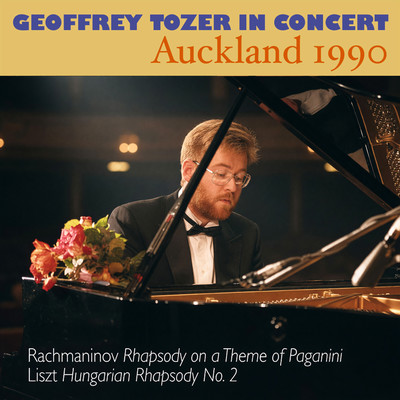
The concert was captured at the Aotea Centre on 26 July 1990 and later remastered by Martin Wright for Move.
Tozer is the soloist throughout. With the Auckland Symphonia under Vladimir Verbitsky he gives the full Rhapsody on a Theme of Paganini, Op. 43; the programme closes with Liszt’s solo Hungarian Rhapsody No. 2.
In the artist’s words
Geoffrey Tozer was an artist of the first rank, a consummate musician, a concert pianist and recitalist with few peers, possessing perfect pitch, a boundless musical memory, the ability to improvise, to transpose instantly into any key or to create on the piano a richly textured reduction of an orchestral score at sight. He was a superb accompanist and a generous collaborator in chamber music. He was also a composer.
Tozer composed from childhood and left more than 160 compositions several of which he performed publicly in Australia and overseas. His prodigious abilities were recognised early in his childhood and during a professional career that lasted for nearly fifty years he developed into a mature artist, fully realising his abilities and earning renown around the world with recitals and concerts on five continents. He made his first recording in 1963 and, as an exclusive artist of Chandos during his adult career, produced thirty-four recordings of distinction, six commercial recordings for several Australian record companies and hundreds of other recordings mainly for the Australian Broadcasting Corporation, including complete concertos of Bach, Beethoven, Mozart and Medtner on film. Tozer won numerous awards during his career including the Winston Churchill Fellowship (twice, Australia), the Australian Creative Artists Fellowship (twice, Australia), the Rubinstein Medal (twice, Israel), the Alex de Vries Prize (Belgium), the Royal Overseas League (United Kingdom), the Diapason d’Or (France), the Liszt Centenary Medallion (Hungary) and a Grammy Nomination for Best Classical Performance (USA), becoming the only Australian pianist to achieve such distinction.
Geoffrey Tozer died on 21 August 2009 at the age of just fifty-four. After Tozer’s untimely death, journalist James Campbell described him in the media as ‘Australia’s greatest and most recorded pianist’. Tozer’s greatness is certainly evident in his recorded output and witnessed by his vast performance history which exceeds that of any other Australian pianist. The body of more than 600 recordings which Tozer produced between 1963 and 2009 fully justified Campbell’s description.
Throughout his career Tozer resisted the frequent calls that he permanently re-locate to the northern hemisphere and sign with a major international agent. Whatever this cost him in career terms, he proved it was possible to achieve international renown as a pianist while based permanently in Australia. His overwhelming motivation was always to bring music to the people whether this meant playing for a local audience or piano students in regional China, giving a Master Class in Mexico City or performing for three weeks on a tour of country towns in South Australia.
Artists
Geoffrey Tozer
piano
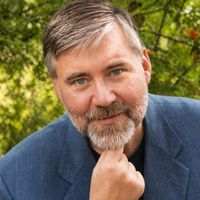
Geoffrey Tozer (1954–2009) was an Australian concert pianist and composer of the first rank, gifted with perfect pitch, a boundless musical memory, and the ability to improvise, transpose instantly into any key, or reduce an orchestral score at sight.
Sergei Rachmaninoff
composer
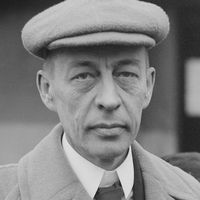
Sergei Vasilievich Rachmaninoff (1873–1943) was a Russian composer, pianist and conductor, widely considered one of the finest pianists of his day and, as a composer, one of the last great representatives of Romanticism in Russian classical music.
Franz Liszt
composer
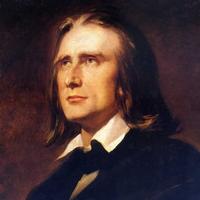
Franz Liszt (1811–1886) was a Hungarian composer, virtuoso pianist, conductor and teacher of the Romantic era. His vast output reshaped piano technique, invented the symphonic poem and pushed harmony toward the twentieth century.
Digital booklet
Digital booklet Notes, texts and credits — read online or download the PDF Download the PDFPerformers
- Geoffrey Tozer · piano
- Vladimir Verbitsky · conductor · tracks 1–6
- Auckland Symphonia · orchestra · tracks 1–6
Technical credits
-
Mastering Engineer
Martin Wright
-
Venue
Aotea Centre
Details
- List price
- $20.00 AUD
- Total playing time
- 38 minutes 10 seconds
- Release date
- 11 Dec 2014
- Category
- Classical
- Musical work copyright
- © 2014 Move Records
- Sound recording copyright
- ℗ 2014 Move Records
- Catalogue
- MD 3384
- EAN
- 9314574338423
More to explore
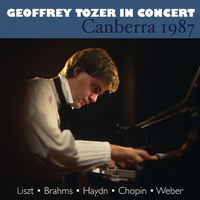
Geoffrey Tozer in Concert: Canberra 1987
This live recording of pianist Geoffrey Tozer was made in June 1987, during a series of four recitals marking his twenty-fifth anniversary as a performer.
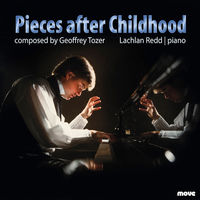
Pieces after Childhood
The remarkable compositions of Geoffrey Tozer were almost entirely unknown and unpublished at the time of his death in 2009. This premiere recording features nine works for piano composed during the years 1972–1988, performed by Lachlan Redd.
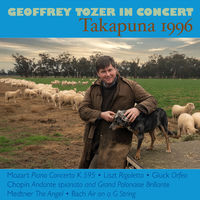
Geoffrey Tozer in Concert: Takapuna 1996
A live 1996 concert from Takapuna captures Geoffrey Tozer with the Auckland Sinfonietta in Mozart’s Piano Concerto No. 27, framed by Chopin, Medtner, Schnabel, Gluck, Liszt and Bach.
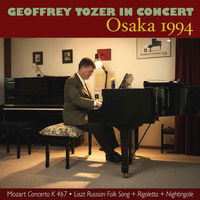
Geoffrey Tozer in Concert: Osaka 1994
Live from Osaka in 1994, Geoffrey Tozer partners the Osaka Symphony Orchestra in Mozart’s Piano Concerto No. 21 in C major, K. 467, then turns to three Liszt piano works.
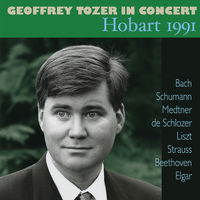
Geoffrey Tozer in Concert: Hobart 1991
Live solo piano recital by Geoffrey Tozer, recorded at the University Centre, Hobart, on 18 May 1991. Bach’s Italian Concerto and Schumann’s Carnaval open a programme that also takes in Medtner, Liszt, Beethoven and Elgar.
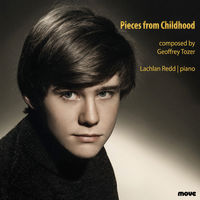
Pieces from Childhood
Geoffrey Tozer’s Pieces from Childhood offer a brief window onto a young genius finding his way in classical music. The emotions he shapes – sometimes tumultuous, sometimes meditative – are the embodiment of a growing artist.