Listen & tracks
1 of 49 tracks have a preview · 3 works · 118:33
-
Italian Concerto, BWV 971Johann Sebastian Bach 3 movements15:10
- 1 (Allegro) 4:25
- 2 Andante 5:47
- 3 Presto 4:58
-
Goldberg Variations, BWV 988Johann Sebastian Bach 32 movements92:56
- 4 Aria 4:53
- 5 Var. 1. a 1 Clav. 2:18
- 6 Var. 2. a 1 Clav. 1:58
- 7 Var. 3 Canone all'Unisuono. a 1 Clav. 2:02
- 8 Var. 4. a 1 Clav. 1:14
- 9 Var. 5. a 1 ô vero 2 Clav. 2:26
- 10 Var. 6. Canone alla Seconda. a 1 Clav. 1:45
- 11 Var. 7. al tempo di Giga. a 1 ô vero 2 Clav. 1:50
- 12 Var. 8. a 2 Clav. 2:33
- 13 Var. 9. Canone alla Terza. a 1 clav. 2:03
- 14 Var. 10. Fugetta. a 1 Clav. 1:48
- 15 Var. 11. a 2 Clav. 2:19
- 16 Var. 12. Canone alla Quarta. a 1 Clav. 2:37
- 17 Var. 13. a 2 Clav. 6:13
- 18 Var. 14. a 2 Clav. 2:32
- 19 Var. 15. Canone alla Quinta. a 1 Clav. andante 5:32
- 201 Var. 16. Ouverture. a 1 Clav. 3:11
- 202 Var. 17. a 2 Clav. 2:49
- 203 Var. 18. Canone alla Sexta. a 1 Clav. 1:38
- 204 Var. 19. a 1 Clav. 1:15
- 205 Var. 20. a 2 Clav. 2:49
- 206 Var. 21. Canone alla Settima. a 1 Clav. 3:21
- 207 Var. 22. a 1 clav. alla breve 1:42
- 208 Var. 23. a 2 Clav. 2:39
- 209 Var. 24. Canone all'Ottava. a 1 Clav. 2:25
- 210 Var. 25. a 2 Clav. adagio 8:31
- 211 Var. 26. a 2 Clav. 2:50
- 212 Var. 27. Canone alla Nona. a 2 Clav. 2:04
- 213 Var. 28. a 2 Clav. 3:07
- 214 Var. 29. a 1 ô vero 2 Clav. 2:58
- 215 Var. 30. Quodlibet. a 1 Clav. 2:09
- 216 Aria 5:25
-
Fourteen Canons, BWV 1087Johann Sebastian Bach 14 movements10:27
- 217 Canon Simplex :37
- 218 All' roversico :36
- 219 Beede vorigen Canones zugleich, motu recto e contrario :33
- 220 Motu contrario e recto :29
- 221 Canon duplex à 4 :34
- 222 Canon simplex über besagtes Fundament à 3 :37
- 223 Idem à 3 :36
- 224 Canon simplex à 3, il soggetto in Alto :38
- 225 Canon in unisono post semifusam à 3 :30
- 226 a. Alio modo, per syncopationes et per liguritas à 2 b. Evolutio :29
- 227 Canon duplex übers Fundament à 5 :37
- 228 Canon duplex über besagte Fundamental-Noten à 5 1:00
- 229 Canon triplex à 6 :50
- 230 Canon à 4 per Augmentationem et Diminutionem 2:21
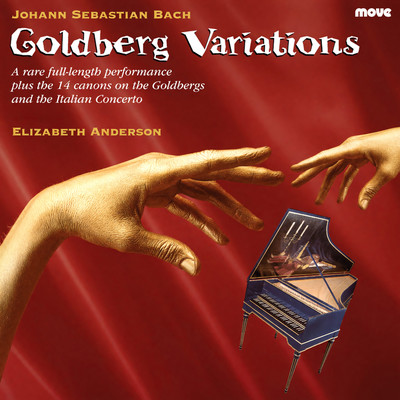
Prominent Australian keyboard performer Elizabeth Anderson takes on the highest peak for harpsichordists: Bach’s Goldberg Variations. At an energetic 93 minutes with all repeats, the work is widely regarded as the pinnacle of keyboard composition – a test of both ability and endurance.
Anderson had been giving sold-out performances of the Goldberg Variations since her first reading more than ten years before this recording. Lucinda Moon and Stephen Freeman join her on baroque violins for the fourteen canons.
In the artist’s words
In 1731, conscious that his life was drawing to a close, Bach set out to publish at least one keyboard work to represent each of the major musical forms of his day. Over the ensuing 10 years, he published three volumes of music for harpsichord and one for organ, all of which he included under the title Clavierübung. This translates loosely as ‘Keyboard Practice’, and its relevance can be better understood if we expand it to ‘The practice of keyboard composition according to J.S. Bach’.
Part II of the Clavierübung, published in 1735, requires ‘a harpsichord with two manuals’, and is devoted to forms borrowed from orchestral music: the Italian concerto and the French overture. During his years in Weimar, Bach had transcribed concertos by a number of Italian composers for the harpsichord and organ, most notable of these being the Vivaldi Concerto in D minor for strings, which he transcribed for organ. By contrast, the Italian Concerto is an original composition based on the Italian concerto principle.
This is the only harpsichord work in which Bach indicates registration by means of the words forte and piano within the movements. In the two fast movements the lower manual with coupled 8' stops is used for the forte passages, and the upper with its single 8' stop for those marked piano. This requires some deft shifts from lower to upper manual and vice versa, as the hands alternate between solo passages marked forte and orchestral accompaniment passages, which are marked piano. By contrast, the forte passages for both hands at the beginnings and ends of these movements represent orchestral tuttis.
The slow movement is strongly reminiscent of the violin concertos, the right hand playing an ornamented solo melody forte, whilst the left hand has a sparse viola and cello accompaniment piano.
The fourth and final volume of the Clavierübung, nicknamed the Goldberg Variations, was published in 1742. This was Bach’s second and final foray into variation form. Whilst the Aria Variata is a youthful experimentation, the Goldberg Variations is the work of a mature genius. In the Goldbergs, Bach leads us through a veritable museum of 18th-century variation practice. Every third variation is a canon – variation 3 demonstrates unison canon, variation 6 is a canon at the interval of a 2nd, and so on at increasing intervals up to variation 27, which is a canon at the 9th. Bach demonstrates inverted canon in variations 12 and 15. In addition to this set of canons, Bach further demonstrates canonic techniques in the Fugetta (variation 10) and the Quodlibet (variation 30).
Quodlibets – the singing of two or more popular songs simultaneously – were a regular form of entertainment in the Bach household. Here, Bach gives us two German folk songs, which he superimposes in canon over the bass theme.
Kale and turnips drove me away.
Had my mother cooked meat I’d have opted to stay.
It is so long since I was with you.
Come closer, Come closer, Come closer.
The harmonic bass upon which all of these canons are superimposed is taken from a Sarabande (here entitled Aria) that Bach wrote for his wife, Anna Magdalena, some ten years before the variations were composed. One imagines Bach browsing through his wife’s harpsichord book, re-discovering this beautiful piece, and being inspired to set out on the momentous musical journey that became the Goldbergs.
In the winter of 1974–75, a professor from the Strasbourg Conservatoire seeking information about an old volume of music in his possession led scholars to one of the most important Bach discoveries of this century: the composer’s personal copy of the Goldberg Variations. The copy contains Bach’s own corrections and revisions to the variations; but its particular value lies in a single manuscript page at its end. Here, under the heading Various canons upon the first eight bass notes of the preceding aria, Bach gave a series of 14 canons in enigmatic notation, all derived from the Goldbergs. The particular fascination of the canons is the problem of realising them from their riddle notations; yet Bach, at the end of the canons, wrote et cetera, hinting that for him at least the elaboration could continue ad infinitum.
Reviews
... a rare full-length performance of the Goldberg Variations plus the 14 canons on the Goldbergs ... including every possible repeat doubles the length of the usual playing time ... I sat spellbound through the whole thing
Her performance is one of sustained excellence: thoughtful, witty and admirably dextrous...(Anderson) has delivered what the Goldberg's title page promised: 'refreshment of the spirit'
formidable technique and heaps of vitality
Artists

Elizabeth Anderson
harpsichord
Elizabeth Anderson has performed on eleven international concert tours to Europe, Japan and Singapore, and is a regular guest lecturer and performer at universities and music schools throughout Australia.
Johann Sebastian Bach
composer
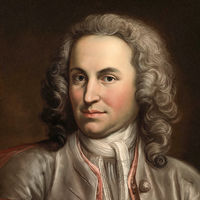
Johann Sebastian Bach (1685–1750) was a German composer and organist of the late Baroque. His sacred and secular music for choir, orchestra, organ and solo instruments remains among the foundations of the Western concert and church repertory.
Digital booklet
Digital booklet Notes, texts and credits — read online or download the PDF Download the PDFPerformers
- Elizabeth Anderson · harpsichord
- Lucinda Moon · baroque violin · disc 2 tracks 17–30
- Stephen Freeman · baroque violin · disc 2 tracks 17–30
Technical credits
-
Recording Engineer
Martin Wright
Vaughan McAlley
-
Venue
Move Records Studio
Details
- List price
- $25.00 AUD
- Total playing time
- 118 minutes 33 seconds
- Release date
- 1996
- Categories
- Baroque, Classical, Keyboard
- Genre
- Baroque
- Musical work copyright
- © 1996 Move Records
- Sound recording copyright
- ℗ 1996 Move Records
- Catalogue
- MD 3160
- EAN
- 9314574316025
More to explore
JS Bach Sonatas for Viola da Gamba and Harpsichord
Considering the fame of Bach’s solo violin partitas and cello suites, it is remarkable that his sonatas for viola da gamba and keyboard still sit in the shadows for many listeners. That some of their material appears elsewhere in his output hardly explains the neglect.
Beatus Vir
Recorded live on their 1999 European tour, the Choir of Ormond College under Douglas Lawrence presents small-scale sacred works in up to eight parts by Palestrina, Gesualdo, Handl, Gabrieli, Monteverdi, Stanford and Rheinberger.
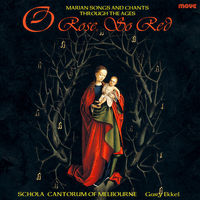
O Rose So Red
Melbourne-based Schola Cantorum, directed by Gary Ekkel, present chants, songs and motets that honour the Virgin Mary across more than a thousand years of sacred repertoire.
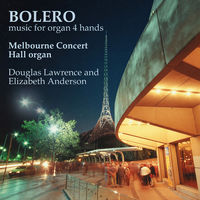
Bolero: Music for Organ 4 Hands
Douglas Lawrence and Elizabeth Anderson play organ four hands on the Melbourne Concert Hall’s French-style Casavant. Bolero gathers favourites and rarities arranged or written for two players at one console.
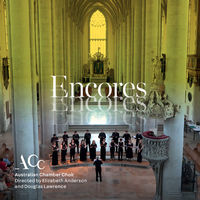
Encores
Directed by Douglas Lawrence, the Australian Chamber Choir gathers favoured concert encores in a programme that shows the ensemble at its most immediate and engaging.
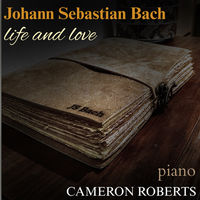
Life and Love
Cameron Roberts plays Johann Sebastian Bach at the piano, joining original keyboard works with his own arrangements and those of Busoni and Lipatti.