Listen & tracks
6 works · 63:34
-
1 Fugue in C major, BWV 952 Johann Sebastian Bach 1:46
-
2 Fugue in C major, BWV 953 Johann Sebastian Bach 2:01
-
Sonata no. 1 in G major, BWV 1027Johann Sebastian Bach 4 movements13:27
- 3 i. Adagio 3:35
- 4 ii. Allegro ma non tanto 3:51
- 5 iii. Andante 2:32
- 6 iv. Allegro moderato 3:29
-
Sonata no. 2 in D major, BWV 1028Johann Sebastian Bach 4 movements15:31
- 7 i. Adagio 1:57
- 8 ii. Allegro 4:12
- 9 iii. Andante 4:47
- 10 iv. Allegro 4:35
-
Sonata no. 3 in G minor, BWV 1029Johann Sebastian Bach 3 movements16:26
- 11 i. Vivace 6:05
- 12 ii. Adagio 6:04
- 13 iii. Allegro 4:17
-
Trio sonata no. 3 in D minor, BWV 527Johann Sebastian Bach 3 movements14:23
- 14 i. Andante 4:59
- 15 ii. Adagio e dolce 5:08
- 16 iii. Vivace 4:16
After all, Bach had no qualms about wholesale recycling, as the overlap between his Schübler Chorales for organ and his cantatas shows with special vividness.
More peculiar is the lack of firm information about when the gamba music was written. Most experts place the greater part of it early in Bach’s career: his six years (1717–23) as Kapellmeister to Prince Leopold of Cöthen. The prince’s Calvinism left the Lutheran Bach few chances for sacred music, so he turned more of his energy to secular works than he usually did before or afterwards. British musicologist Keith Anderson has tentatively placed the gamba sonatas instead in the Leipzig years (1723–50), when Bach was supplying new instrumental pieces for the university Collegium Musicum.
If the Cöthen dating is right, Bach most likely wrote the gamba parts for his violist friend Christian Abel (1682–1761), who remained in Cöthen after Bach left for Leipzig. Abel’s son Carl Friedrich, also a violist, later worked in England with Bach’s youngest son, Johann Christian; he may well have known and played this music.
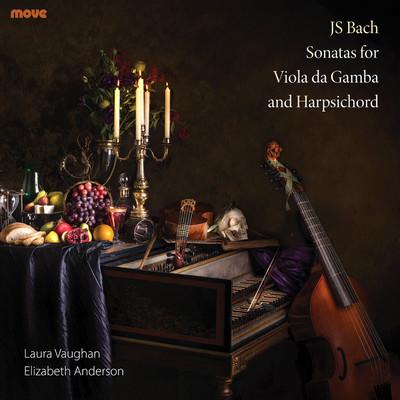
Laura Vaughan and Elizabeth Anderson present the three sonatas for viola da gamba and harpsichord, with two C major fugues and an arrangement of the organ Trio Sonata in D minor, BWV 527.
Reviews
Gamba expert Laura Vaughan and harpsichordist Elizabeth Anderson have produced a finely balanced recording of the sonatas, padding out their CD with a few arrangements: the two C Major Fugues BWV 952 and 953 where Vaughan takes the middle voice, and the Trio Sonata in D minor from the set of six for organ, with the left hand part handed to the string player... in their basic character, these performances remain consistent. They exemplify a lightly-applied scholarship where the bar-line is not permitted to hold tyrannical sway; rather, each phrase is handled with apt consideration and the give-and-take of these amiable sonatas is honoured.
Artists
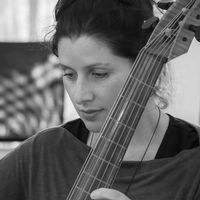
Laura Vaughan
bass viol, tenor viol
Melbourne-based viola da gamba specialist Laura Vaughan is a dynamic and well-recognised member of the early music movement in Australia.
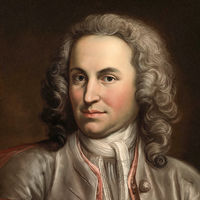
Johann Sebastian Bach
composer
Johann Sebastian Bach (1685–1750) was a German composer and organist of the late Baroque. His sacred and secular music for choir, orchestra, organ and solo instruments remains among the foundations of the Western concert and church repertory.
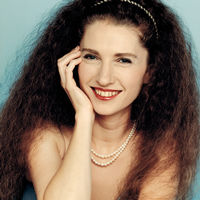
Elizabeth Anderson
harpsichord
Elizabeth Anderson has performed on eleven international concert tours to Europe, Japan and Singapore, and is a regular guest lecturer and performer at universities and music schools throughout Australia.
Digital booklet
Digital booklet Notes, texts and credits — read online or download the PDF Download the PDFPerformers
- Laura Vaughan · bass viol, tenor viol
- Elizabeth Anderson · harpsichord
Technical credits
-
Recording Engineer
Vaughan McAlley
-
Editing Engineer
Vaughan McAlley
-
Venue
Move Records Studio
-
Cover photo
Albert Comper
Details
- List price
- $25.00 AUD
- Total playing time
- 63 minutes 34 seconds
- Release date
- 1 Mar 2016
- Category
- Classical
- Genre
- Baroque
- Musical work copyright
- © 2016 Move Records
- Sound recording copyright
- ℗ 2016 Move Records
- Catalogue
- MD 3396
- EAN
- 9314574339628
More to explore
Encores
Directed by Douglas Lawrence, the Australian Chamber Choir gathers favoured concert encores in a programme that shows the ensemble at its most immediate and engaging.
Life and Love
Cameron Roberts plays Johann Sebastian Bach at the piano, joining original keyboard works with his own arrangements and those of Busoni and Lipatti.
The Well-Tempered Clavier: Books 1 and 2
Distinguished Australian pianist and harpsichordist Judith Lambden presents J.S. Bach’s complete Well-Tempered Clavier, Books I and II (BWV 846–893), recorded across nine years as a five-CD set.
Bach to China with Yu
Volume 3 of Julian Yu’s clarinet music, with Robert Schubert and ensemble in arrangements that join Chinese folk melody to Western classical craft.
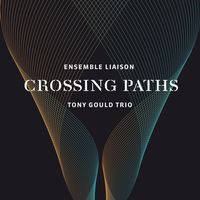
Crossing Paths
Ensemble Liaison and the Tony Gould Trio take turns across the programme: each piece is heard first in a scored reading, then in an improvised jazz response that opens the same melodic and harmonic material to fresh colour.
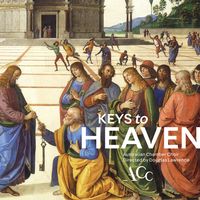
Keys to Heaven
The Australian Chamber Choir opens with the first recording of Agata della Pietà’s cantata Ecce nunc, written in eighteenth-century Venice by an orphan of the Ospedale della Pietà and reconstructed by Elizabeth Anderson. Sacred works by Palestrina and Allegri complete the programme.